Department of Natural Sciences and Mathematics, The University of Texas at Dallas, Richardson, TX, United States of America.
Department of Molecular Physiology and Biophysics, Vanderbilt University, Nashville, TN, United States of America.
PLoS One. 2022 Feb 23;17(2):e0261103. doi: 10.1371/journal.pone.0261103. eCollection 2022.
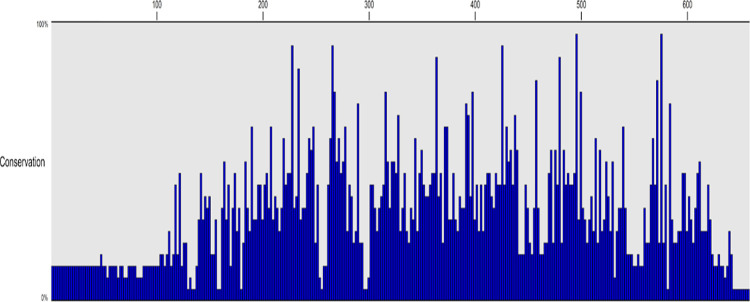
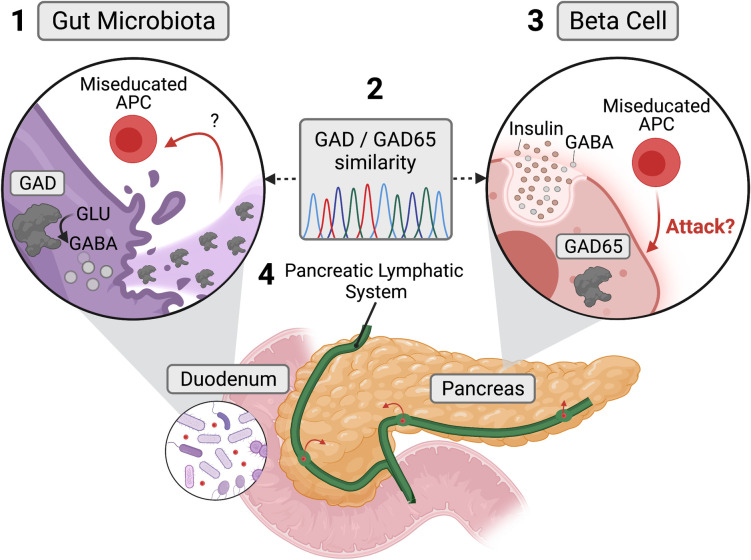
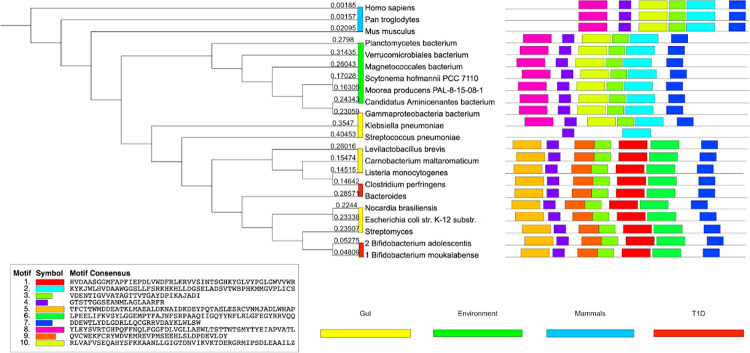
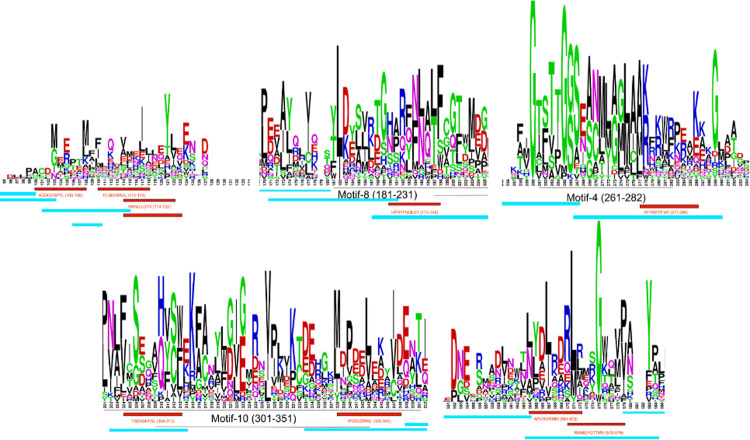
A variety of islet autoantibodies (AAbs) can predict and possibly dictate eventual type 1 diabetes (T1D) diagnosis. Upwards of 75% of those with T1D are positive for AAbs against glutamic acid decarboxylase (GAD65 or GAD), a producer of gamma-aminobutyric acid (GABA) in human pancreatic beta cells. Interestingly, bacterial populations within the human gut also express GAD and produce GABA. Evidence suggests that dysbiosis of the microbiome may correlate with T1D pathogenesis and physiology. Therefore, autoimmune linkages between the gut microbiome and islets susceptible to autoimmune attack need to be further elucidated. Utilizing in silico analyses, we show that 25 GAD sequences from human gut bacterial sources show sequence and motif similarities to human beta cell GAD65. Our motif analyses determined that most gut GAD sequences contain the pyroxical dependent decarboxylase (PDD) domain of human GAD65, which is important for its enzymatic activity. Additionally, we showed overlap with known human GAD65 T cell receptor epitopes, which may implicate the immune destruction of beta cells. Thus, we propose a physiological hypothesis in which changes in the gut microbiome in those with T1D result in a release of bacterial GAD, thus causing miseducation of the host immune system. Due to the notable similarities we found between human and bacterial GAD, these deputized immune cells may then target human beta cells leading to the development of T1D.
多种胰岛自身抗体(AAb)可预测并可能决定最终的 1 型糖尿病(T1D)诊断。超过 75%的 T1D 患者对谷氨酸脱羧酶(GAD65 或 GAD)的 AAb 呈阳性,GAD 是人类胰腺β细胞中γ-氨基丁酸(GABA)的产生者。有趣的是,人类肠道内的细菌种群也表达 GAD 并产生 GABA。有证据表明,微生物组的失调可能与 T1D 的发病机制和生理学有关。因此,需要进一步阐明肠道微生物组与易受自身免疫攻击的胰岛之间的自身免疫联系。我们利用计算机分析表明,来自人类肠道细菌来源的 25 种 GAD 序列在序列和基序上与人胰岛β细胞 GAD65 相似。我们的基序分析确定,大多数肠道 GAD 序列包含人类 GAD65 的依赖吡哆醛的脱羧酶(PDD)结构域,这对于其酶活性很重要。此外,我们还发现与已知的人类 GAD65 T 细胞受体表位重叠,这可能暗示β细胞的免疫破坏。因此,我们提出了一个生理假设,即在 T1D 患者中,肠道微生物组的变化导致细菌 GAD 的释放,从而导致宿主免疫系统的错误教育。由于我们在人类和细菌 GAD 之间发现了显著的相似性,这些被委托的免疫细胞可能会靶向人类β细胞,从而导致 T1D 的发展。