From the Section for Plastic and Reconstructive Surgery, Clinic of Surgery, Department of Clinical Pharmacology, and Clinic of Anesthesia and Intensive Care, St. Olav's University Hospital; and Departments of Circulation and Medical Imaging and Clinical and Molecular Medicine, Norwegian University of Science and Technology.
Plast Reconstr Surg. 2022 Mar 1;149(3):774-787. doi: 10.1097/PRS.0000000000008884.
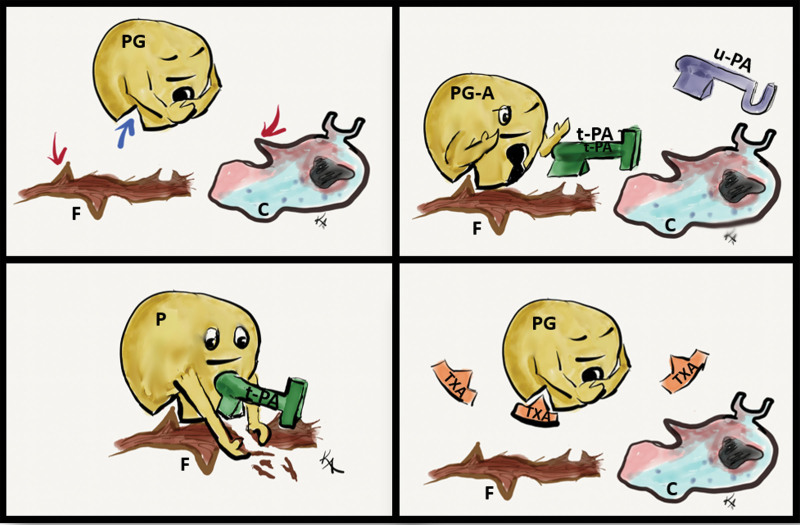
Although high-bleed surgery routinely utilizes the antifibrinolytic drug tranexamic acid, most plastic surgical procedures are conducted in soft tissue with low-volume bleeding. Unease regarding possible systemic adverse effects prevents widespread systemic use, but local use of tranexamic acid is gaining popularity among plastic surgeons. Randomized controlled trials on topical use of tranexamic acid are mainly from high-bleed surgeries, and few studies address the effect in soft tissue. This article reviews the scientific evidence regarding local use of tranexamic acid in soft-tissue surgery, discusses pharmacological effects and possible adverse reactions, and presents recommendations for use in plastic surgery.
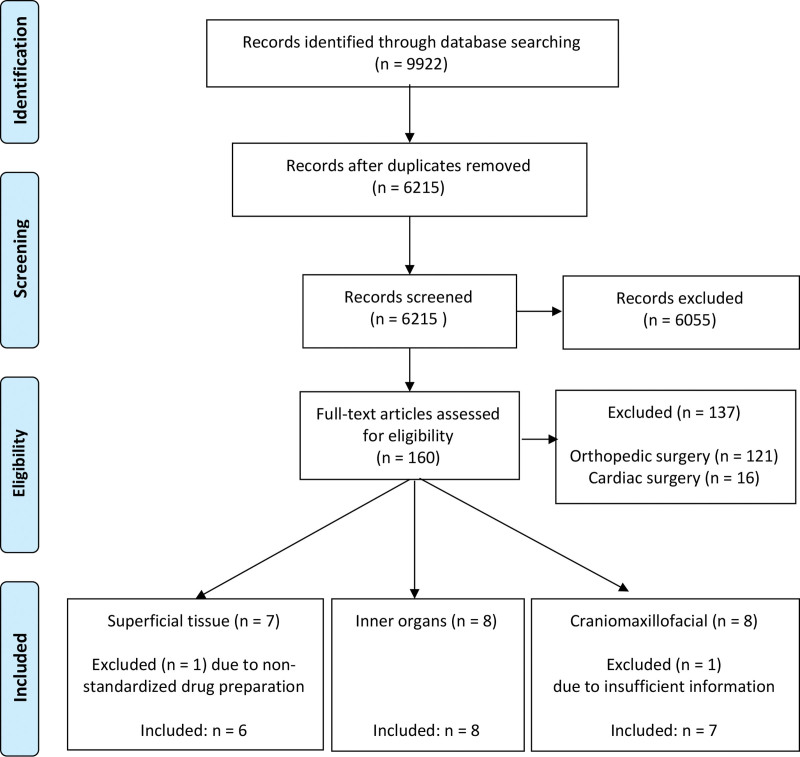
A systematic search of databases for studies on local use of tranexamic acid in soft-tissue surgery was performed. Randomized controlled trials were included for a systematic review on effect; a narrative review regarding other clinically relevant aspects is based on extensive literature searches combined with the authors' own research.
Fourteen randomized controlled trials, including 1923 patients, were included in the systematic review on local use of tranexamic acid in soft-tissue surgery.
Local use of tranexamic acid may reduce blood loss comparably to intravenous prophylactic use with negligible risk of systemic adverse effects, but high-quality randomized controlled trials are few. Prolonged exposure to high local concentrations is discouraged, and direct contact with the central nervous system may cause seizures. No single superior means of administration or dosage is supported in the literature, and lowest effective dose is unknown. There may not be one single ideal dosing regimen, but rather many possibilities adaptable for different surgical situations.
尽管高出血手术通常使用抗纤维蛋白溶解药物氨甲环酸,但大多数整形手术都是在低出血量的软组织中进行的。由于担心可能出现全身不良反应,因此阻止了其广泛的全身应用,但氨甲环酸的局部应用在整形医生中越来越受欢迎。局部使用氨甲环酸的随机对照试验主要来自高出血手术,很少有研究涉及软组织的效果。本文综述了关于在软组织手术中局部使用氨甲环酸的科学证据,讨论了其药理作用和可能的不良反应,并提出了在整形手术中使用的建议。
对数据库中关于软组织手术中局部使用氨甲环酸的研究进行了系统检索。对具有统计学意义的研究进行了系统综述,对其他具有临床意义的方面进行了叙述性综述,综述依据是广泛的文献检索以及作者自己的研究。
共有 14 项随机对照试验,包括 1923 例患者,被纳入了软组织手术中局部使用氨甲环酸的系统综述。
局部使用氨甲环酸可能会减少出血量,与预防性静脉使用氨甲环酸的效果相当,且几乎没有全身不良反应的风险,但高质量的随机对照试验很少。不鼓励长时间暴露于高浓度的局部浓度,且直接接触中枢神经系统可能会引起癫痫发作。文献中没有支持单一的最佳给药途径或剂量,也不知道最低有效剂量。可能没有一种理想的给药方案,而是有许多适用于不同手术情况的可能性。