Department of Biosciences, Durham University, Durham, UK.
Medical Research Council Unit, The Gambia, London School of Hygiene and Tropical Medicine, Fajara, The Gambia.
Malar J. 2022 Feb 23;21(1):64. doi: 10.1186/s12936-022-04087-9.
The World Health Organization recommends house screening as a tool for malaria control, yet evidence of the long-term durability, functionality and acceptability of this intervention is lacking. In this study, the sustainability and use of novel types of screened doors and windows was examined 4 years after installation in a Gambian village.
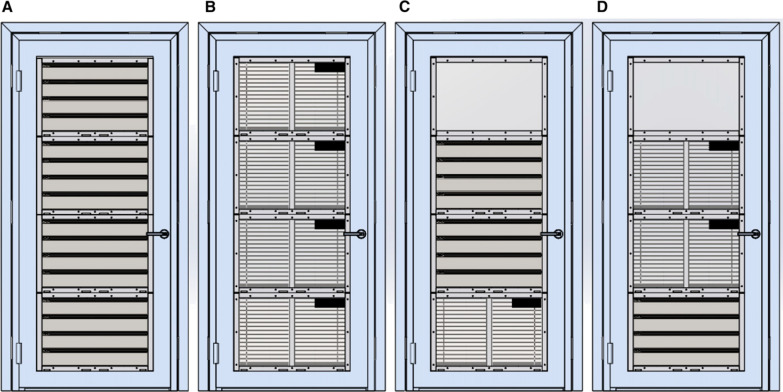
A survey of 31 houses, each with two screened doors and two screened windows, was conducted in the rainy season. There were four types of screened door and two types of screened window. Trained staff carried out the survey and interviews of room owners were conducted in the local language before translation into English.
Structurally, the manufactured doors and windows were highly durable and in excellent condition. Most doors shut smoothly 50/61 (82%), although only 25/61 (41%) shut fully automatically with the latch slotting into the hole on the frame and holding fast. Door locks were less robust, with only (24/61) 39% present and working. Blinds proved especially flimsy, with only 4/109 (4%) of door blinds and 10/56 (18%) of window blinds present and in working order. Householders hung curtains inside most doors 50/61 (82%) and in 26/61 (43%) of the windows. Front doors were commonly found propped open 21/31 (68%) and 23/27 (85%) of those with a front door curtain, put their curtains down at night. Doors and windows were well liked, 19/31 (61%) of respondents were happy with them because they kept mosquitoes out 14/31 (45%) and provided security 12/31 (39%). The main reason given for the use of curtains was to provide privacy 26/28 (93% of those with curtains), especially while the door was open or had 'see-through' panels.
Overall, the screened doors and windows were in full-working order and undamaged after 4 years of use. The doors and windows were well liked, especially for their ability to reduce the entry of mosquitoes and for the security they afforded. Improvements to the lock design are needed before scale-up. Most householders hung curtains behind their doors for privacy. Installation of screening in buildings should be accompanied with recommendations that at night, when doors and windows are closed, curtains be lifted or drawn to one side-to improve ventilation and keep the house cool.
世界卫生组织建议采用房屋筛查作为疟疾控制的一种手段,但缺乏这种干预措施的长期耐久性、功能性和可接受性的证据。在这项研究中,在冈比亚的一个村庄里,在安装 4 年后,对新型纱窗门的可持续性和使用情况进行了检查。
在雨季,对 31 个房屋进行了调查,每个房屋有两扇纱窗门和两扇纱窗窗。有四种类型的纱窗门和两种类型的纱窗窗。经过培训的工作人员进行了调查,在翻译成英语之前,对房间所有者进行了当地语言的访谈。
从结构上看,制造的门窗非常耐用,状况良好。大多数门都能顺利关闭 50/61(82%),尽管只有 25/61(41%)能完全自动关闭,门闩插入门框上的插槽并固定。门锁不太坚固,只有 24/61(39%)存在且工作正常。百叶窗尤其脆弱,只有 4/109(4%)的门百叶窗和 10/56(18%)的窗百叶窗存在且工作正常。房主在大多数门 50/61(82%)内和 26/61(43%)的窗户内挂上了窗帘。前门锁上时通常是开着的 21/31(68%),而前门锁上时,有 23/27(85%)的窗帘被放下。门和窗户很受欢迎,31 名受访者中有 19/31(61%)对它们感到满意,因为它们能阻止蚊子进入 14/31(45%),并提供安全保障 12/31(39%)。使用窗帘的主要原因是提供隐私 26/28(93%的有窗帘的人),尤其是当门打开或有“透视”面板时。
总的来说,纱窗门和窗户在使用 4 年后仍然处于完全正常的工作状态,没有损坏。门和窗户很受欢迎,尤其是因为它们能减少蚊子的进入和提供安全保障。在扩大规模之前,需要改进锁的设计。大多数房主在门后挂窗帘以保护隐私。在建筑物中安装纱窗时,应建议在夜间关闭门窗时,将窗帘掀起或拉到一侧,以改善通风并保持房屋凉爽。