National Malaria Control Programme, Banjul, The Gambia.
Department of Biosciences, Durham University, Durham, UK.
J R Soc Interface. 2021 May;18(178):20201030. doi: 10.1098/rsif.2020.1030. Epub 2021 May 12.
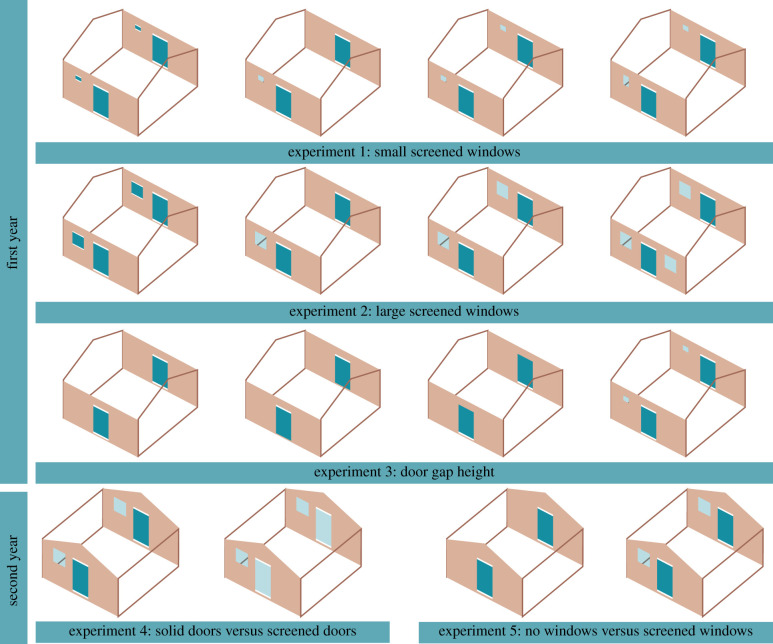
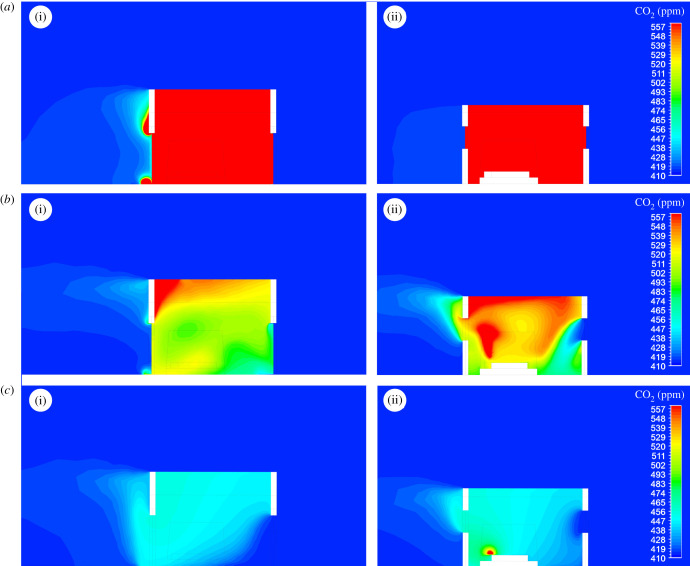
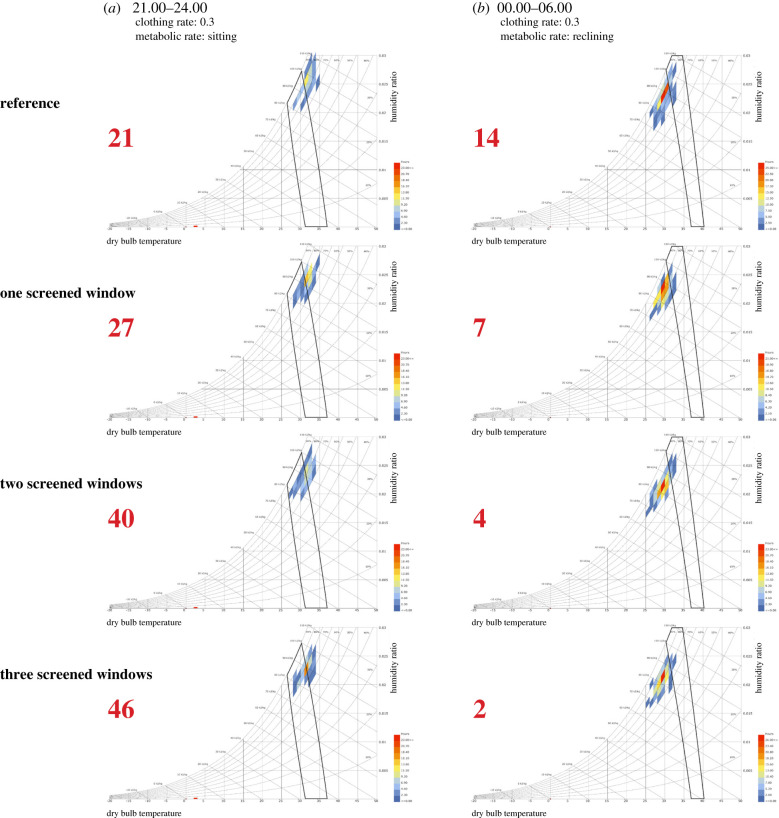
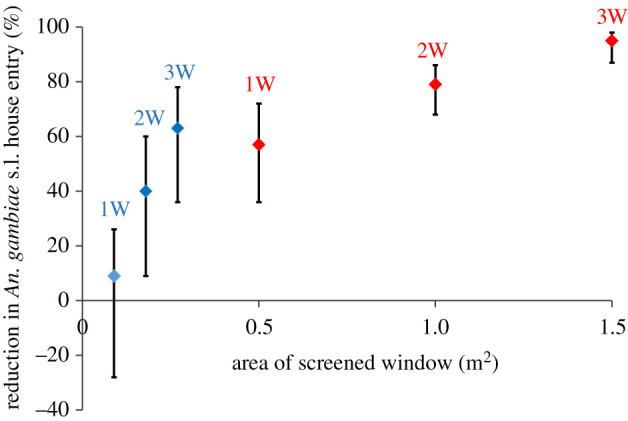
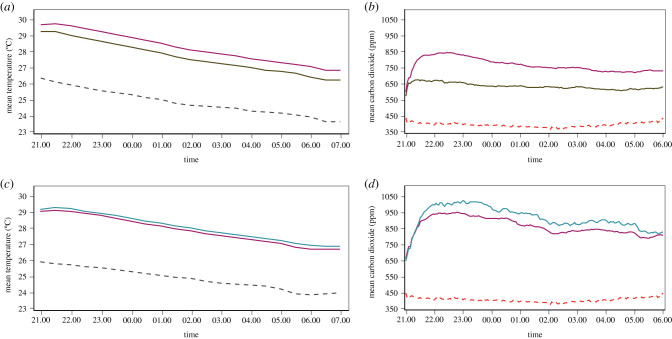
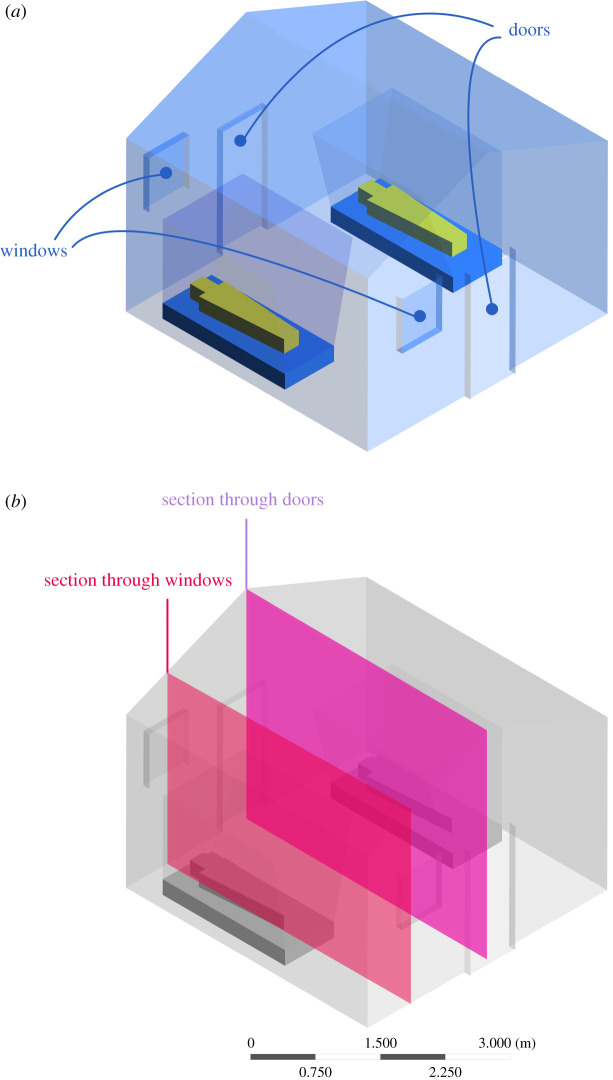
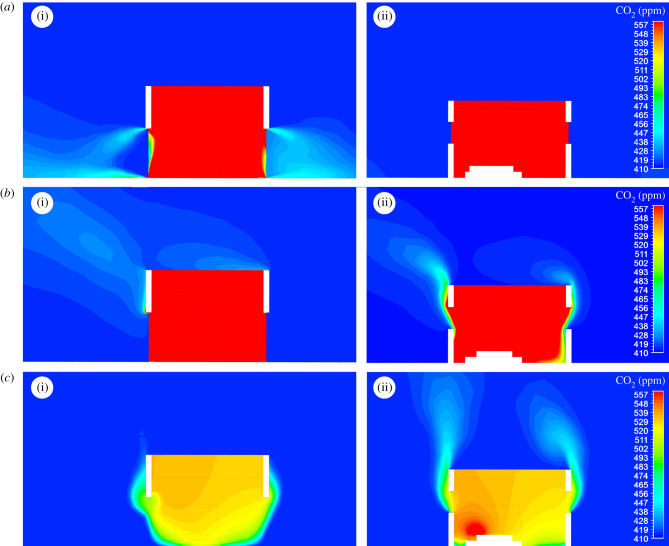
In sub-Saharan Africa, cooler houses would increase the coverage of insecticide-treated bednets, the primary malaria control tool. We examined whether improved ventilation, using windows screened with netting, cools houses at night and reduces malaria mosquito house entry in The Gambia. Identical houses were constructed, with badly fitting doors the only mosquito entry points. Two men slept in each house and mosquitoes captured using light traps. First, temperature and mosquito density were compared in four houses with 0, 1, 2 and 3 screened windows. Second, carbon dioxide (CO), a major mosquito attractant, was measured in houses with (i) no windows, (ii) screened windows and (iii) screened windows and screened doors. Computational fluid dynamic modelling captured the spatial movement of CO. Increasing ventilation made houses cooler, more comfortable and reduced malaria mosquito house entry; with three windows reducing mosquito densities by 95% (95%CI = 90-98%). Screened windows and doors reduced the indoor temperature by 0.6°C (95%CI = 0.5-0.7°C), indoor CO concentrations by 31% between 21.00 and 00.00 h and malaria mosquito entry by 76% (95%CI = 69-82%). Modelling shows screening reduces CO plumes from houses. Under our experimental conditions, cross-ventilation not only reduced indoor temperature, but reduced the density of house-entering malaria mosquitoes, by weakening CO plumes emanating from houses.
在撒哈拉以南非洲,较凉爽的房屋将增加经过杀虫剂处理的蚊帐的覆盖率,这是主要的疟疾控制工具。我们研究了在冈比亚,使用带有网眼的窗户改善通风是否可以在夜间使房屋降温,并减少疟蚊进入房屋。建造了完全相同的房屋,仅留有不严密的门作为蚊子进入的唯一途径。两个男人睡在每个房子里,并用诱蚊灯捕获蚊子。首先,在四个有 0、1、2 和 3 个带网眼窗户的房屋中比较了温度和蚊子密度。其次,在没有窗户(i),有带网眼窗户(ii)和有带网眼窗户和门的房屋(iii)中测量了二氧化碳(CO),CO 是一种主要的蚊子诱捕剂。计算流体动力学模型捕捉了 CO 的空间运动。增加通风可使房屋更凉爽、更舒适,并减少疟蚊进入房屋的数量;有三个窗户可将蚊子密度降低 95%(95%CI = 90-98%)。带网眼的窗户和门可使室内温度降低 0.6°C(95%CI = 0.5-0.7°C),21.00 点至 00.00 点之间的室内 CO 浓度降低 31%,疟疾蚊子进入减少 76%(95%CI = 69-82%)。模型显示,屏蔽可减少房屋中的 CO 羽流。在我们的实验条件下,交叉通风不仅降低了室内温度,而且通过削弱从房屋中散发出来的 CO 羽流,降低了进入房屋的疟蚊密度。