Department of Molecular Virology and Microbiology, Baylor College of Medicine, Houston, TX, USA.
Department of Infection Control and Immunology, Kitasato University, Tokyo, Japan.
Nat Protoc. 2022 Apr;17(4):1004-1027. doi: 10.1038/s41596-021-00669-0. Epub 2022 Feb 23.
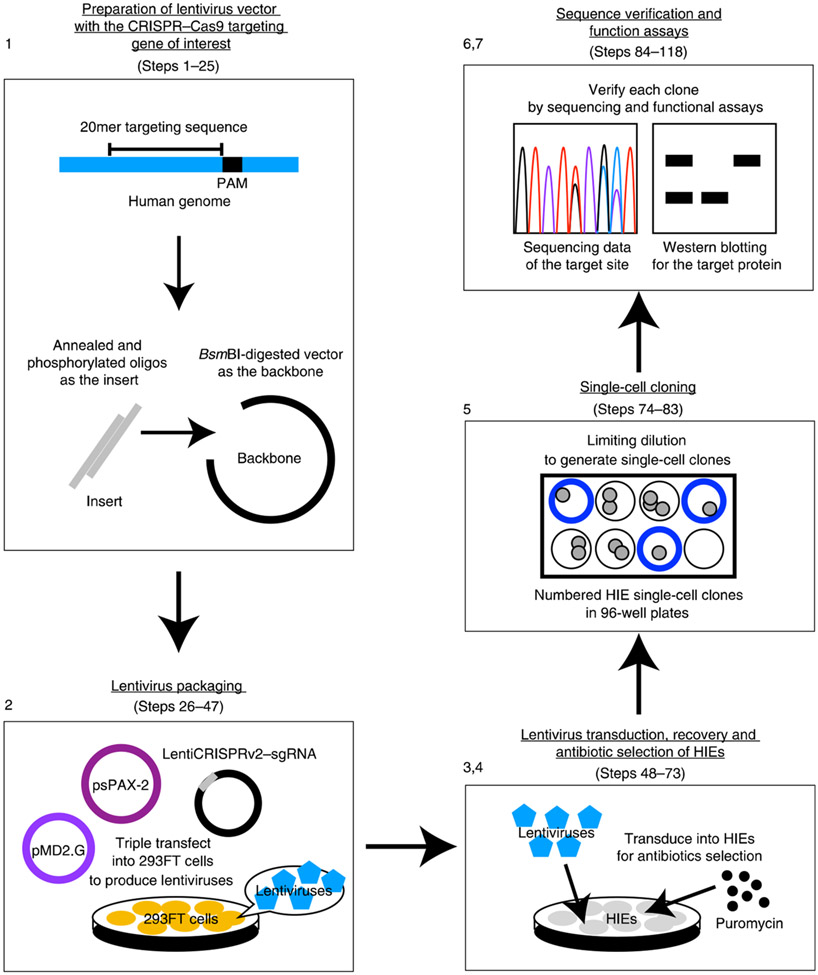
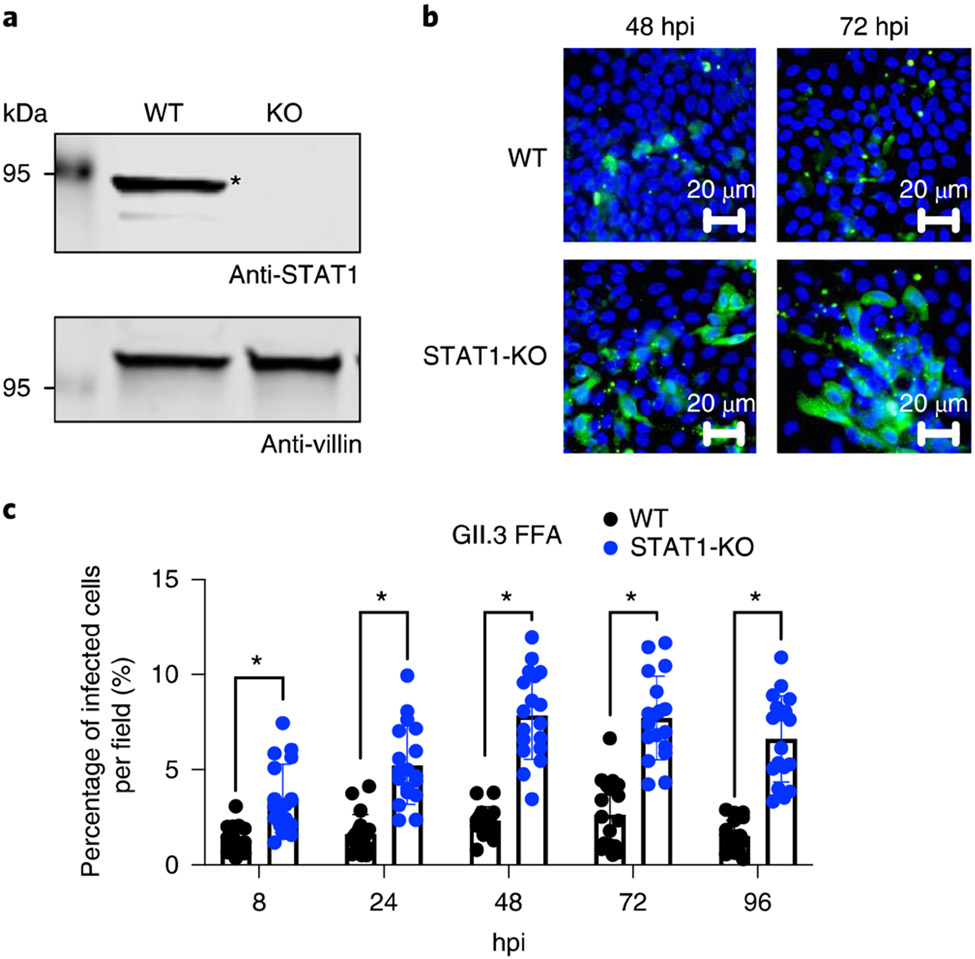
Human intestinal tissue-derived enteroids (HIEs; also called organoids) are a powerful ex vivo model for gastrointestinal research. Genetic modification of these nontransformed cultures allows new insights into gene function and biological processes involved in intestinal diseases as well as gastrointestinal and donor segment-specific function. Here we provide a detailed technical pipeline and protocol for using the CRISPR-Cas9 genome editing system to knock out a gene of interest specifically in HIEs by lentiviral transduction and single-cell cloning. This protocol differs from a previously published alternative using electroporation of human colonoids to deliver piggyback transposons or CRISPR-Cas9 constructs, as this protocol uses a modified, fused LentiCRISPRv2-small-guiding RNA to express Cas9 and small-guiding RNA in a lentivirus. The protocol also includes the steps of gene delivery and subsequent single-cell cloning of the knockout cells as well as verification of clones and sequence identification of the mutation sites to establish knockout clones. An overview flowchart, step-by-step guidelines and troubleshooting suggestions are provided to aid the researcher in obtaining the genetic knockout HIE line within 2-3 months. In this protocol, we further describe how to use HIEs as an ex vivo model to assess host restriction factors for viral replication (using human norovirus replication as an example) by knocking out host attachment factors or innate immunity genes. Other applications are discussed to broaden the utility of this system, for example, to generate knockin or conditional knockout HIE lines to investigate the function of essential genes in many biological processes including other types of organoids.
人肠组织来源的类器官(HIE;也称为类器官)是胃肠道研究的强大体外模型。对这些未转化培养物进行基因修饰可以深入了解基因功能和参与肠道疾病以及胃肠道和供体节段特异性功能的生物学过程。在这里,我们提供了一个详细的技术流程和方案,用于使用 CRISPR-Cas9 基因组编辑系统通过慢病毒转导和单细胞克隆特异性敲除 HIE 中的目的基因。该方案与先前使用电穿孔传递猪驮转座子或 CRISPR-Cas9 构建体的替代方案不同,因为该方案使用改良的融合 LentiCRISPRv2-small-guide RNA 在慢病毒中表达 Cas9 和 small-guide RNA。该方案还包括基因传递以及随后的敲除细胞的单细胞克隆以及克隆的验证和突变位点的序列鉴定,以建立敲除克隆。提供了概述流程图、逐步指南和故障排除建议,以帮助研究人员在 2-3 个月内获得遗传敲除 HIE 系。在本方案中,我们进一步描述了如何使用 HIE 作为体外模型,通过敲除宿主附着因子或先天免疫基因来评估宿主限制因子对病毒复制的限制(以人类诺如病毒复制为例)。讨论了其他应用,以扩大该系统的用途,例如生成敲入或条件敲除 HIE 系,以研究包括其他类型类器官在内的许多生物学过程中必需基因的功能。