Hubrecht Institute, Royal Netherlands Academy of Arts and Sciences (KNAW) and University Medical Center Utrecht, 3584 CT Utrecht, the Netherlands; Oncode Institute, Hubrecht Institute, 3584 CT Utrecht, the Netherlands.
Hubrecht Institute, Royal Netherlands Academy of Arts and Sciences (KNAW) and University Medical Center Utrecht, 3584 CT Utrecht, the Netherlands; Oncode Institute, Hubrecht Institute, 3584 CT Utrecht, the Netherlands.
Stem Cell Reports. 2021 Mar 9;16(3):412-418. doi: 10.1016/j.stemcr.2020.11.009.
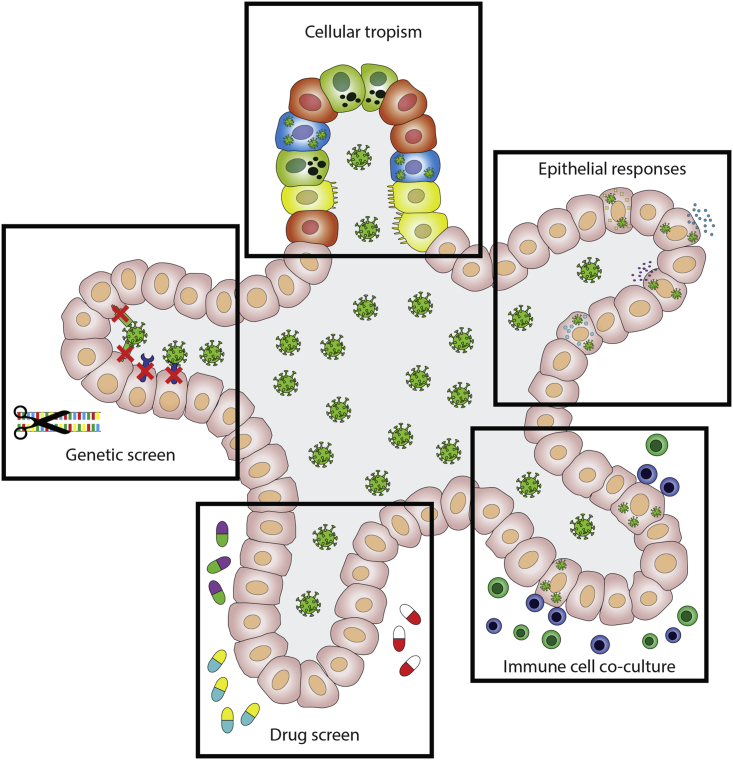
Many pathogenic viruses that affect man display species specificity, limiting the use of animal models. Studying viral biology and identifying potential treatments therefore benefits from the development of in vitro cell systems that closely mimic human physiology. In the current COVID-19 pandemic, rapid scientific insights are of the utmost importance to limit its impact on public health and society. Organoids are emerging as versatile tools to progress the understanding of SARS-CoV-2 biology and to aid in the quest for novel treatments.
许多影响人类的致病病毒具有物种特异性,这限制了动物模型的使用。因此,研究病毒生物学和确定潜在的治疗方法受益于开发体外细胞系统,这些系统可以很好地模拟人体生理学。在当前的 COVID-19 大流行中,快速的科学见解对于限制其对公共卫生和社会的影响至关重要。类器官正在成为推进对 SARS-CoV-2 生物学理解和帮助寻找新的治疗方法的多功能工具。