Dbeibia Amal, Taheur Fadia Ben, Altammar Khadijah A, Haddaji Najla, Mahdhi Abdelkarim, Amri Zahra, Mzoughi Ridha, Jabeur Chédia
Laboratory of Analysis, Treatment and Valorization of Environmental Pollutants and Products, Faculty of Pharmacy, Monastir University, Tunisia.
Department of Biology, College of Science, University of Hafr Al Batin, P. O. Box 1803, Hafr Al Batin 31991, Saudi Arabia.
Saudi J Biol Sci. 2022 Feb;29(2):1021-1028. doi: 10.1016/j.sjbs.2021.09.071. Epub 2021 Oct 1.
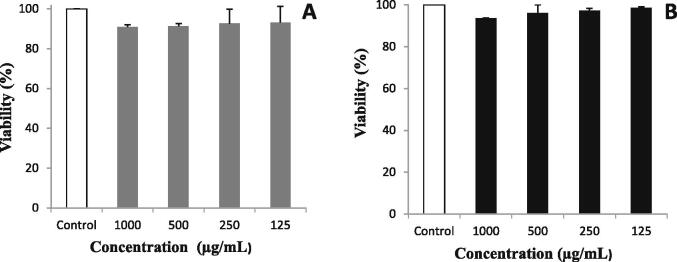
In the current study the potential use of aqueous and methanolic extracts of aerial parts as biological control agent against pathogenic bacteria and especially methicillin resistant isolated from auricular infections was evaluated. Chemical tests and spectrophotometric methods were used for screening and quantification of phytochemicals. The assessment of the antioxidant activity was accomplished by DPPH and ABTS radicals scavenging assays. Extracts were evaluated for their antibacterial efficacy by diffusion and microdilution methods. Biofilm inhibition was tested using XTT assay and the cytotoxicity of extracts was carried out on Vero cell line. The GC-FID analysis revealed that was rich in unsatured fatty acids. In addition, the aqueous extract had the highest flavonoid and protein contents (30.82 mg QE /g dry extract and 98.92 mg BSAE/g dry extract respectively). However, the methanolic extract had the highest phenolic, sugars and tannins. The antioxidant activity demonstrated that the aqueous extract exhibited the strong potency (IC50 ranged between 0.001 and 0.002 mg/mL). Both extracts displayed antimicrobial activity on Gram negative and positive strains. They were effective against isolated from auricular infections. The tested extracts were able to inhibit biofilm formation with concentration-dependent manner. Moreover, no cytotoxic effect on Vero cells line was demonstrated for the extracts. Overall, our findings highlight the potential use of extract as a novel source of bioactive molecules with antioxidant, antibacterial and antiobiofilm effects for the control of infectious disease especially those associated to methicillin resistant.
在本研究中,评估了地上部分的水提取物和甲醇提取物作为生物控制剂对抗病原菌,特别是从耳部感染中分离出的耐甲氧西林菌的潜在用途。采用化学试验和分光光度法对植物化学物质进行筛选和定量。通过DPPH和ABTS自由基清除试验完成抗氧化活性评估。采用扩散法和微量稀释法评估提取物的抗菌效果。使用XTT试验检测生物膜抑制情况,并在Vero细胞系上进行提取物的细胞毒性试验。气相色谱-火焰离子化检测器(GC-FID)分析表明,其富含不饱和脂肪酸。此外,水提取物的黄酮类化合物和蛋白质含量最高(分别为30.82 mg QE/g干提取物和98.92 mg BSAE/g干提取物)。然而,甲醇提取物的酚类、糖类和单宁含量最高。抗氧化活性表明,水提取物表现出较强的效力(IC50在0.001至0.002 mg/mL之间)。两种提取物对革兰氏阴性和阳性菌株均表现出抗菌活性。它们对从耳部感染中分离出的菌株有效。受试提取物能够以浓度依赖的方式抑制生物膜形成。此外,提取物对Vero细胞系未显示出细胞毒性作用。总体而言,我们的研究结果突出了该提取物作为一种新型生物活性分子来源的潜在用途,其具有抗氧化、抗菌和抗生物膜作用,可用于控制传染病,尤其是那些与耐甲氧西林菌相关的传染病。
需注意,原文中部分内容缺失具体所指物质,翻译时保留了原文的空缺表述。