Parente Luigi, Falvo Eugenia, Castagnetti Cristina, Grassi Francesca, Mancini Francesco, Rossi Paolo, Capra Alessandro
DIEF-Department of Engineering "Enzo Ferrari", University of Modena and Reggio Emilia, Via Pietro Vivarelli 10, 41125 Modena, Italy.
J Imaging. 2022 Jan 23;8(2):22. doi: 10.3390/jimaging8020022.
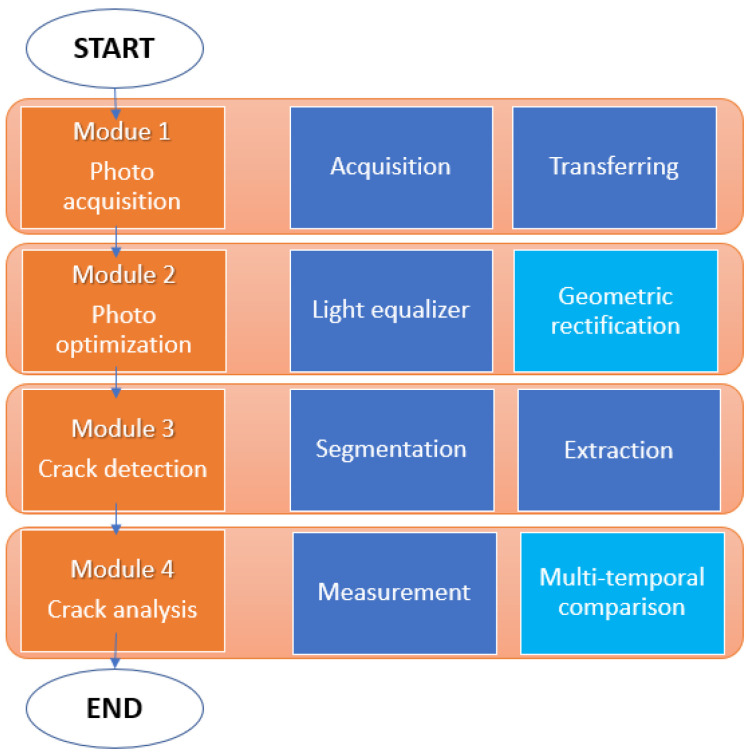
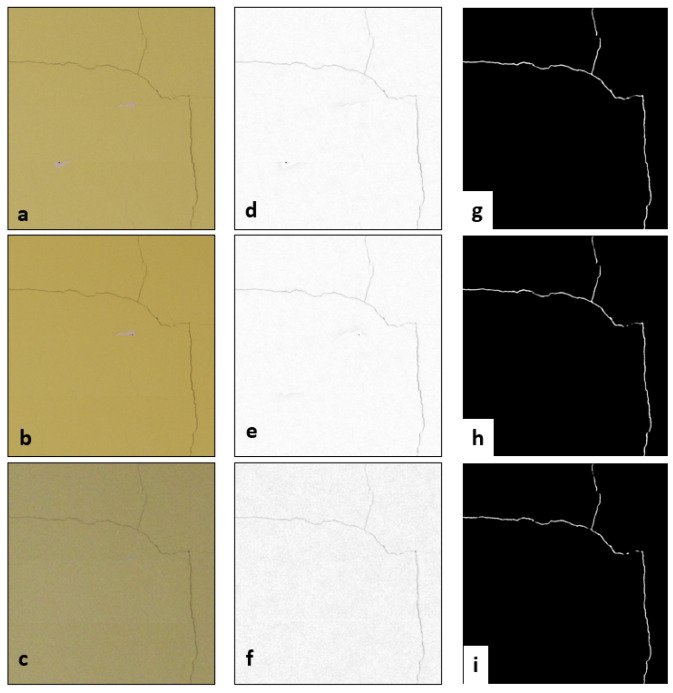
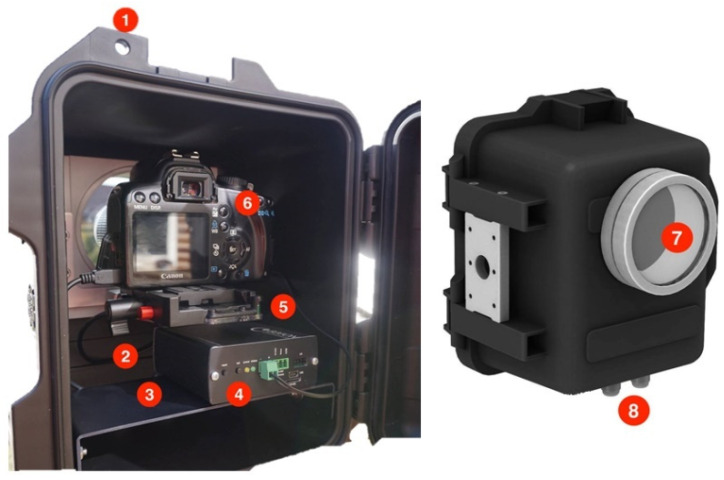
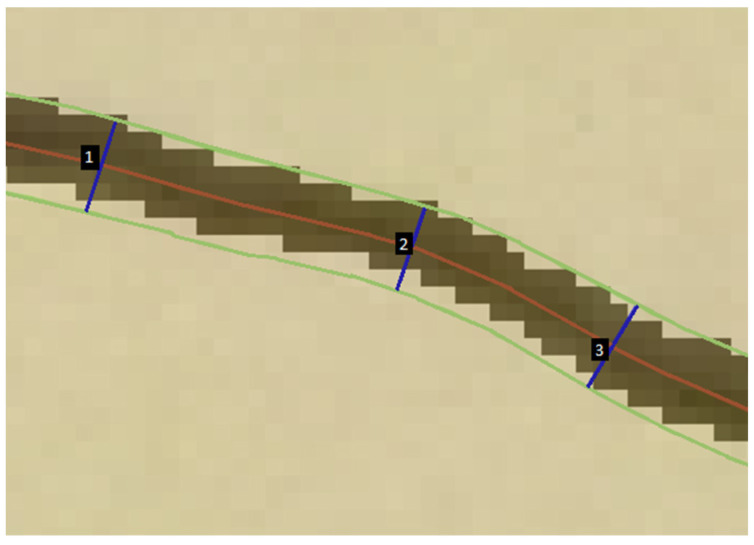
The proper inspection of a cracks pattern over time is a critical diagnosis step to provide a thorough knowledge of the health state of a structure. When monitoring cracks propagating on a planar surface, adopting a single-image-based approach is a more convenient (costly and logistically) solution compared to subjective operators-based solutions. Machine learning (ML)- based monitoring solutions offer the advantage of automation in crack detection; however, complex and time-consuming training must be carried out. This study presents a simple and automated ML-based crack monitoring approach implemented in open sources software that only requires a single image for training. The effectiveness of the approach is assessed conducting work in controlled and real case study sites. For both sites, the generated outputs are significant in terms of accuracy (~1 mm), repeatability (sub-mm) and precision (sub-pixel). The presented results highlight that the successful detection of cracks is achievable with only a straightforward ML-based training procedure conducted on only a single image of the multi-temporal sequence. Furthermore, the use of an innovative camera kit allowed exploiting automated acquisition and transmission fundamental for Internet of Things (IoTs) for structural health monitoring and to reduce user-based operations and increase safety.
随着时间的推移对裂缝模式进行恰当检查是全面了解结构健康状况的关键诊断步骤。在监测平面上裂缝扩展时,与基于人工操作的方法相比,采用基于单图像的方法是一种更便捷(成本更低且在后勤方面更可行)的解决方案。基于机器学习(ML)的监测解决方案在裂缝检测方面具有自动化优势;然而,必须进行复杂且耗时的训练。本研究提出了一种简单且自动化的基于ML的裂缝监测方法,该方法在开源软件中实现,只需要一张图像进行训练。通过在受控和实际案例研究地点开展工作来评估该方法的有效性。对于这两个地点,生成的结果在准确性(约1毫米)、可重复性(亚毫米级)和精度(亚像素级)方面都很显著。所呈现的结果表明,仅通过对多时间序列中的单张图像进行简单的基于ML的训练过程就能成功检测裂缝。此外,使用创新的相机套件有助于利用物联网(IoT)进行结构健康监测所需的自动采集和传输功能,减少基于用户的操作并提高安全性。