Department of Surgery, Medical University of South Carolina, Charleston, SC 29425, USA.
Cells. 2022 Feb 17;11(4):708. doi: 10.3390/cells11040708.
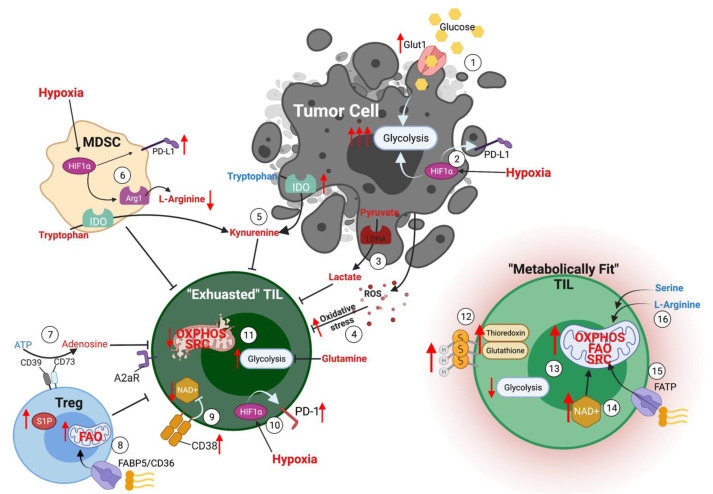
Despite rapid advances in the field of immunotherapy, the elimination of established tumors has not been achieved. Many promising new treatments such as adoptive cell therapy (ACT) fall short, primarily due to the loss of T cell effector function or the failure of long-term T cell persistence. With the availability of new tools and advancements in technology, our understanding of metabolic processes has increased enormously in the last decade. Redundancy in metabolic pathways and overlapping targets that could address the plasticity and heterogenous phenotypes of various T cell subsets have illuminated the need for understanding immunometabolism in the context of multiple disease states, including cancer immunology. Herein, we discuss the developing field of T cell immunometabolism and its crucial relevance to improving immunotherapeutic approaches. This in-depth review details the metabolic pathways and preferences of the antitumor immune system and the state of various metabolism-targeting therapeutic approaches.
尽管免疫疗法领域取得了快速进展,但尚未实现已建立的肿瘤的消除。许多有前途的新治疗方法,如过继细胞疗法(ACT),都失败了,主要是由于 T 细胞效应功能的丧失或长期 T 细胞持久性的失败。随着新工具的出现和技术的进步,我们在过去十年中对代谢过程的理解有了巨大的提高。代谢途径的冗余和重叠的靶点,可以解决各种 T 细胞亚群的可塑性和异质表型,这就需要在多种疾病状态下,包括癌症免疫学,理解免疫代谢。在此,我们讨论 T 细胞免疫代谢的发展领域及其对改善免疫治疗方法的关键相关性。这篇深入的综述详细介绍了抗肿瘤免疫系统的代谢途径和偏好,以及各种代谢靶向治疗方法的状态。