Faculté de Médecine, Université de Tours, 10, Boulevard Tonnellé, 37032 Tours, France.
Faculty of Bioengineering and Bioinformatics, Moscow State University, Leninskye Gory 73, 119992 Moscow, Russia.
Cells. 2022 Feb 17;11(4):704. doi: 10.3390/cells11040704.
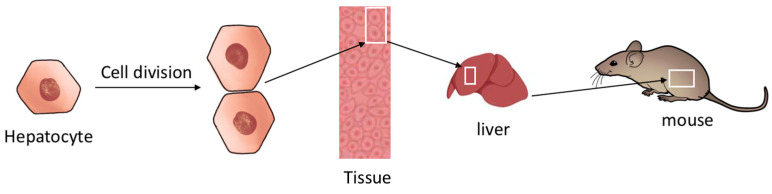
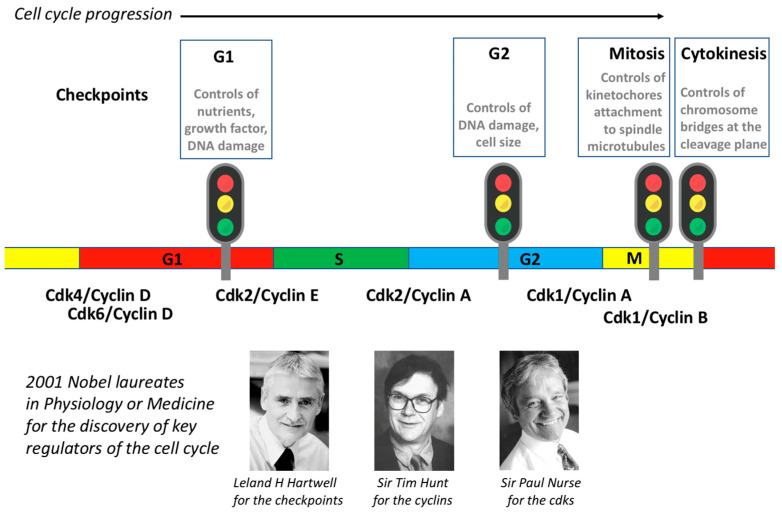
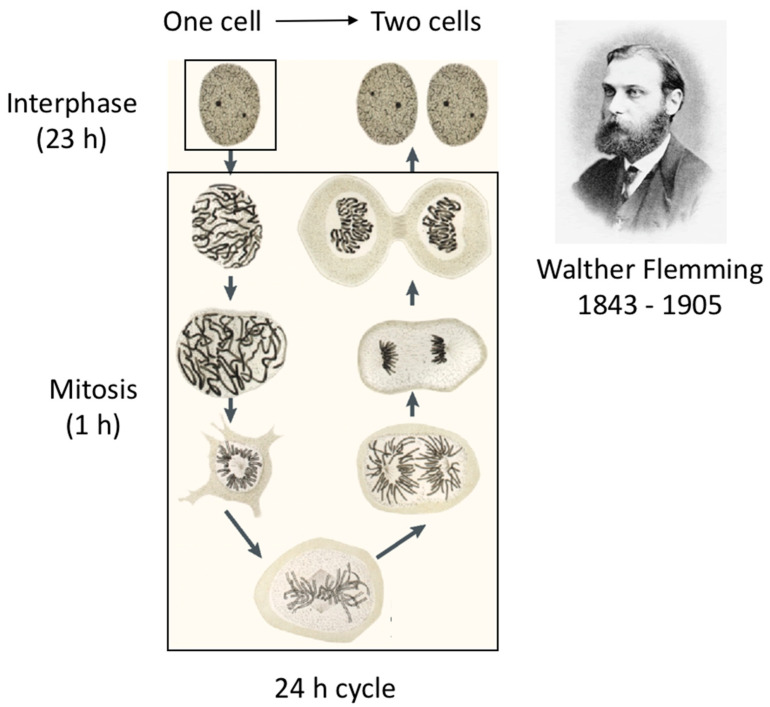
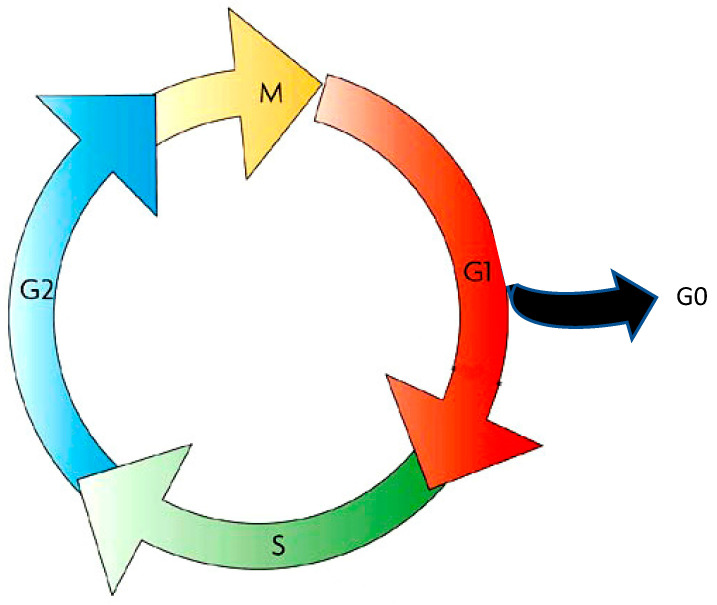
All living organisms on Earth are made up of cells, which are the functional unit of life. Eukaryotic organisms can consist of a single cell (unicellular) or a group of either identical or different cells (multicellular). Biologists have always been fascinated by how a single cell, such as an egg, can give rise to an entire organism, such as the human body, composed of billions of cells, including hundreds of different cell types. This is made possible by cell division, whereby a single cell divides to form two cells. During a symmetric cell division, a mother cell produces two daughter cells, while an asymmetric cell division results in a mother and a daughter cell that have different fates (different morphologies, cellular compositions, replicative potentials, and/or capacities to differentiate). In biology, the cell cycle refers to the sequence of events that a cell must go through in order to divide. These events, which always occur in the same order, define the different stages of the cell cycle: G1, S, G2, and M. What is fascinating about the cell cycle is its universality, and the main reason for this is that the genetic information of the cell is encoded by exactly the same molecular entity with exactly the same structure: the DNA double helix. Since both daughter cells always inherit their genetic information from their parent cell, the underlying fundamentals of the cell cycle-DNA replication and chromosome segregation-are shared by all organisms. This review goes back in time to provide a historical summary of the main discoveries that led to the current understanding of how cells divide and how cell division is regulated to remain highly reproducible.
地球上所有的生物都是由细胞组成的,细胞是生命的功能单位。真核生物可以由一个细胞(单细胞)或一组相同或不同的细胞(多细胞)组成。生物学家一直对一个单细胞(如卵子)如何能产生一个由数十亿个细胞组成的完整生物体(如人体)感到着迷,其中包括数百种不同的细胞类型。这是通过细胞分裂实现的,即一个细胞分裂形成两个细胞。在对称细胞分裂中,母细胞产生两个子细胞,而不对称细胞分裂则导致母细胞和子细胞具有不同的命运(不同的形态、细胞组成、复制潜力和/或分化能力)。在生物学中,细胞周期是指细胞必须经历的一系列事件,以便进行分裂。这些事件总是按照相同的顺序发生,定义了细胞周期的不同阶段:G1、S、G2 和 M。细胞周期令人着迷的是它的普遍性,而其主要原因是细胞的遗传信息是由完全相同的分子实体以完全相同的结构编码的:双螺旋 DNA。由于两个子细胞总是从其母细胞继承其遗传信息,因此细胞周期的基本原理——DNA 复制和染色体分离——被所有生物共享。这篇综述追溯历史,总结了导致当前对细胞分裂以及如何调节细胞分裂以保持高度可重复性的理解的主要发现。