Maraolo Alberto Enrico, Mazzitelli Maria, Zappulo Emanuela, Scotto Riccardo, Granata Guido, Andini Roberto, Durante-Mangoni Emanuele, Petrosillo Nicola, Gentile Ivan
First Division of Infectious Diseases, Cotugno Hospital, AORN Ospedali dei Colli, 80131 Naples, Italy.
Infectious and Tropical Diseases Unit, Department of Medical and Surgical Sciences, Magna Graecia University, 88100 Catanzaro, Italy.
Antibiotics (Basel). 2022 Jan 30;11(2):183. doi: 10.3390/antibiotics11020183.
infection (CDI) is associated with substantial morbidity and mortality as well as high propensity of recurrence. Systemic antibiotic therapy (SAT) represents the top inciting factor of CDI, both primary and recurrent (rCDI). Among the many strategies aimed to prevent CDI in high-risk subjects undergoing SAT, oral vancomycin prophylaxis (OVP) appears promising under a cost-effectiveness perspective.
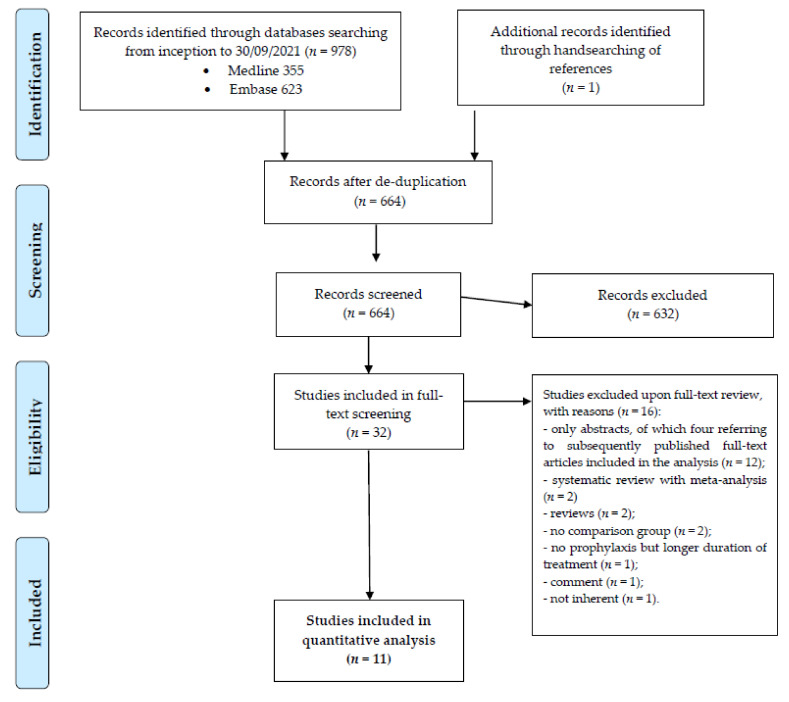
A systematic review with meta-analysis and trial sequential analysis (TSA) of studies assessing the efficacy and the safety of OVP to prevent primary CDI and rCDI in persons undergoing SAT was carried out. PubMed and EMBASE were searched until 30 September 2021. The protocol was pre-registered on PROSPERO (CRD42019145543).
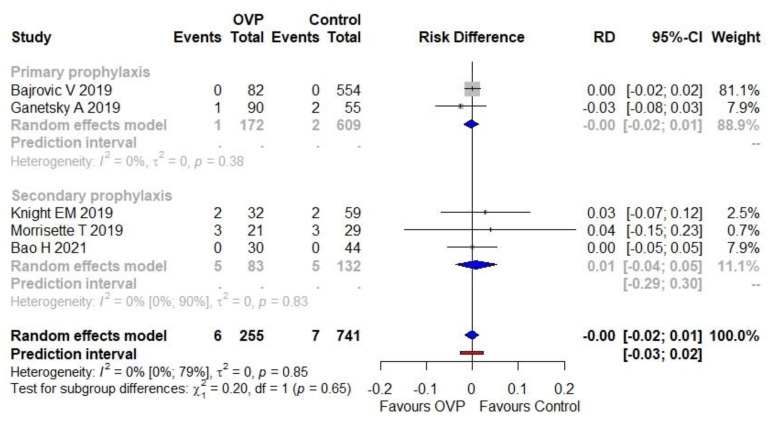
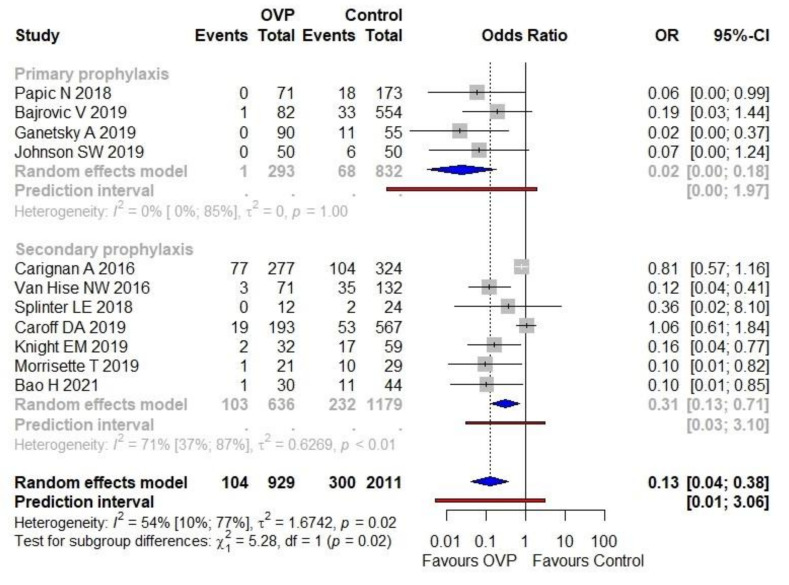
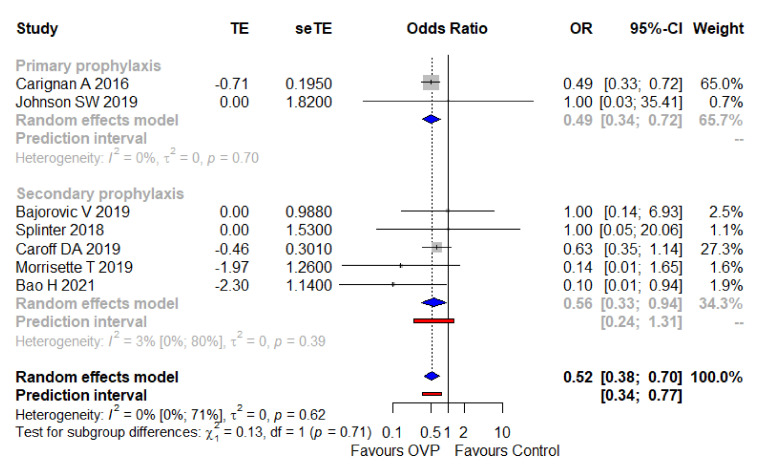
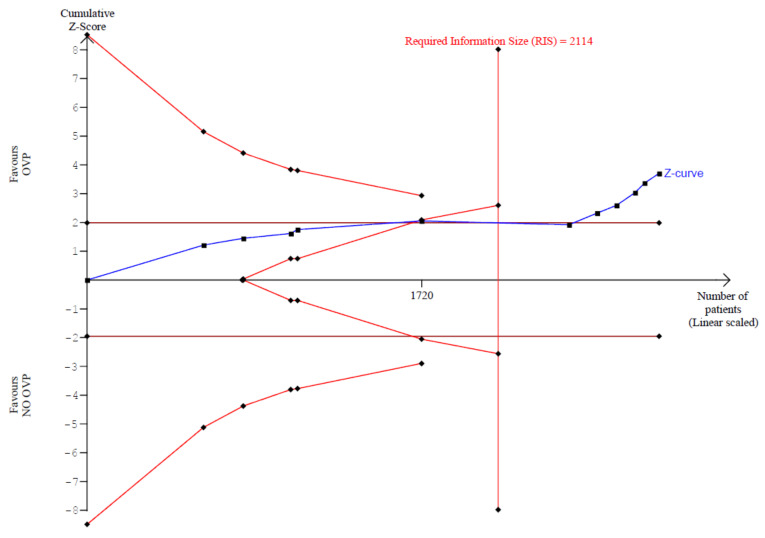
Eleven studies met the inclusion criteria, only one being a randomized controlled trial (RCT). Overall, 929 subjects received OVP and 2011 represented the comparator group (no active prophylaxis). OVP exerted a strong protective effect for CDI occurrence: odds ratio 0.14, 95% confidence interval 0.04-0.38. Moderate heterogeneity was observed: I 54%. This effect was confirmed throughout several subgroup analyses, including prevention of primary CDI versus rCDI. TSA results pointed at the conclusive nature of the evidence. Results were robust to a variety of sensitivity and quantitative bias analyses, although the underlying evidence was deemed as low quality. No differences between the two groups were highlighted regarding the onset of vancomycin-resistant infections.
OVP appears to be an efficacious option for prevention of CDI in high-risk subjects undergoing SAT. Nevertheless, additional data from RCTs are needed to establish OVP as good clinical practice and define optimal dosage and duration.
艰难梭菌感染(CDI)与严重的发病率和死亡率以及高复发倾向相关。全身抗生素治疗(SAT)是CDI(包括原发性和复发性CDI[rCDI])的首要诱发因素。在旨在预防接受SAT的高危人群发生CDI的众多策略中,从成本效益角度来看,口服万古霉素预防(OVP)似乎很有前景。
对评估OVP预防接受SAT的人群原发性CDI和rCDI的疗效和安全性的研究进行了系统评价,并进行荟萃分析和试验序贯分析(TSA)。检索了截至2021年9月30日的PubMed和EMBASE。该方案已在PROSPERO(CRD42019145543)上预先注册。
11项研究符合纳入标准,只有1项是随机对照试验(RCT)。总体而言,929名受试者接受了OVP,2011名作为对照组(未进行积极预防)。OVP对CDI的发生具有很强的保护作用:比值比为0.14,95%置信区间为0.04-0.38。观察到中度异质性:I²为54%。在包括预防原发性CDI与rCDI在内的多项亚组分析中均证实了这一效应。TSA结果表明证据具有决定性。尽管基础证据被认为质量较低,但结果在各种敏感性和定量偏倚分析中均很稳健。两组在耐万古霉素感染的发生方面未发现差异。
对于接受SAT的高危人群,OVP似乎是预防CDI的有效选择。然而,需要来自RCT的更多数据,以将OVP确立为良好的临床实践,并确定最佳剂量和疗程。