Zhang Zijun, Cao Kai, Liu Jiamin, Wei Zhenyu, Xu Xizhan, Liang Qingfeng
Beijing Institute of Ophthalmology, Beijing Tongren Eye Center, Beijing Tongren Hospital, Capital Medical University, Beijing Key Laboratory of Ophthalmology and Visual Sciences, Beijing 100005, China.
Antibiotics (Basel). 2022 Feb 12;11(2):238. doi: 10.3390/antibiotics11020238.
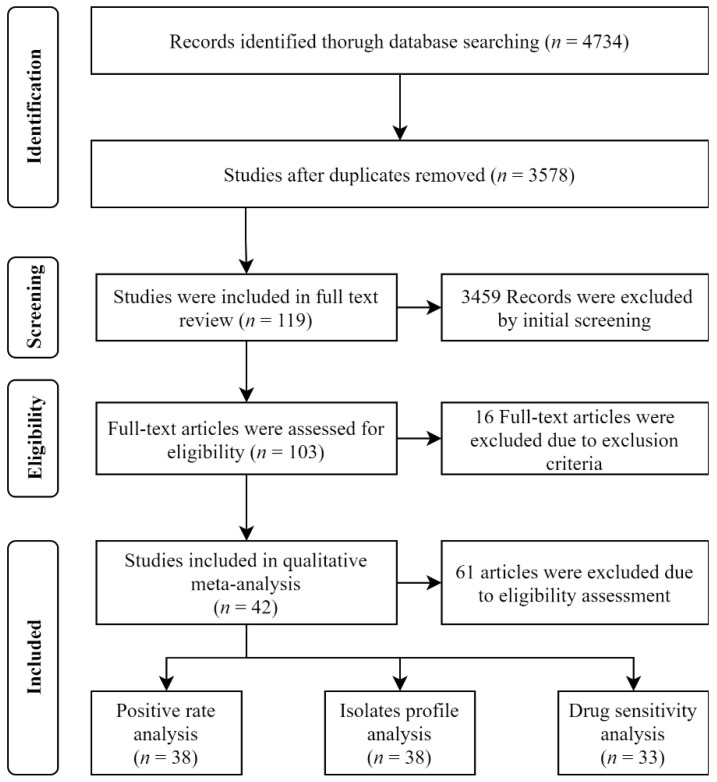
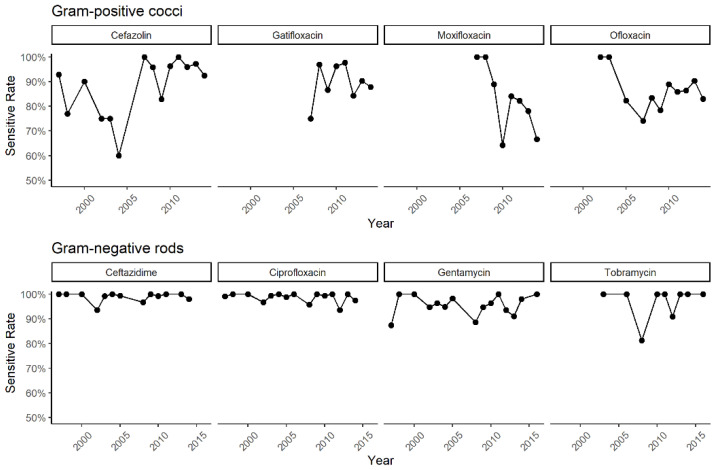
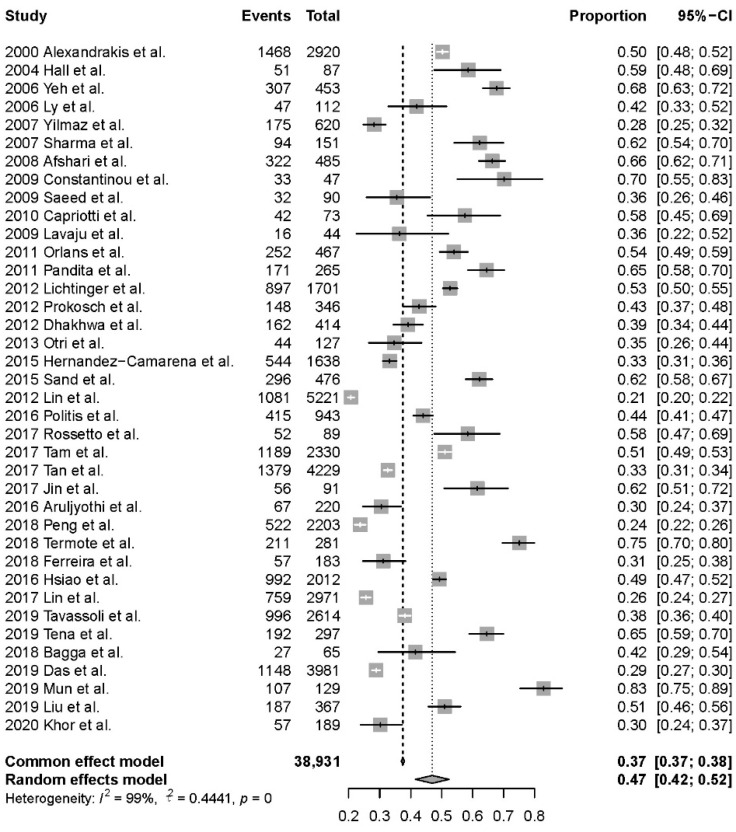
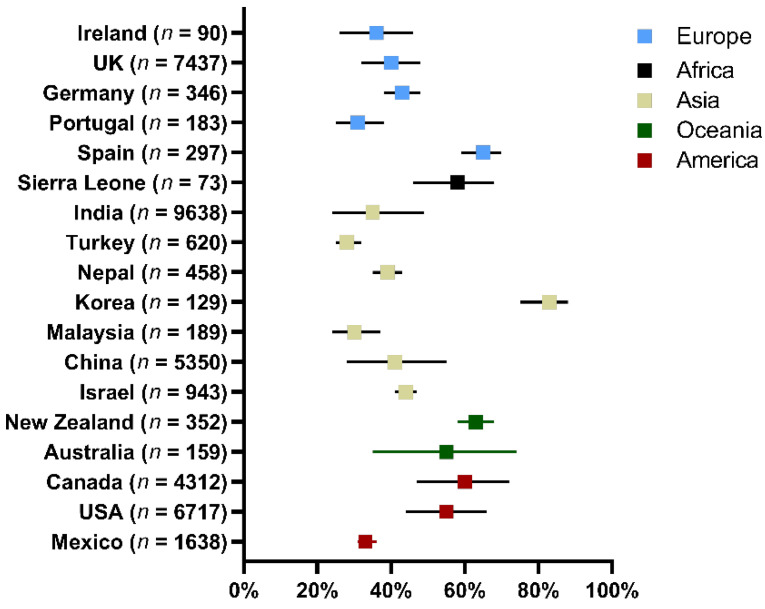
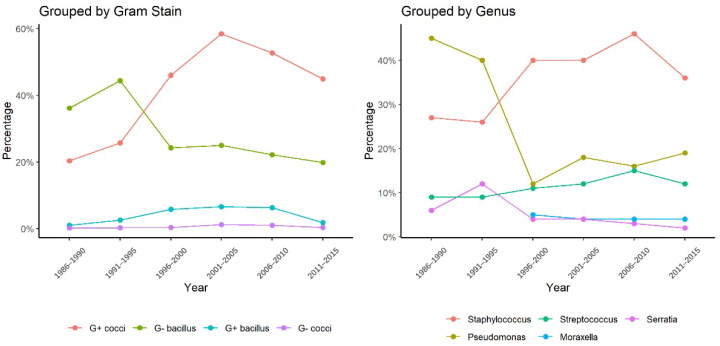
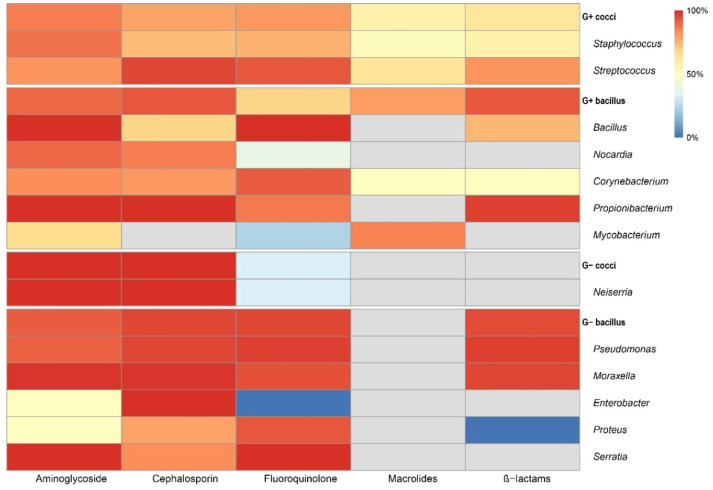
Bacterial keratitis (BK) is the most common type of infectious keratitis. The spectrum of pathogenic bacteria and their susceptibility to antibiotics varied with the different regions. A meta-analysis was conducted to review the global culture rate, distribution, current trends, and drug susceptibility of isolates from BK over the past 20 years (2000-2020). Four databases were searched, and published date was limited between 2000 and 2020. Main key words were "bacterial keratitis", "culture results" and "drug resistance". Forty-two studies from twenty-one countries (35 cities) were included for meta-analysis. The overall positive culture rate was 47% (95%CI, 42-52%). Gram-positive cocci were the major type of bacteria (62%), followed by Gram-negative bacilli (30%), Gram-positive bacilli (5%), and Gram-negative cocci (5%). spp. (41.4%), spp. (17.0%), spp. (13.1%), spp. (6.6%) and spp. (4.1%) were the most common bacterial organism. The antibiotic resistance pattern analysis revealed that most Gram-positive cocci were susceptive to aminoglycoside (86%), followed by fluoroquinolone (81%) and cephalosporin (79%). Gram-negative bacilli were most sensitive to cephalosporin (96%) and fluoroquinolones (96%), followed by aminoglycoside (92%). In Gram-positive cocci, the susceptibility trends of fluoroquinolones were decreasing since 2010. Clinics should pay attention to the changing trends of pathogen distribution and their drug resistance pattern and should diagnose and choose sensitive antibiotics based on local data.
细菌性角膜炎(BK)是最常见的感染性角膜炎类型。致病细菌的种类及其对抗生素的敏感性因地区而异。进行了一项荟萃分析,以回顾过去20年(2000 - 2020年)全球细菌性角膜炎分离株的培养率、分布、当前趋势和药敏情况。检索了四个数据库,发表日期限制在2000年至2020年之间。主要关键词为“细菌性角膜炎”、“培养结果”和“耐药性”。纳入了来自21个国家(35个城市)的42项研究进行荟萃分析。总体阳性培养率为47%(95%CI,42 - 52%)。革兰氏阳性球菌是主要的细菌类型(62%),其次是革兰氏阴性杆菌(30%)、革兰氏阳性杆菌(5%)和革兰氏阴性球菌(5%)。肺炎链球菌(41.4%)、金黄色葡萄球菌(17.0%)、表皮葡萄球菌(13.1%)、铜绿假单胞菌(6.6%)和凝固酶阴性葡萄球菌(4.1%)是最常见的细菌种类。抗生素耐药模式分析显示,大多数革兰氏阳性球菌对氨基糖苷类敏感(86%),其次是氟喹诺酮类(81%)和头孢菌素类(79%)。革兰氏阴性杆菌对头孢菌素类(96%)和氟喹诺酮类(96%)最敏感,其次是氨基糖苷类(92%)。在革兰氏阳性球菌中,自2010年以来氟喹诺酮类的敏感性呈下降趋势。临床应关注病原体分布及其耐药模式的变化趋势,并应根据当地数据进行诊断和选择敏感抗生素。