Brueggemann Petra, Mebus Wilhelm, Boecking Benjamin, Amarjargal Nyamaa, Niemann Uli, Spiliopoulou Myra, Dobel Christian, Rose Matthias, Mazurek Birgit
Tinnitus Center, Charité-Universitätsmedizin Berlin, Freie Universität Berlin and Humboldt-Universität zu Berlin, 10117 Berlin, Germany.
Knowledge Management & Discovery Lab, Faculty of Computer Science, Otto von Guericke University, 39106 Magdeburg, Germany.
Brain Sci. 2022 Feb 16;12(2):275. doi: 10.3390/brainsci12020275.
(1) To determine which psychosocial aspects predict tinnitus-related distress in a large self-reported dataset of patients with chronic tinnitus, and (2) to identify underlying constructs by means of factor analysis.
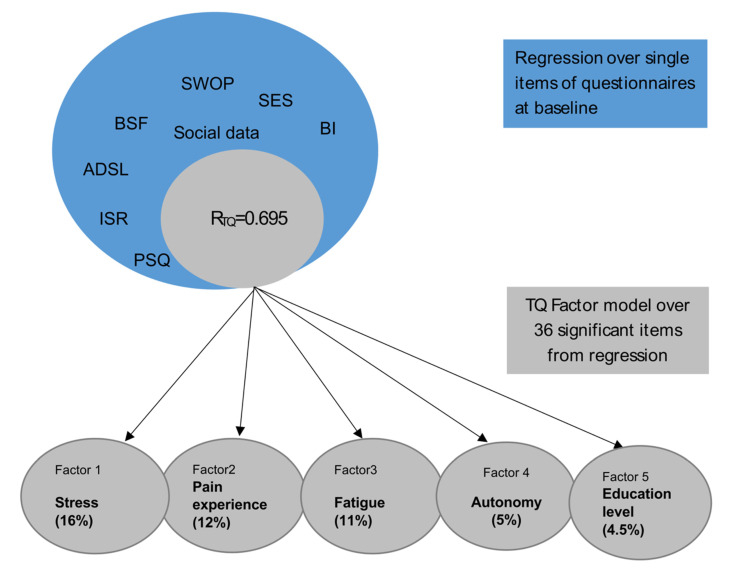
A cohort of 1958 patients of the Charité Tinnitus Center, Berlin completed a large questionnaire battery that comprised sociodemographic data, tinnitus-related distress, general psychological stress experience, emotional symptoms, and somatic complaints. To identify a construct of "tinnitus-related distress", significant predictive items were grouped using factor analysis.
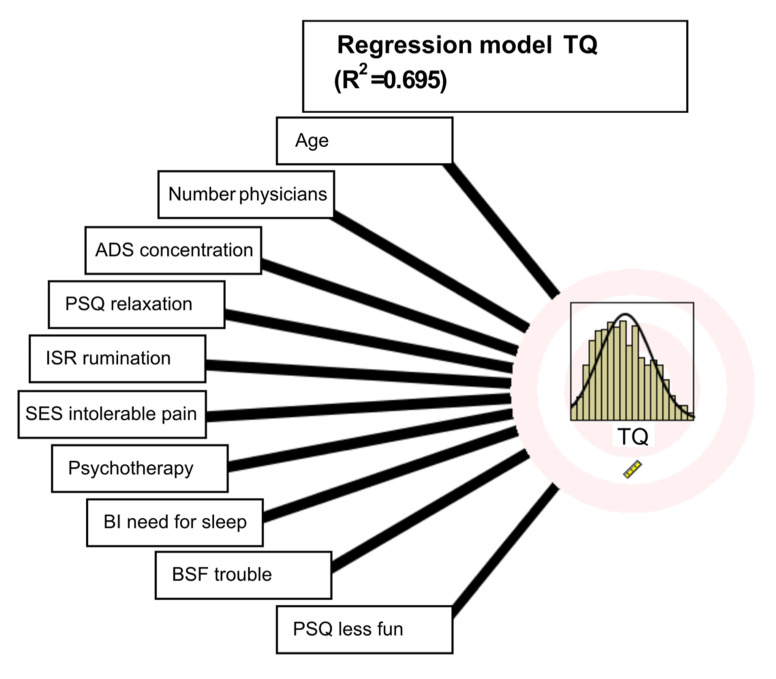
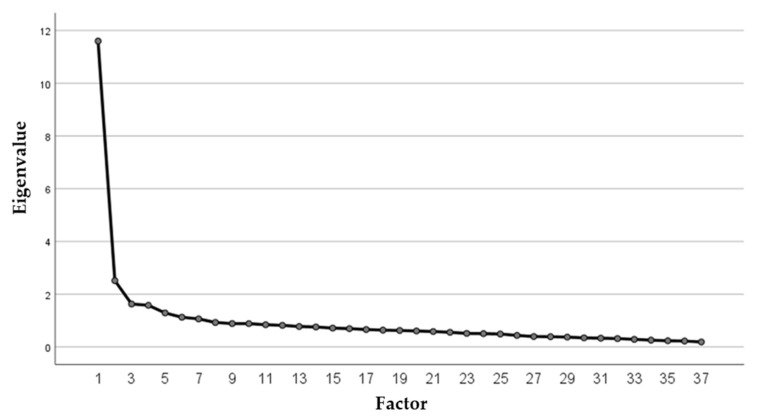
For the prediction of tinnitus-related distress (linear regression model with R = 0.7), depressive fatigue symptoms (concentration, sleep, rumination, joy decreased), the experience of emotional strain, somatization tendencies (pain experience, doctor contacts), and age appeared to play a role. The factor analysis revealed five factors: "stress", "pain experience", "fatigue", "autonomy", and low "educational level".
Tinnitus-related distress is predicted by psychological and sociodemographic indices. Relevant factors seem to be depressive exhaustion with somatic expressions such as sleep and concentration problems, somatization, general psychological stress, and reduced activity, in addition to higher age.
(1)在一个大型慢性耳鸣患者自我报告数据集中,确定哪些心理社会因素可预测耳鸣相关困扰;(2)通过因子分析识别潜在结构。
柏林夏里特耳鸣中心的1958名患者完成了一套大型问卷,内容包括社会人口统计学数据、耳鸣相关困扰、一般心理压力体验、情绪症状和躯体不适。为识别“耳鸣相关困扰”的结构,使用因子分析对显著预测项目进行分组。
对于耳鸣相关困扰的预测(线性回归模型,R = 0.7),抑郁性疲劳症状(注意力、睡眠、反复思考、愉悦感下降)、情绪紧张体验、躯体化倾向(疼痛体验、就医次数)和年龄似乎起到了作用。因子分析揭示了五个因素:“压力”、“疼痛体验”、“疲劳”、“自主性”和低“教育水平”。
耳鸣相关困扰可由心理和社会人口统计学指标预测。除年龄较大外,相关因素似乎还有伴有睡眠和注意力问题等躯体表现形式的抑郁性疲惫、躯体化、一般心理压力和活动减少。