Reddy Narsa M, Tamatam Chandra Mohan, Aparna Ankireddy, Reddy Sekhar P
Department of Pediatrics, College of Medicine, The University of Illinois Chicago, Chicago, IL 60612, USA.
Department of Pathology, The University of Illinois Chicago, Chicago, IL 60612, USA.
Antioxidants (Basel). 2022 Jan 22;11(2):212. doi: 10.3390/antiox11020212.
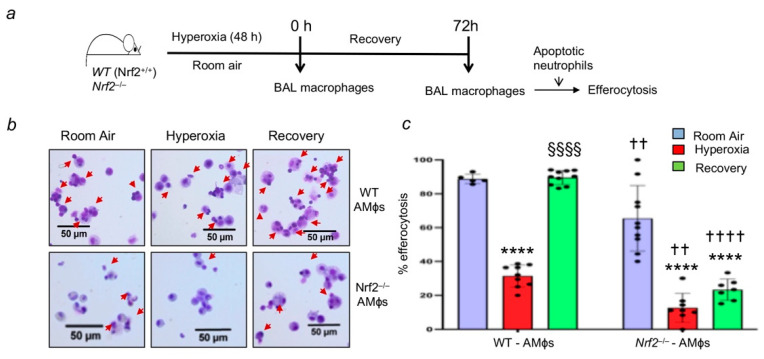
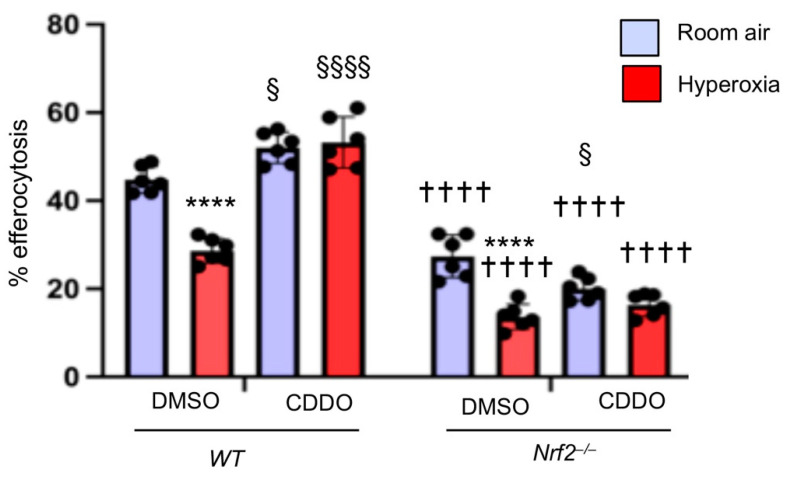
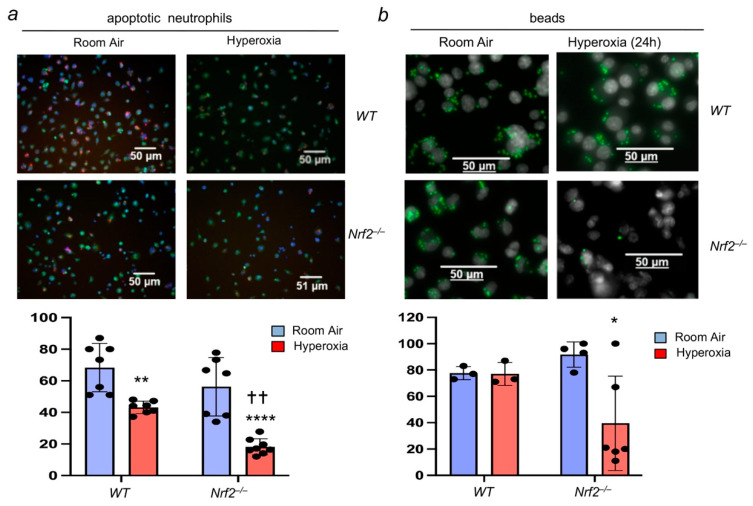
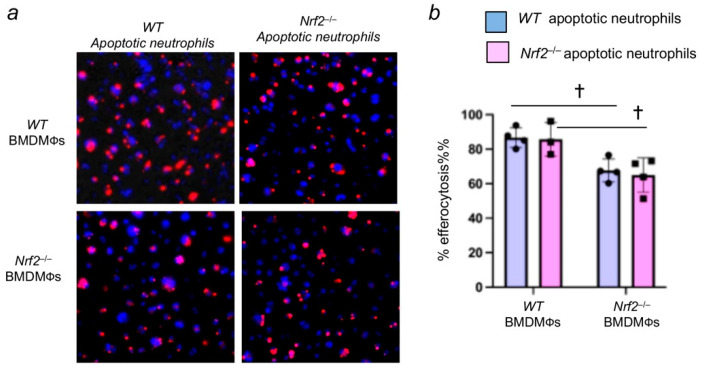
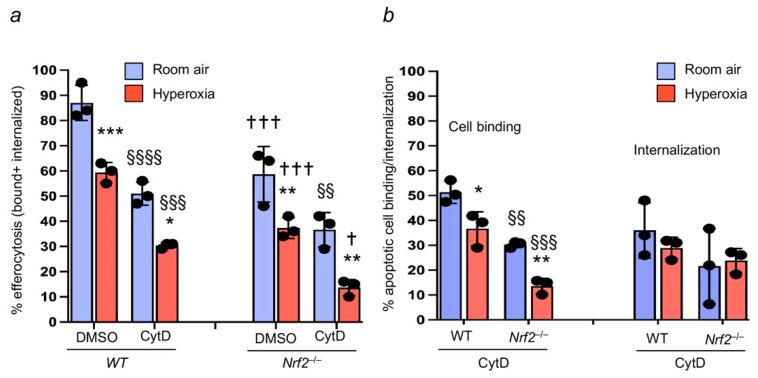
Recognition and clearance of apoptotic cells by phagocytes (also known as efferocytosis), primarily mediated by macrophages, are essential to terminate lung inflammatory responses and promote tissue repair after injury. The Nrf2 transcription factor is crucial for cytoprotection and host defense. Previously, we showed sustained neutrophilic lung inflammation in Nrf2-deficient () mice after hyperoxia-induced lung injury in vivo, but the mechanisms underlying this abnormal phenotype remain unclear. To examine whether Nrf2 regulates apoptotic neutrophil clearance, we used the alveolar macrophages (AMФs) and bone-marrow-derived macrophages (BMDMФs) of wild-type (WT) and mice. We found that the efferocytic ability of AMФ was impaired in hyperoxia-exposed mice's lungs, but the effect was more pronounced in mice. Importantly, AMФ-mediated efferocytosis remained impaired in mice recovering from injury but was restored to the basal state in the wild-type counterparts. Hyperoxia affected apoptotic neutrophil binding, not internalization, in both WT and BMDMФs, but the effect was more significant in the latter cells. Augmenting Nrf2 activity restored hyperoxia attenuated efferocytosis in WT, but not in macrophages. However, the loss of Nrf2 in neutrophils affected their uptake by WT macrophages. Collectively, these results demonstrate that Nrf2 is required for optimal macrophage-mediated efferocytosis and that activating Nrf2 may provide a physiological way to accelerate apoptotic cell clearance after oxidant injury.
吞噬细胞对凋亡细胞的识别与清除(也称为胞葬作用)主要由巨噬细胞介导,对于终止肺部炎症反应及促进损伤后的组织修复至关重要。Nrf2转录因子对细胞保护和宿主防御至关重要。此前,我们发现体内高氧诱导肺损伤后,Nrf2基因敲除()小鼠会出现持续性嗜中性粒细胞性肺部炎症,但这种异常表型背后的机制仍不清楚。为了研究Nrf2是否调节凋亡中性粒细胞的清除,我们使用了野生型(WT)和小鼠的肺泡巨噬细胞(AMФs)及骨髓来源的巨噬细胞(BMDMФs)。我们发现,暴露于高氧环境的小鼠肺中AMФ的胞葬能力受损,但在小鼠中这种影响更为明显。重要的是,在从损伤中恢复的小鼠中,AMФ介导的胞葬作用仍然受损,但在野生型小鼠中恢复到了基础状态。高氧影响WT和BMDMФs中凋亡中性粒细胞的结合而非内化,但在后者细胞中这种影响更为显著。增强Nrf2活性可恢复高氧减弱的WT巨噬细胞胞葬作用,但不能恢复巨噬细胞的胞葬作用。然而,中性粒细胞中Nrf2的缺失影响了WT巨噬细胞对它们的摄取。总的来说,这些结果表明Nrf2是最佳巨噬细胞介导的胞葬作用所必需的,并且激活Nrf2可能提供一种生理途径来加速氧化损伤后凋亡细胞的清除。