Azemi Ahmad Khusairi, Nordin Muhammad Luqman, Hambali Kamarul Ariffin, Noralidin Nur Amalina, Mokhtar Siti Safiah, Rasool Aida Hanum Ghulam
Department of Pharmacology, School of Medical Sciences, Universiti Sains Malaysia (Health Campus), Kota Bharu 16150, Kelantan, Malaysia.
Department of Veterinary Clinical Studies, Faculty of Veterinary Medicine, Universiti Malaysia Kelantan, Pengkalan Chepa, Kota Bharu 16100, Kelantan, Malaysia.
Antioxidants (Basel). 2022 Feb 21;11(2):431. doi: 10.3390/antiox11020431.
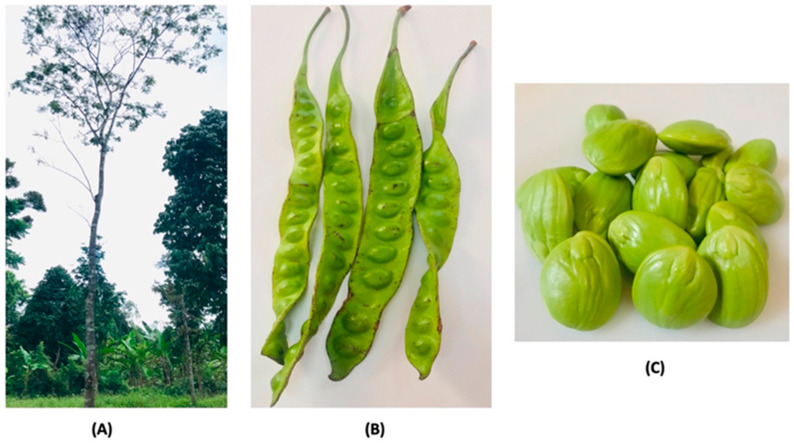
Diabetes mellitus (DM) is a metabolic disorder characterized by hyperglycemia and is considered a major health problem in the world. It is associated with endothelial dysfunction which causes progressive vascular damage. DM is a known risk factor for atherosclerosis and cardiovascular complications such as peripheral artery disease, coronary artery disease, and stroke. Medicinal plants may act as an alternative resource or adjunctive treatment option in the treatment of diabetes and its cardiovascular complications. (Fabaceae) is a plant found abundantly in the Southeast Asian region. Its seeds, with or without pods, and roots have long been used as a traditional medicine in this region to treat hypertension and diabetes. Studies have shown its numerous beneficial pharmacological properties. Extracts of , particularly from its seeds and empty pods, show the presence of polyphenols. They also exhibit potent antioxidant, hypoglycemic, anti-inflammatory, and antihypertensive properties. Its hypoglycemic properties are reported to be associated with the presence of β-sitosterol, stigmasterol, and stigmat-4-en-3-one. The current review aimed to provide an overview of the current status of , its pharmacological potential, and its phytochemical content in attenuating diabetic vasculopathy. Glycemic status, oxidative stress, inflammation, and hyperlipidemia are known to play pivotal roles in the initiation and severity of diabetic cardiovascular diseases; thus, targeting these factors might be beneficial for preventing and/or treating diabetic vasculopathy.
糖尿病(DM)是一种以高血糖为特征的代谢紊乱疾病,被认为是全球主要的健康问题。它与内皮功能障碍有关,内皮功能障碍会导致进行性血管损伤。糖尿病是动脉粥样硬化和心血管并发症(如外周动脉疾病、冠状动脉疾病和中风)的已知危险因素。药用植物可能作为治疗糖尿病及其心血管并发症的替代资源或辅助治疗选择。(豆科)是一种在东南亚地区大量发现的植物。其种子(带荚或不带荚)和根长期以来在该地区被用作治疗高血压和糖尿病的传统药物。研究表明它具有许多有益的药理特性。(该植物名称未给出英文)的提取物,特别是其种子和空荚的提取物,含有多酚。它们还具有强大的抗氧化、降血糖、抗炎和降压特性。据报道,其降血糖特性与β-谷甾醇、豆甾醇和豆甾-4-烯-3-酮的存在有关。本综述旨在概述(该植物名称未给出英文)的现状、其药理潜力以及其在减轻糖尿病血管病变方面的植物化学成分。已知血糖状态、氧化应激、炎症和高脂血症在糖尿病心血管疾病的发生和严重程度中起关键作用;因此,针对这些因素可能有助于预防和/或治疗糖尿病血管病变。