Center for Computational Systems Medicine, School of Biomedical Informatics, University of Texas Health Science Center, Houston, TX 77030, USA.
West China Biomedical Big Data Center, West China Hospital, Sichuan University, Chengdu 610041, China.
Biomolecules. 2022 Jan 24;12(2):196. doi: 10.3390/biom12020196.
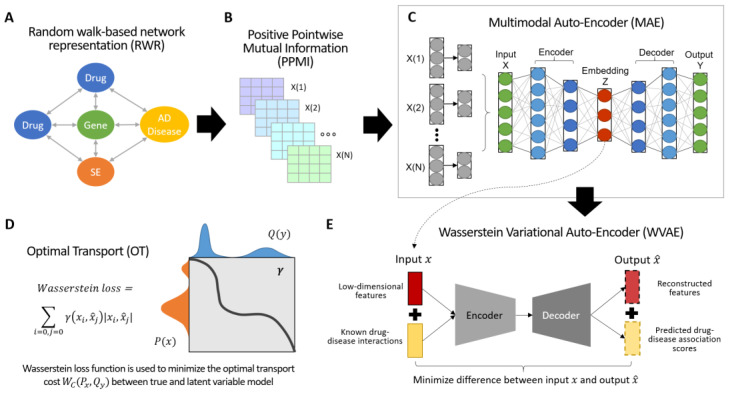
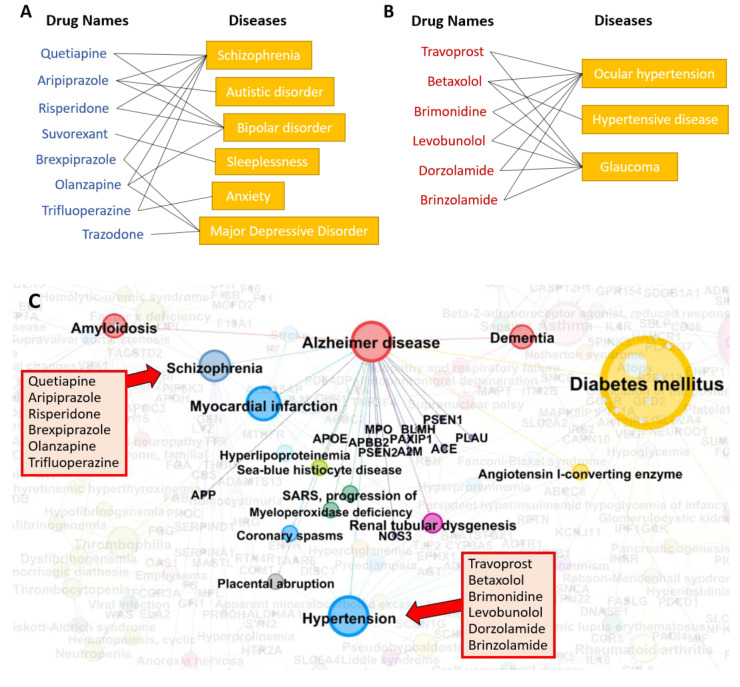
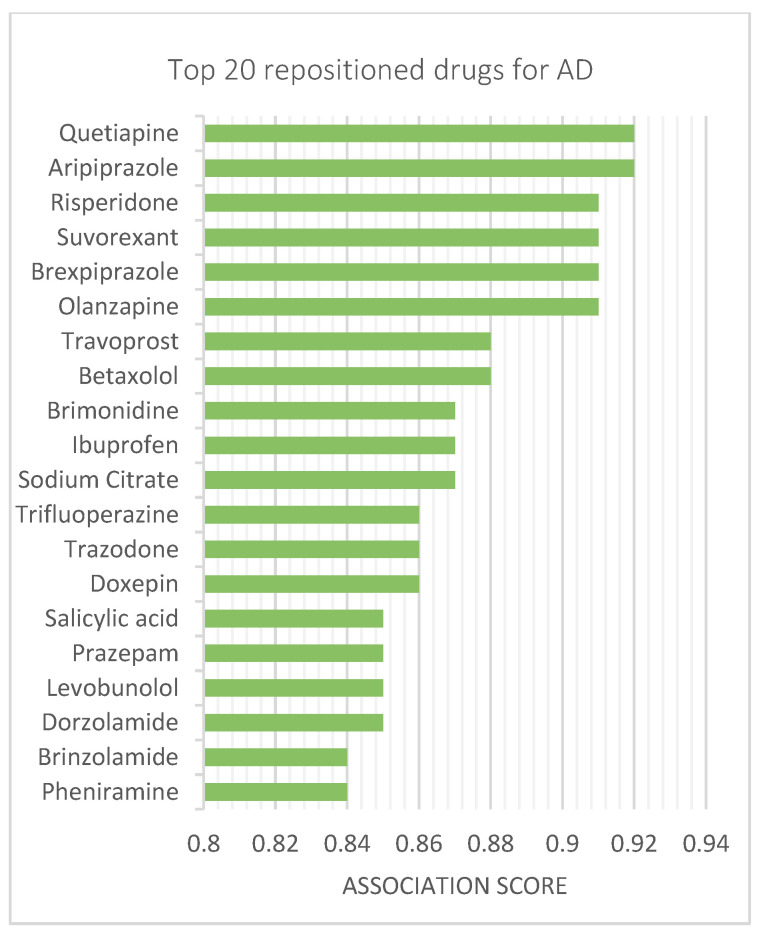
Alzheimer's disease (AD) is the leading cause of age-related dementia, affecting over 5 million people in the United States and incurring a substantial global healthcare cost. Unfortunately, current treatments are only palliative and do not cure AD. There is an urgent need to develop novel anti-AD therapies; however, drug discovery is a time-consuming, expensive, and high-risk process. Drug repositioning, on the other hand, is an attractive approach to identify drugs for AD treatment. Thus, we developed a novel deep learning method called DOTA (Drug repositioning approach using Optimal Transport for Alzheimer's disease) to repurpose effective FDA-approved drugs for AD. Specifically, DOTA consists of two major autoencoders: (1) a multi-modal autoencoder to integrate heterogeneous drug information and (2) a Wasserstein variational autoencoder to identify effective AD drugs. Using our approach, we predict that antipsychotic drugs with circadian effects, such as quetiapine, aripiprazole, risperidone, suvorexant, brexpiprazole, olanzapine, and trazadone, will have efficacious effects in AD patients. These drugs target important brain receptors involved in memory, learning, and cognition, including serotonin 5-HT2A, dopamine D2, and orexin receptors. In summary, DOTA repositions promising drugs that target important biological pathways and are predicted to improve patient cognition, circadian rhythms, and AD pathogenesis.
阿尔茨海默病(AD)是与年龄相关的痴呆症的主要病因,影响了美国超过 500 万人,并带来了巨大的全球医疗保健成本。不幸的是,目前的治疗方法只是对症治疗,无法治愈 AD。因此,我们需要开发新的抗 AD 疗法;然而,药物发现是一个耗时、昂贵且高风险的过程。药物重定位是一种有吸引力的方法,可以确定用于 AD 治疗的药物。因此,我们开发了一种名为 DOTA(使用最优传输进行阿尔茨海默病药物重定位的方法)的新型深度学习方法,用于重新定位有效的 FDA 批准的 AD 药物。具体来说,DOTA 由两个主要的自动编码器组成:(1)一个多模态自动编码器,用于整合异构药物信息,(2)一个 Wasserstein 变分自动编码器,用于识别有效的 AD 药物。使用我们的方法,我们预测具有昼夜节律作用的抗精神病药物,如喹硫平、阿立哌唑、利培酮、苏沃雷生、布瑞哌唑、奥氮平和曲唑酮,将对 AD 患者有疗效。这些药物针对涉及记忆、学习和认知的重要大脑受体,包括 5-羟色胺 5-HT2A、多巴胺 D2 和食欲素受体。总之,DOTA 重新定位了有前途的药物,这些药物针对重要的生物学途径,预计能改善患者的认知、昼夜节律和 AD 发病机制。