Department of Crop Science, College of Agriculture and Life & Environment Sciences, Chungbuk National University, Cheongju 28644, Korea.
Syngenta Crop Protection LLC, Seeds Research, 9 Davis Dr. Research Triangle Park, Durham, NC 27709, USA.
Genes (Basel). 2022 Jan 24;13(2):210. doi: 10.3390/genes13020210.
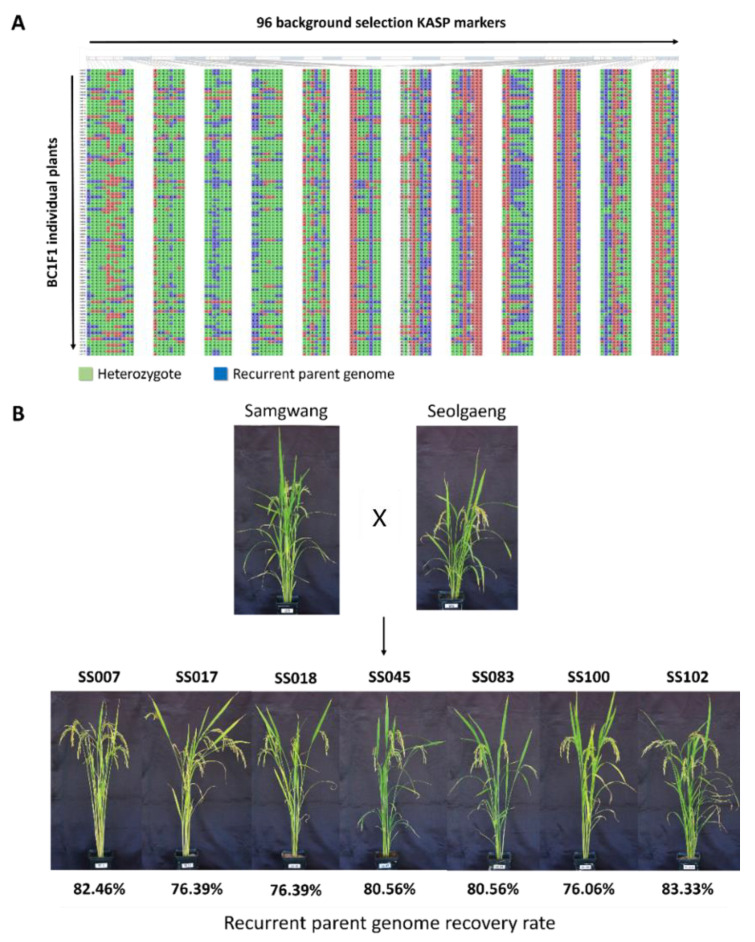
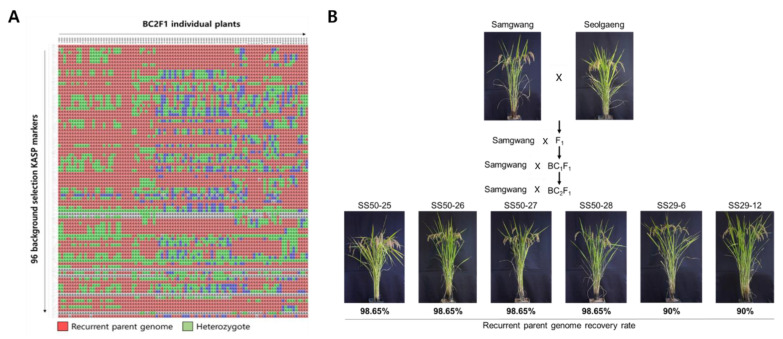
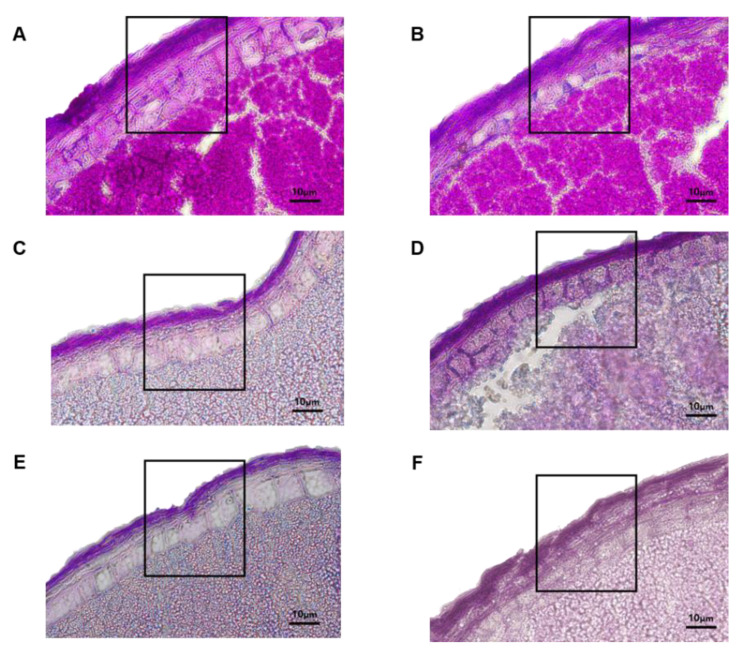
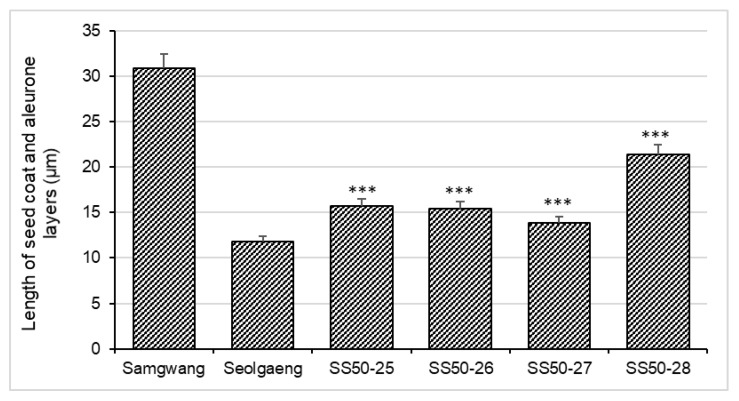
Brown rice is composed of rice bran, pericarp, seed coat, and aleurone layers, and the rice bran layer contains a large number of substances useful for the human body, such as dietary fiber, α-tocopherol, α-tocotrienol, and vitamins. However, more than 90% of these substances are removed when polished, and white rice has the disadvantage of losing food-related ingredients, such as umami-related amino acids, when compared to the unpolished group. In this study, we tried to develop new breeding lines with a thinner seed coat and aleurone layer to provide high eating quality with softer chewing characteristics and processability in rice grain. We detected an SNP for foreground selection for the backcross population by comparing genome sequences between Samgwang and Seolgaeng and developed high eating quality brown rice breeding lines by applying marker-assisted backcrossing (MAB) breeding programs to backcross populations between Samgwang and Seolgaeng using KASP markers. SNP markers for foreground selection were identified to improve eating and processability through SNP mapping of Samgwang and Seolgaeng with SSIIa as a target gene in this study. Line selection according to genotype of KASP markers was successful in BCF and BCF generations, with the recurrent parent genome recovery ratio ranging from 91.22% to 98.65%. In BCF seeds of the selected lines, thickness of the aleurone layer was found to range from 13.82 to 21.67 μm, which is much thinner than the 30.91 μm of the wild type, suggesting that selection by MABc could be used as an additional breeding material for the development of highly processed rice varieties. These lines will be useful to develop new brown rice varieties with softer chewing characteristics and processability in rice grain.
糙米由米糠、果皮、种皮和糊粉层组成,米糠层含有大量对人体有益的物质,如膳食纤维、α-生育酚、α-生育三烯酚和维生素。然而,这些物质中有 90%以上在抛光时被去除,与未抛光的糙米相比,白米失去了与食物相关的成分,如与鲜味相关的氨基酸。在这项研究中,我们试图通过开发种皮和糊粉层较薄的新育成系,为大米提供具有柔软咀嚼特性和可加工性的高食用品质。我们通过比较 Samgwang 和 Seolgaeng 的基因组序列,在回交群体中检测到一个用于前选的 SNP,并利用 KASP 标记,对 Samgwang 和 Seolgaeng 之间的回交群体应用标记辅助回交(MAB)育成计划,开发出高食用品质的糙米育成系。本研究以 SSIIa 为目标基因,对 Samgwang 和 Seolgaeng 进行 SNP 作图,鉴定 SNP 标记进行前选,以改善食用和加工性能。根据 KASP 标记的基因型进行系选择,在 BCF 和 BCF 世代中获得成功,轮回亲本基因组回收率在 91.22%到 98.65%之间。在所选系的 BCF 种子中,糊粉层的厚度范围为 13.82 至 21.67 μm,比野生型的 30.91 μm 薄得多,这表明 MABc 的选择可以作为开发高加工水稻品种的附加育成材料。这些系将有助于开发具有柔软咀嚼特性和可加工性的新糙米品种。