U1086 "ANTICIPE" INSERM, University of Caen Normandy, 14000 Caen, France.
Int J Environ Res Public Health. 2022 Feb 17;19(4):2311. doi: 10.3390/ijerph19042311.
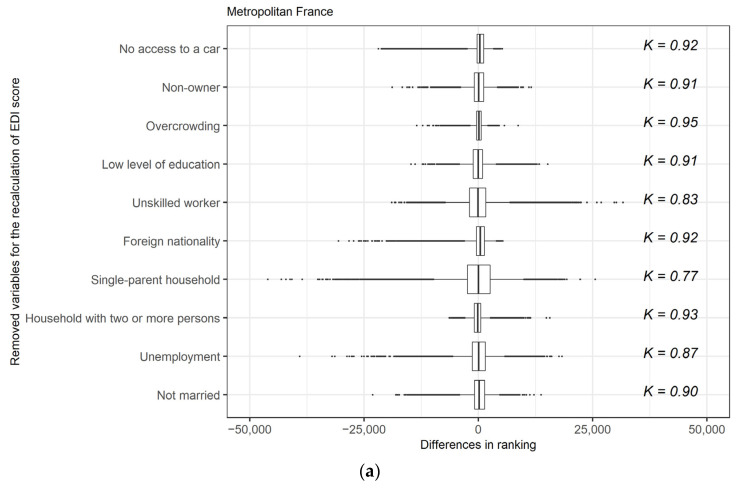
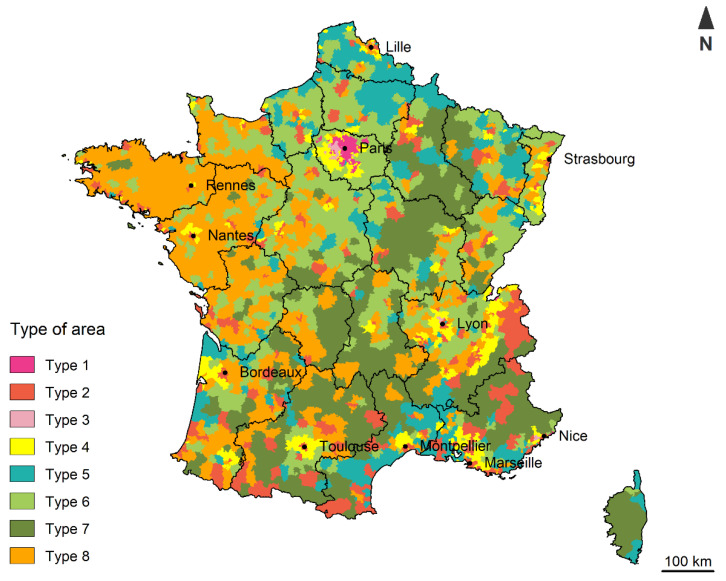
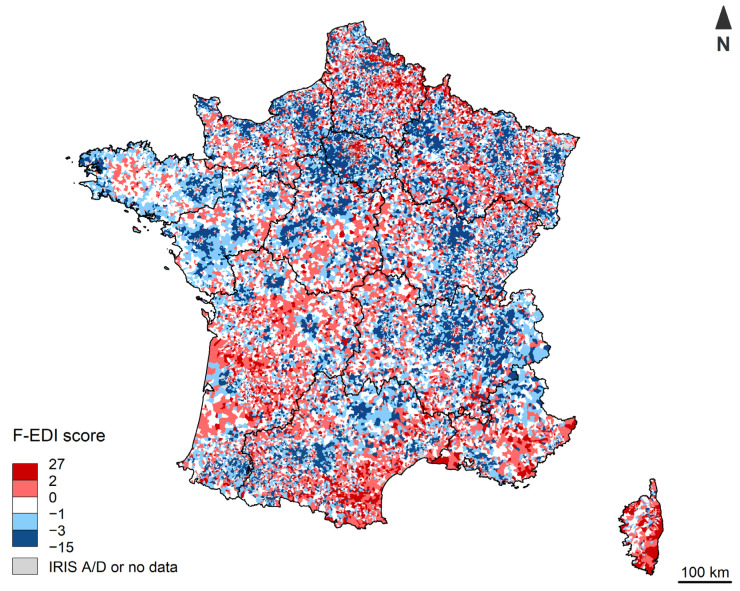
Most ecological indices of deprivation are constructed from census data at the national level, which raises questions about the relevance of their use, and their comparability across a country. We aimed to determine whether a national index can account for deprivation regardless of location characteristics. In Metropolitan France, 43,853 residential census block groups (IRIS) were divided into eight area types based on quality of life. We calculated score deprivation for each IRIS using the French version of the European Deprivation Index (F-EDI). We decomposed the score by calculating the contribution of each of its components by area type, and we assessed the impact of removing each component and recalculating the weights on the identification of deprived IRIS. The set of components most contributing to the score changed according to the area type, but the identification of deprived IRIS remained stable regardless of the component removed for recalculating the score. Not all components of the F-EDI are markers of deprivation according to location characteristics, but the multidimensional nature of the index ensures its robustness. Further research is needed to examine the limitations of using these indices depending on the purpose of the study, particularly in relation to the geographical grid used to calculate deprivation scores.
大多数剥夺生态指数都是基于国家一级的人口普查数据构建的,这引发了人们对其使用相关性及其在国家内部可比性的质疑。我们旨在确定无论地理位置特征如何,一个国家指数是否可以解释剥夺现象。在法兰西岛大区,43853 个居民普查街区组(IRIS)根据生活质量分为 8 个区域类型。我们使用法国版欧洲剥夺指数(F-EDI)为每个 IRIS 计算剥夺分数。我们通过按区域类型计算每个组成部分的贡献来分解分数,并评估删除每个组成部分并重算权重对识别剥夺的 IRIS 的影响。对分数贡献最大的组成部分集根据区域类型而变化,但无论为重新计算分数而删除哪个组成部分,识别剥夺的 IRIS 仍然保持稳定。F-EDI 的并非所有组成部分都是根据地理位置特征的剥夺指标,但该指数的多维性质确保了其稳健性。需要进一步研究根据研究目的使用这些指数的局限性,特别是与用于计算剥夺分数的地理网格有关。