
机器学习在开发用于减压椎体成形术的决策支持模型中的应用。
Application of Machine Learning in Developing Decision-Making Support Models for Decompressed Vertebroplasty.
作者信息
Liao Pei-Hung, Tsuei Yu-Chuan, Chu William
机构信息
School of Nursing, National Taipei University of Nursing and Health Sciences, No. 365, Ming-te Road, Peitou District, Taipei 112, Taiwan.
Department of Orthopedics, Cheng Hsin General Hospital, No. 45, Cheng Hsin St., Beitou, Taipei 112, Taiwan.
出版信息
Healthcare (Basel). 2022 Jan 23;10(2):214. doi: 10.3390/healthcare10020214.
BACKGROUND
The common treatment methods for vertebral compression fractures with osteoporosis are vertebroplasty and kyphoplasty, and the result of the operation may be related to the value of various measurement data during the operation.
MATERIAL AND METHOD
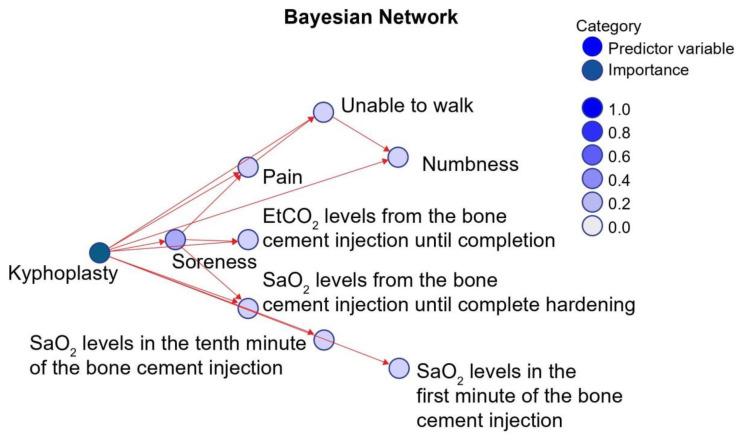
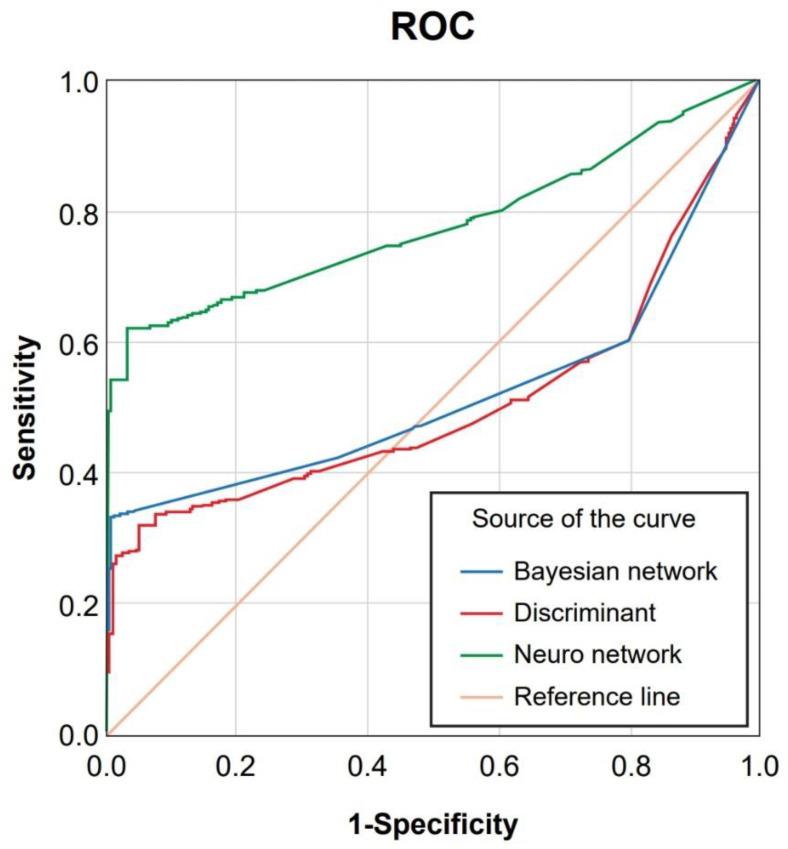
This study mainly uses machine learning algorithms, including Bayesian networks, neural networks, and discriminant analysis, to predict the effects of different decompression vertebroplasty methods on preoperative symptoms and changes in vital signs and oxygen saturation in intraoperative measurement data.
RESULT
The neural network shows better analysis results, and the area under the curve is >0.7. In general, important determinants of surgery include numbness and immobility of the lower limbs before surgery.
CONCLUSION
In the future, this association model can be used to assist in decision making regarding surgical methods. The results show that different surgical methods are related to abnormal vital signs and may affect the length of hospital stay.
背景
骨质疏松性椎体压缩骨折的常见治疗方法是椎体成形术和后凸成形术,手术结果可能与手术过程中各种测量数据的值有关。
材料与方法
本研究主要使用机器学习算法,包括贝叶斯网络、神经网络和判别分析,以预测不同减压椎体成形术方法对术前症状以及术中测量数据中生命体征和血氧饱和度变化的影响。
结果
神经网络显示出更好的分析结果,曲线下面积>0.7。一般来说,手术的重要决定因素包括术前下肢麻木和活动障碍。
结论
未来,这种关联模型可用于辅助手术方法的决策。结果表明,不同的手术方法与生命体征异常有关,可能会影响住院时间。




 Zotero 插件