Chen Yung-Chieh, Chen Yung-Li, Kuo Duen-Pang, Li Yi-Tien, Chiang Yung-Hsiao, Chang Jyh-Jong, Tseng Sung-Hui, Chen Cheng-Yu
Translational Imaging Research Center, Taipei Medical University Hospital, Taipei 110, Taiwan.
Department of Medical Imaging, Taipei Medical University Hospital, Taipei 110, Taiwan.
J Pers Med. 2022 Jan 31;12(2):196. doi: 10.3390/jpm12020196.
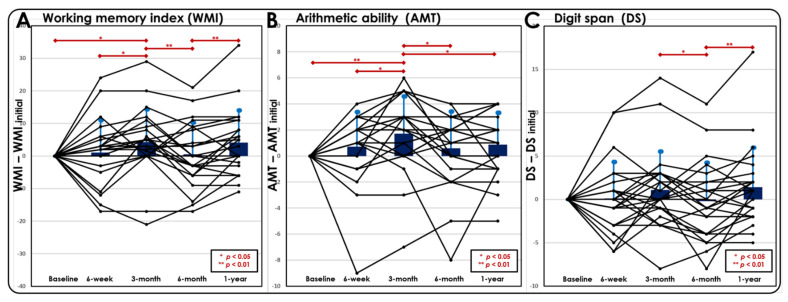
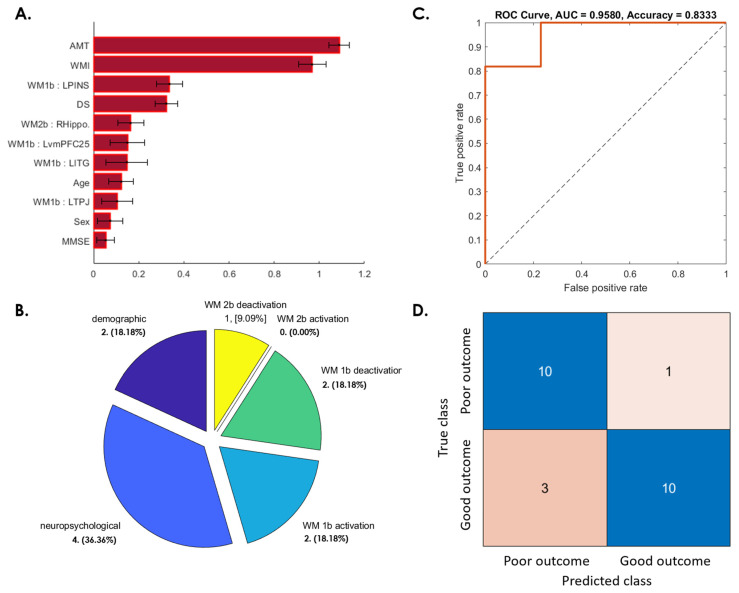
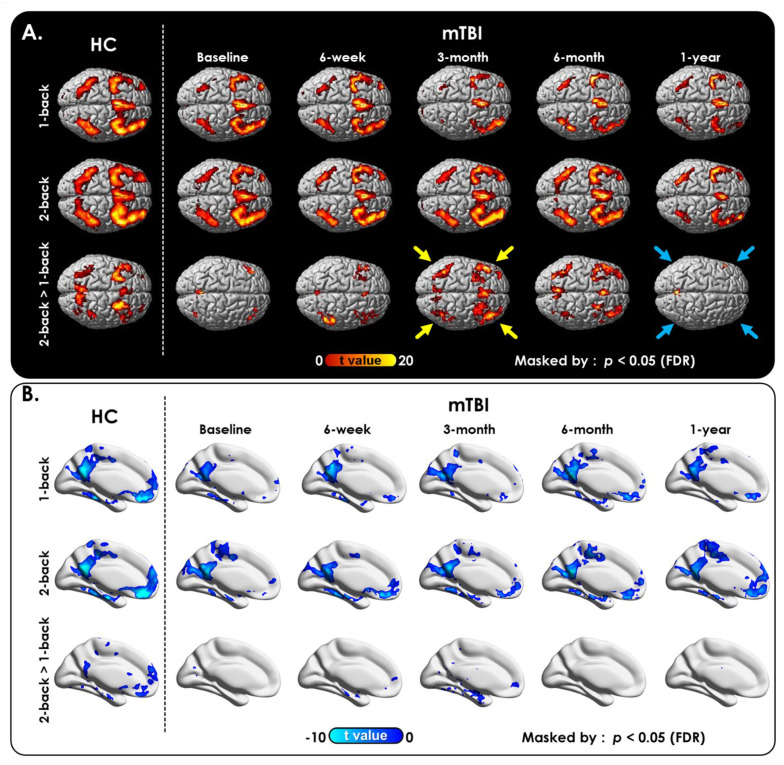
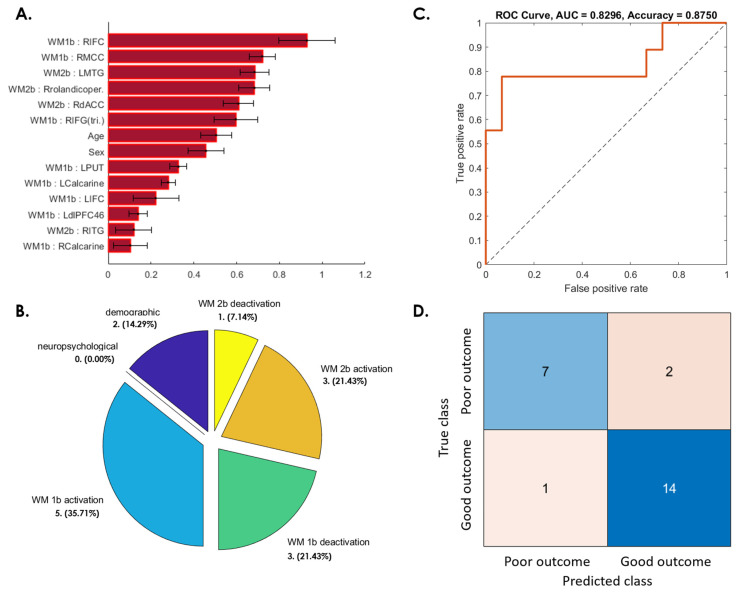
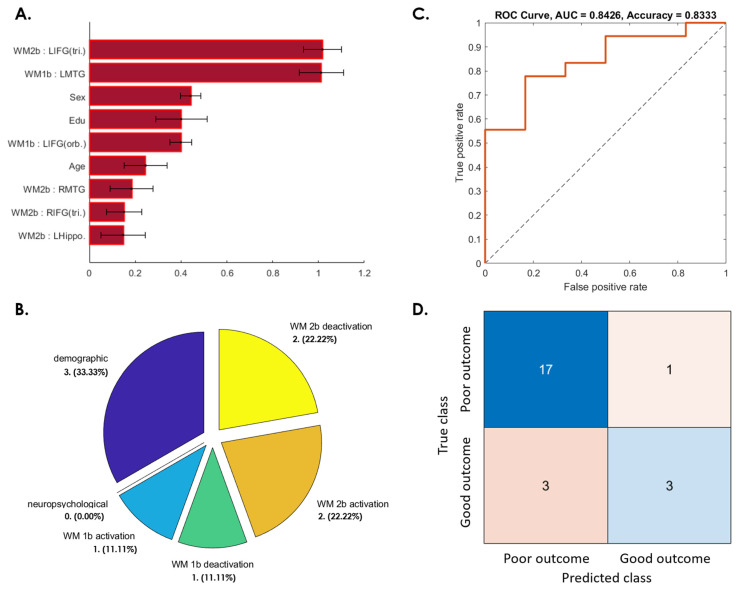
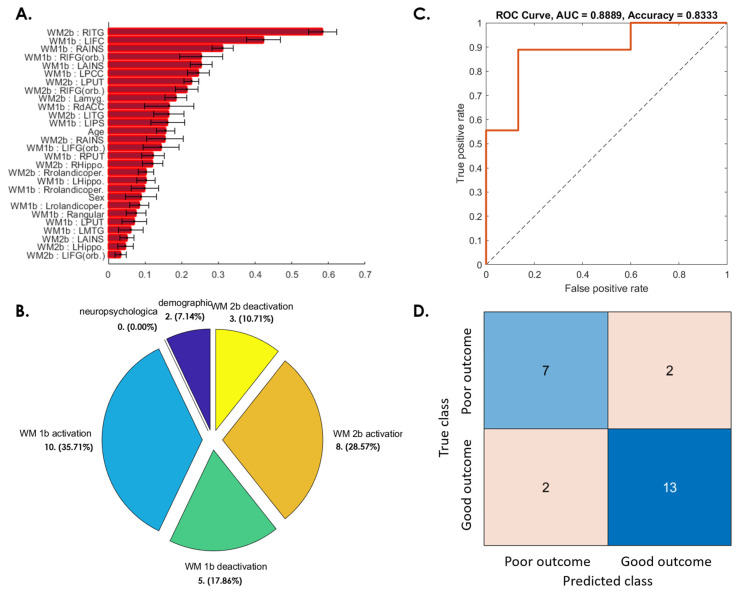
Concussion, also known as mild traumatic brain injury (mTBI), commonly causes transient neurocognitive symptoms, but in some cases, it causes cognitive impairment, including working memory (WM) deficit, which can be long-lasting and impede a patient's return to work. The predictors of long-term cognitive outcomes following mTBI remain unclear, because abnormality is often absent in structural imaging findings. Previous studies have demonstrated that WM functional activity estimated from functional magnetic resonance imaging (fMRI) has a high sensitivity to postconcussion WM deficits and may be used to not only evaluate but guide treatment strategies, especially targeting brain areas involved in postconcussion cognitive decline. The purpose of the study was to determine whether machine learning-based models using fMRI biomarkers and demographic or neuropsychological measures at the baseline could effectively predict the 1-year cognitive outcomes of concussion. We conducted a prospective, observational study of patients with mTBI who were compared with demographically matched healthy controls enrolled between September 2015 and August 2020. Baseline assessments were collected within the first week of injury, and follow-ups were conducted at 6 weeks, 3 months, 6 months, and 1 year. Potential demographic, neuropsychological, and fMRI features were selected according to their significance of correlation with the estimated changes in WM ability. The support vector machine classifier was trained using these potential features and estimated changes in WM between the predefined time periods. Patients demonstrated significant cognitive recovery at the third month, followed by worsened performance after 6 months, which persisted until 1 year after a concussion. Approximately half of the patients experienced prolonged cognitive impairment at the 1-year follow up. Satisfactory predictions were achieved for patients whose WM function did not recover at 3 months (accuracy = 87.5%), 6 months (accuracy = 83.3%), and 1 year (accuracy = 83.3%) and performed worse at the 1-year follow-up compared to the baseline assessment (accuracy = 83.3%). This study demonstrated the feasibility of personalized prediction for long-term postconcussive WM outcomes based on baseline fMRI and demographic features, opening a new avenue for early rehabilitation intervention in selected individuals with possible poor long-term cognitive outcomes.
脑震荡,也称为轻度创伤性脑损伤(mTBI),通常会导致短暂的神经认知症状,但在某些情况下,会导致认知障碍,包括工作记忆(WM)缺陷,这种缺陷可能会长期存在并阻碍患者重返工作岗位。mTBI后长期认知结果的预测因素仍不清楚,因为结构影像学检查结果通常无异常。先前的研究表明,通过功能磁共振成像(fMRI)估计的WM功能活动对脑震荡后WM缺陷具有高度敏感性,不仅可用于评估,还可指导治疗策略,特别是针对与脑震荡后认知衰退相关的脑区。本研究的目的是确定使用fMRI生物标志物以及基线时的人口统计学或神经心理学测量指标的机器学习模型是否能够有效预测脑震荡1年的认知结果。我们对mTBI患者进行了一项前瞻性观察研究,并与2015年9月至2020年8月纳入的人口统计学匹配的健康对照进行比较。在受伤后的第一周内收集基线评估数据,并在6周、3个月、6个月和1年进行随访。根据与WM能力估计变化的相关性意义,选择潜在的人口统计学、神经心理学和fMRI特征。使用这些潜在特征和预定义时间段之间WM的估计变化来训练支持向量机分类器。患者在第三个月表现出明显的认知恢复,随后在6个月后表现恶化,并持续到脑震荡后1年。在1年随访时,约一半的患者经历了长期认知障碍。对于在3个月(准确率=87.5%)、6个月(准确率=83.3%)和1年(准确率=83.3%)时WM功能未恢复且与基线评估相比在1年随访时表现更差的患者(准确率=83.3%),实现了令人满意的预测。本研究证明了基于基线fMRI和人口统计学特征对脑震荡后长期WM结果进行个性化预测的可行性,为可能具有不良长期认知结果的特定个体开辟了早期康复干预的新途径。