Institute of Biomedicine (IBIOMED), University of León, 24071 León, Spain.
Division of Biological Sciences and Health, University of Sonora, Hermosillo 83000, Mexico.
Medicina (Kaunas). 2022 Feb 19;58(2):316. doi: 10.3390/medicina58020316.
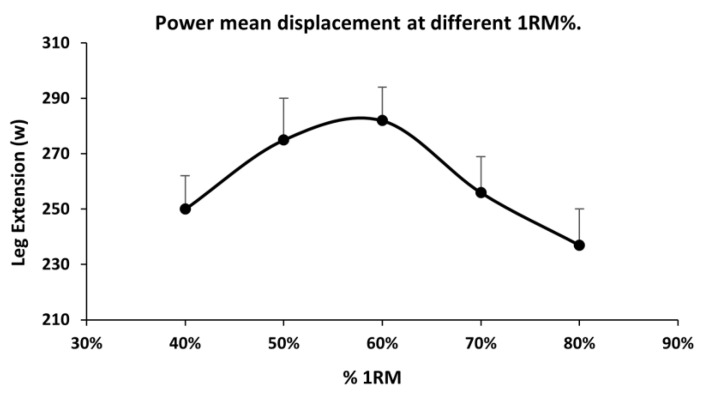
: Multiple sclerosis (MS) tends to affect muscle performance, mainly in the lower extremities. The degree of disability is associated with the loss of strength and muscle mass, to varying extents. Muscle quality (MQ) expresses the amount of force produced relative to the activated muscle mass. The purpose of this study was to compare the MQ of the knee extensors in the main manifestations of strength (isometric, dynamic strength, and power) among patients with differing degrees of neurological disability and evolutionary forms of the disease. We also establish reference values for MQ in MS patients (pwMS). : In total, 250 pwMS were evaluated according to the Expanded Disability Status Scale (EDSS). The maximum dynamic and isometric forces and muscle power manifested a load of 60% of the maximum dynamics of the knee extensors. The lean mass of the thigh and hip was determined by densitometry, and the MQ was calculated for the three types of force evaluated. The pwMS with relapsing remitting MS (RRMS) presented isometric MQ values that were 15.8% better than those of pwMS with primary progressive MS (PPMS) and 13.8% better than those of pwMS with secondary progressive MS (SPMS). For pwMS with SPMS, the dynamic MQ was 16.7% worse than that of patients with RRMS, while the power MQ was 29.5% worse. By degree of disability (<4 >7.5 EDSS score), patients with better MQ had mild EDSS scores, and patients with severe EDSS scores had 24.8%, 25.9%, and 40.3% worse isometric, dynamic, and power MQ scores, respectively, than those with RRMS. Based on these results, reference values for MQ in pwMS were established. The pwMS with different types of MS do not show differences in lean mass or strength but do show differences in MQ. In pwMS with different EDSS grades, there are no differences in lean mass, but there are differences in strength based on MQ, especially power MQ.
: 多发性硬化症(MS)往往会影响肌肉功能,主要是下肢。残疾程度与力量和肌肉质量的丧失程度有关。肌肉质量(MQ)表示相对于激活的肌肉质量产生的力的量。本研究的目的是比较不同神经残疾程度和疾病演变形式的患者的膝关节伸肌的主要力量表现(等长、动态力量和功率)的 MQ。我们还为 MS 患者(pwMS)建立了 MQ 的参考值。 : 总共根据扩展残疾状况量表(EDSS)评估了 250 名 pwMS。最大动态和等长力以及肌肉功率表现出膝关节伸肌最大动态的 60%的负荷。大腿和臀部的瘦体重通过密度测定法确定,并且为评估的三种力计算了 MQ。RRMS 型 pwMS 的等长 MQ 值比原发性进展型 MS(PPMS)和继发性进展型 MS(SPMS)型 pwMS 分别好 15.8%和 13.8%。对于 SPMS 型 pwMS,动态 MQ 比 RRMS 型患者差 16.7%,而功率 MQ 比 RRMS 型患者差 29.5%。根据残疾程度(<4 >7.5 EDSS 评分),具有较好 MQ 的患者的 EDSS 评分较轻,而具有严重 EDSS 评分的患者的等长、动态和功率 MQ 评分分别比 RRMS 型患者差 24.8%、25.9%和 40.3%。基于这些结果,为 pwMS 建立了 MQ 的参考值。具有不同类型 MS 的 pwMS 在瘦体重或力量方面没有差异,但在 MQ 方面存在差异。在具有不同 EDSS 等级的 pwMS 中,瘦体重没有差异,但基于 MQ 的力量存在差异,尤其是功率 MQ。