Kuhn Marie-Line, Berre Jo-Yanne Le, Kebdani-Minet Naima, Panabières Franck
ISA, INRAE, CNRS, Universite Côte d'Azur, 06903 Sophia Antipolis, France.
Microorganisms. 2022 Jan 25;10(2):281. doi: 10.3390/microorganisms10020281.
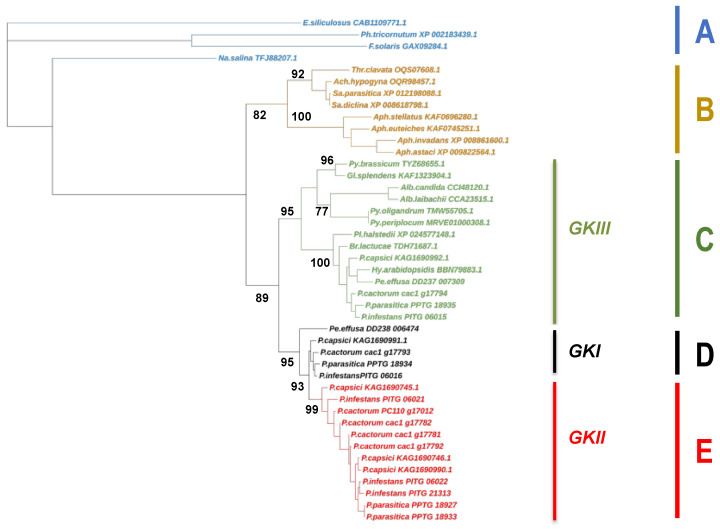
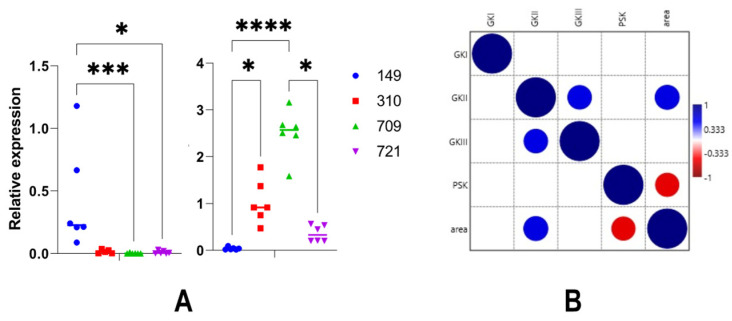
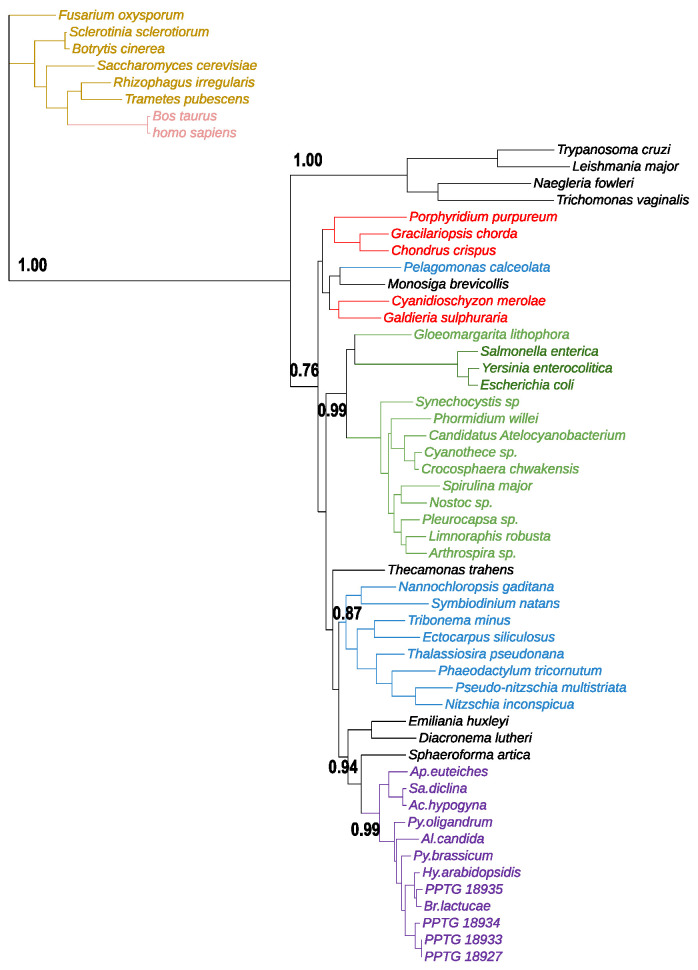
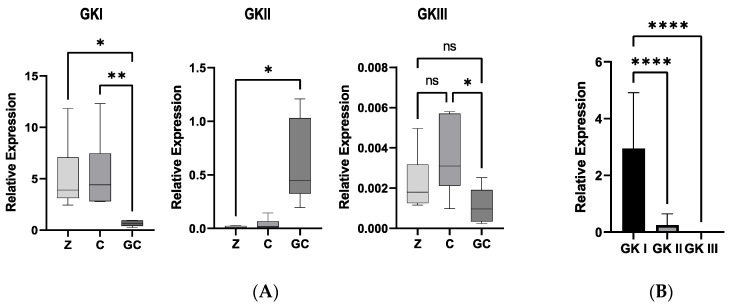
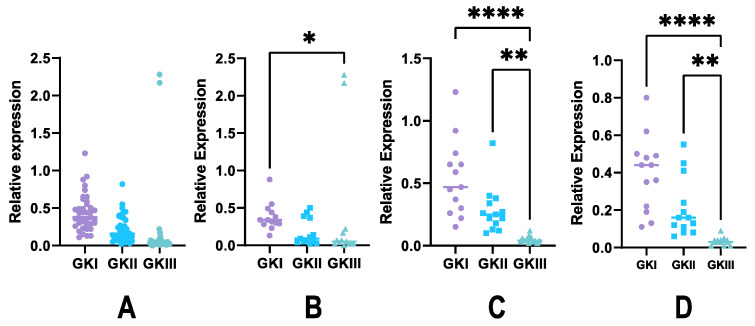
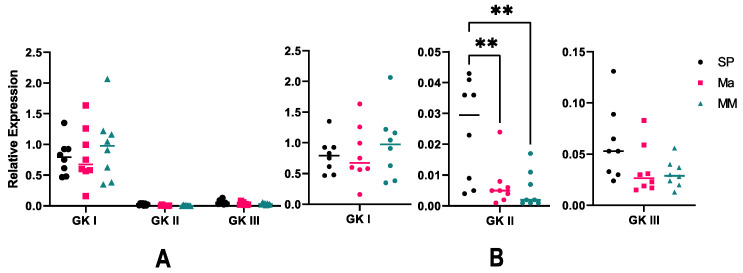
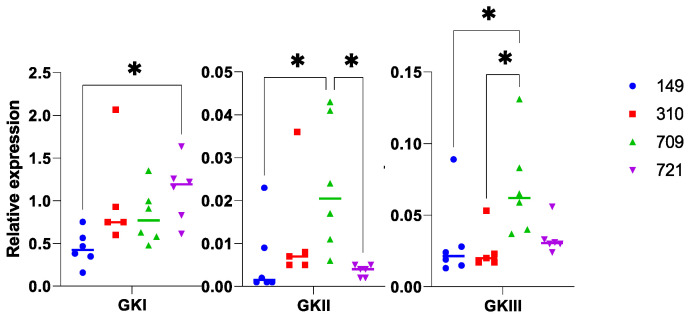
Oomycetes, of the genus , comprise of some of the most devastating plant pathogens. Parasitism of results from evolution from an autotrophic ancestor and adaptation to a wide range of environments, involving metabolic adaptation. Sequence mining showed that spp. display an unusual repertoire of glycolytic enzymes, made of multigene families and enzyme replacements. To investigate the impact of these gene duplications on the biology of and, eventually, identify novel functions associated to gene expansion, we focused our study on the first glycolytic step on , a broad host range pathogen. We reveal that this step is committed by a set of three glucokinase types that differ by their structure, enzymatic properties, and evolutionary histories. In addition, they are expressed differentially during the life cycle, including plant infection. Last, we show that there is a strong association between the expression of a glucokinase member in planta and extent of plant infection. Together, these results suggest that metabolic adaptation is a component of the processes underlying evolution of parasitism in , which may possibly involve the neofunctionalization of metabolic enzymes.
疫霉属的卵菌包括一些最具毁灭性的植物病原体。其寄生现象源于自养祖先的进化以及对广泛环境的适应,这涉及代谢适应。序列挖掘表明,疫霉属物种展示出由多基因家族和酶替代组成的不寻常的糖酵解酶库。为了研究这些基因复制对疫霉生物学的影响,并最终确定与基因扩张相关的新功能,我们将研究重点放在了一种广泛寄主范围的病原体——致病疫霉的第一个糖酵解步骤上。我们发现这一步骤由一组三种不同结构、酶学性质和进化历史的葡萄糖激酶类型完成。此外,它们在致病疫霉的生命周期中,包括植物感染期间,表达存在差异。最后,我们表明植物中葡萄糖激酶成员的表达与植物感染程度之间存在强烈关联。总之,这些结果表明代谢适应是致病疫霉寄生进化过程的一个组成部分,这可能涉及代谢酶的新功能化。