• 文献检索
  • 文档翻译
  • 深度研究
  • 学术资讯
  • Suppr Zotero 插件Zotero 插件
  • 邀请有礼
  • 套餐&价格
  • 历史记录
应用&插件
Suppr Zotero 插件Zotero 插件浏览器插件Mac 客户端Windows 客户端微信小程序
定价
高级版会员购买积分包购买API积分包
服务
文献检索文档翻译深度研究API 文档MCP 服务
关于我们
关于 Suppr公司介绍联系我们用户协议隐私条款
关注我们

Suppr 超能文献

核心技术专利:CN118964589B侵权必究
粤ICP备2023148730 号-1Suppr @ 2026

文献检索

告别复杂PubMed语法,用中文像聊天一样搜索,搜遍4000万医学文献。AI智能推荐,让科研检索更轻松。

立即免费搜索

文件翻译

保留排版,准确专业,支持PDF/Word/PPT等文件格式,支持 12+语言互译。

免费翻译文档

深度研究

AI帮你快速写综述,25分钟生成高质量综述,智能提取关键信息,辅助科研写作。

立即免费体验

BODIPY 缀合物作为用于医学诊断和治疗的功能化合物。

BODIPY Conjugates as Functional Compounds for Medical Diagnostics and Treatment.

机构信息

G.A. Krestov Institute of Solution Chemistry of Russian Academy of Sciences, 1 Akademicheskaya St., 153045 Ivanovo, Russia.

Inorganic Chemistry Department, Ivanovo State University of Chemistry and Technology, 7 Sheremetevskiy Ave., 153000 Ivanovo, Russia.

出版信息

Molecules. 2022 Feb 18;27(4):1396. doi: 10.3390/molecules27041396.

DOI:10.3390/molecules27041396
PMID:35209191
原文链接:https://pmc.ncbi.nlm.nih.gov/articles/PMC8877204/
Abstract

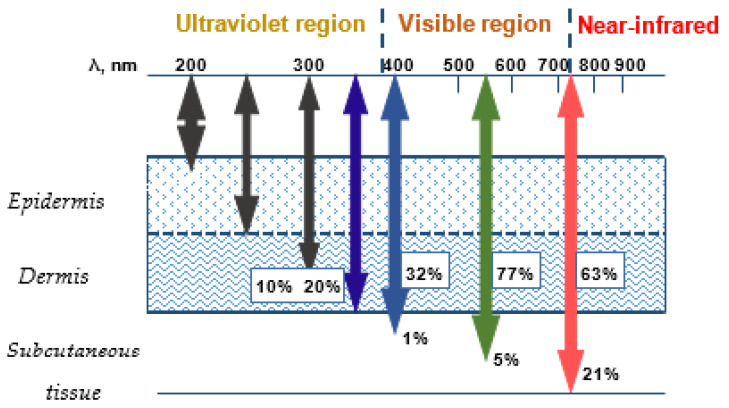
Fluorescent dyes absorbing and emitting in the visible and near-IR regions are promising for the development of fluorescent probes for labeling and bio-visualization of body cells. The ability to absorb and emit in the long-wavelength region increases the efficiency of recording the spectral signals of the probes due to the higher permeability of the skin layers. Compared to other fluorescent dyes, BODIPYs are attractive due to their excellent photophysical properties-narrow absorption and emission, intense fluorescence, simple signal modulation for the practical applications. As part of conjugates with biomolecules, BODIPY could act as a biomarker, but as therapeutic agent, which allows solving several problems at once-labeling or bioimaging and treatment based on the suppression of pathogenic microflora and cancer cells, which provides a huge potential for practical application of BODIPY conjugates in medicine. The review is devoted to the discussion of the recent, promising directions of BODIPY application in the field of conjugation with biomolecules. The first direction is associated with the development of BODIPY conjugates with drugs, including compounds of platinum, paclitaxel, chlorambucil, isoxazole, capsaicin, etc. The second direction is devoted to the labeling of vitamins, hormones, lipids, and other biomolecules to control the processes of their transport, localization in target cells, and metabolism. Within the framework of the third direction, the problem of obtaining functional optically active materials by conjugating BODIPY with other colored and fluorescent particles, in particular, phthalocyanines, is being solved.

摘要

在可见和近红外区域吸收和发射荧光染料对于开发用于标记和生物可视化体细胞的荧光探针具有广阔的前景。由于皮肤层的通透性更高,在长波长区域吸收和发射的能力提高了探针光谱信号记录的效率。与其他荧光染料相比,BODIPY 因其出色的光物理性质(窄吸收和发射、强荧光、简单的信号调制)而具有吸引力,这些性质使其在实际应用中具有吸引力。作为与生物分子缀合物的一部分,BODIPY 可以作为生物标志物,但也可以作为治疗剂,这可以同时解决几个问题——基于抑制病原微生物和癌细胞的标记或生物成像和治疗,这为 BODIPY 缀合物在医学中的实际应用提供了巨大的潜力。该综述致力于讨论 BODIPY 在与生物分子缀合领域中的最新有前途的应用方向。第一个方向与开发与药物的 BODIPY 缀合物有关,包括铂、紫杉醇、氯苯丁酸、异恶唑、辣椒素等化合物。第二个方向致力于标记维生素、激素、脂质和其他生物分子,以控制它们的运输、在靶细胞中的定位和代谢过程。在第三个方向的框架内,通过将 BODIPY 与其他有色和荧光颗粒(特别是酞菁)缀合来获得功能性光学活性材料的问题正在得到解决。
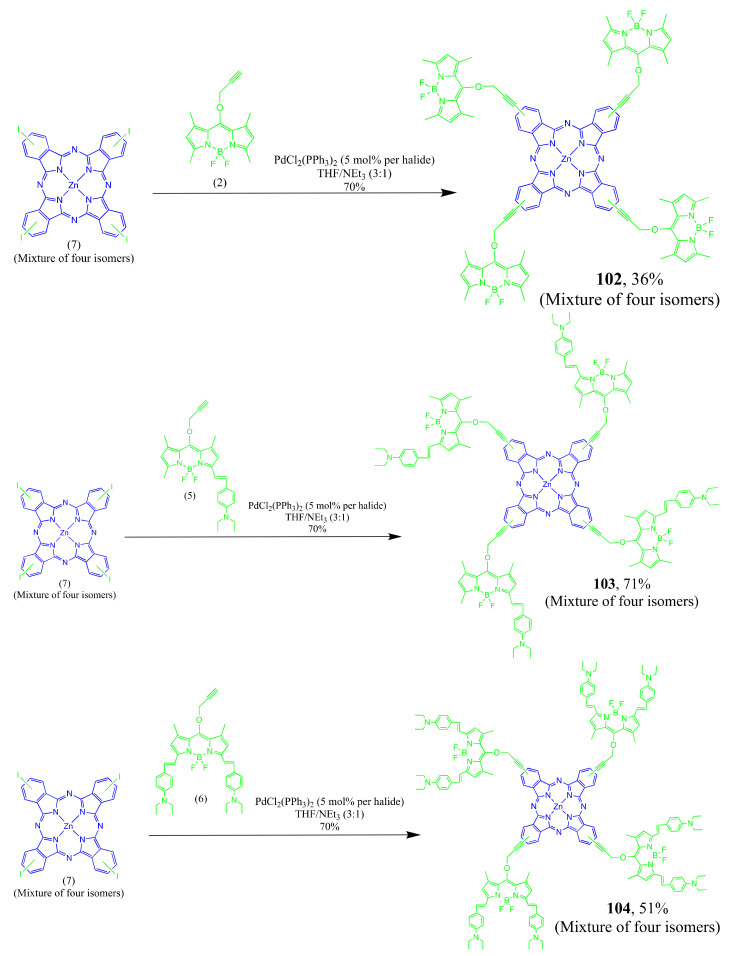
https://cdn.ncbi.nlm.nih.gov/pmc/blobs/7c9a/8877204/1b253d9faac5/molecules-27-01396-sch056.jpg
https://cdn.ncbi.nlm.nih.gov/pmc/blobs/7c9a/8877204/cc71385d6e01/molecules-27-01396-g001.jpg
https://cdn.ncbi.nlm.nih.gov/pmc/blobs/7c9a/8877204/1426b111250f/molecules-27-01396-g002.jpg
https://cdn.ncbi.nlm.nih.gov/pmc/blobs/7c9a/8877204/8df2cc65b999/molecules-27-01396-sch001.jpg
https://cdn.ncbi.nlm.nih.gov/pmc/blobs/7c9a/8877204/caf00e6b9a43/molecules-27-01396-sch002.jpg
https://cdn.ncbi.nlm.nih.gov/pmc/blobs/7c9a/8877204/46dfa4170f8d/molecules-27-01396-sch003.jpg
https://cdn.ncbi.nlm.nih.gov/pmc/blobs/7c9a/8877204/a389b3691bb0/molecules-27-01396-sch004.jpg
https://cdn.ncbi.nlm.nih.gov/pmc/blobs/7c9a/8877204/81bd69f98377/molecules-27-01396-sch005.jpg
https://cdn.ncbi.nlm.nih.gov/pmc/blobs/7c9a/8877204/804cfed32872/molecules-27-01396-sch006.jpg
https://cdn.ncbi.nlm.nih.gov/pmc/blobs/7c9a/8877204/b36214c027d2/molecules-27-01396-sch007.jpg
https://cdn.ncbi.nlm.nih.gov/pmc/blobs/7c9a/8877204/8304dd898b07/molecules-27-01396-sch008.jpg
https://cdn.ncbi.nlm.nih.gov/pmc/blobs/7c9a/8877204/e3a134eace4f/molecules-27-01396-sch009.jpg
https://cdn.ncbi.nlm.nih.gov/pmc/blobs/7c9a/8877204/b10c1c26093a/molecules-27-01396-g003.jpg
https://cdn.ncbi.nlm.nih.gov/pmc/blobs/7c9a/8877204/220ced5808b0/molecules-27-01396-sch010.jpg
https://cdn.ncbi.nlm.nih.gov/pmc/blobs/7c9a/8877204/7e440b497b2d/molecules-27-01396-g004.jpg
https://cdn.ncbi.nlm.nih.gov/pmc/blobs/7c9a/8877204/139be50bf827/molecules-27-01396-sch011.jpg
https://cdn.ncbi.nlm.nih.gov/pmc/blobs/7c9a/8877204/0a93039dac54/molecules-27-01396-g005.jpg
https://cdn.ncbi.nlm.nih.gov/pmc/blobs/7c9a/8877204/b82ce300c499/molecules-27-01396-sch012.jpg
https://cdn.ncbi.nlm.nih.gov/pmc/blobs/7c9a/8877204/3b0810f34c2e/molecules-27-01396-sch013.jpg
https://cdn.ncbi.nlm.nih.gov/pmc/blobs/7c9a/8877204/895cd8dd2fbe/molecules-27-01396-sch014.jpg
https://cdn.ncbi.nlm.nih.gov/pmc/blobs/7c9a/8877204/c58b8c707d3b/molecules-27-01396-g006.jpg
https://cdn.ncbi.nlm.nih.gov/pmc/blobs/7c9a/8877204/b16fd804797f/molecules-27-01396-sch015.jpg
https://cdn.ncbi.nlm.nih.gov/pmc/blobs/7c9a/8877204/d89bd178aa32/molecules-27-01396-g007.jpg
https://cdn.ncbi.nlm.nih.gov/pmc/blobs/7c9a/8877204/6154cac29b87/molecules-27-01396-sch016.jpg
https://cdn.ncbi.nlm.nih.gov/pmc/blobs/7c9a/8877204/c32c32e7dbc9/molecules-27-01396-sch017.jpg
https://cdn.ncbi.nlm.nih.gov/pmc/blobs/7c9a/8877204/f3ae83aa9cfb/molecules-27-01396-sch018.jpg
https://cdn.ncbi.nlm.nih.gov/pmc/blobs/7c9a/8877204/687a1f75e39d/molecules-27-01396-sch021.jpg
https://cdn.ncbi.nlm.nih.gov/pmc/blobs/7c9a/8877204/cced13fc548c/molecules-27-01396-sch023.jpg
https://cdn.ncbi.nlm.nih.gov/pmc/blobs/7c9a/8877204/3024c0613ed9/molecules-27-01396-sch024.jpg
https://cdn.ncbi.nlm.nih.gov/pmc/blobs/7c9a/8877204/3cb0f5f03aa3/molecules-27-01396-sch027.jpg
https://cdn.ncbi.nlm.nih.gov/pmc/blobs/7c9a/8877204/3f693768523b/molecules-27-01396-g011.jpg
https://cdn.ncbi.nlm.nih.gov/pmc/blobs/7c9a/8877204/93f2d9d484cb/molecules-27-01396-sch031.jpg
https://cdn.ncbi.nlm.nih.gov/pmc/blobs/7c9a/8877204/a9cd3b1aa47e/molecules-27-01396-sch036.jpg
https://cdn.ncbi.nlm.nih.gov/pmc/blobs/7c9a/8877204/4b1996a8695a/molecules-27-01396-sch037.jpg
https://cdn.ncbi.nlm.nih.gov/pmc/blobs/7c9a/8877204/8767e0bb45fa/molecules-27-01396-g014.jpg
https://cdn.ncbi.nlm.nih.gov/pmc/blobs/7c9a/8877204/2ca11e0be0ad/molecules-27-01396-sch038a.jpg
https://cdn.ncbi.nlm.nih.gov/pmc/blobs/7c9a/8877204/96897a1db8d3/molecules-27-01396-sch039.jpg
https://cdn.ncbi.nlm.nih.gov/pmc/blobs/7c9a/8877204/7fad250e27a9/molecules-27-01396-g015.jpg
https://cdn.ncbi.nlm.nih.gov/pmc/blobs/7c9a/8877204/9daf40d80e73/molecules-27-01396-sch040.jpg
https://cdn.ncbi.nlm.nih.gov/pmc/blobs/7c9a/8877204/a43055058678/molecules-27-01396-sch041.jpg
https://cdn.ncbi.nlm.nih.gov/pmc/blobs/7c9a/8877204/0a6a7e5c4961/molecules-27-01396-sch042.jpg
https://cdn.ncbi.nlm.nih.gov/pmc/blobs/7c9a/8877204/2d3a846128ed/molecules-27-01396-sch043.jpg
https://cdn.ncbi.nlm.nih.gov/pmc/blobs/7c9a/8877204/a6d751f8fe9c/molecules-27-01396-sch044a.jpg
https://cdn.ncbi.nlm.nih.gov/pmc/blobs/7c9a/8877204/d6fe722b63af/molecules-27-01396-sch045.jpg
https://cdn.ncbi.nlm.nih.gov/pmc/blobs/7c9a/8877204/56aa941579ac/molecules-27-01396-g016.jpg
https://cdn.ncbi.nlm.nih.gov/pmc/blobs/7c9a/8877204/9ac0208bc770/molecules-27-01396-sch046.jpg
https://cdn.ncbi.nlm.nih.gov/pmc/blobs/7c9a/8877204/4ade0e595541/molecules-27-01396-sch047.jpg
https://cdn.ncbi.nlm.nih.gov/pmc/blobs/7c9a/8877204/380684477fdc/molecules-27-01396-sch048.jpg
https://cdn.ncbi.nlm.nih.gov/pmc/blobs/7c9a/8877204/acb81daa7c1f/molecules-27-01396-g017.jpg
https://cdn.ncbi.nlm.nih.gov/pmc/blobs/7c9a/8877204/27b35bc2ddec/molecules-27-01396-sch049.jpg
https://cdn.ncbi.nlm.nih.gov/pmc/blobs/7c9a/8877204/a2b2bf43135e/molecules-27-01396-sch050.jpg
https://cdn.ncbi.nlm.nih.gov/pmc/blobs/7c9a/8877204/ae346caaad3a/molecules-27-01396-sch051.jpg
https://cdn.ncbi.nlm.nih.gov/pmc/blobs/7c9a/8877204/46d0da1cc5ee/molecules-27-01396-sch052.jpg
https://cdn.ncbi.nlm.nih.gov/pmc/blobs/7c9a/8877204/14467060bb95/molecules-27-01396-sch053a.jpg
https://cdn.ncbi.nlm.nih.gov/pmc/blobs/7c9a/8877204/fed24470b5d5/molecules-27-01396-sch054.jpg
https://cdn.ncbi.nlm.nih.gov/pmc/blobs/7c9a/8877204/3dac3e972583/molecules-27-01396-sch055.jpg
https://cdn.ncbi.nlm.nih.gov/pmc/blobs/7c9a/8877204/1b253d9faac5/molecules-27-01396-sch056.jpg
https://cdn.ncbi.nlm.nih.gov/pmc/blobs/7c9a/8877204/cc71385d6e01/molecules-27-01396-g001.jpg
https://cdn.ncbi.nlm.nih.gov/pmc/blobs/7c9a/8877204/1426b111250f/molecules-27-01396-g002.jpg
https://cdn.ncbi.nlm.nih.gov/pmc/blobs/7c9a/8877204/8df2cc65b999/molecules-27-01396-sch001.jpg
https://cdn.ncbi.nlm.nih.gov/pmc/blobs/7c9a/8877204/caf00e6b9a43/molecules-27-01396-sch002.jpg
https://cdn.ncbi.nlm.nih.gov/pmc/blobs/7c9a/8877204/46dfa4170f8d/molecules-27-01396-sch003.jpg
https://cdn.ncbi.nlm.nih.gov/pmc/blobs/7c9a/8877204/a389b3691bb0/molecules-27-01396-sch004.jpg
https://cdn.ncbi.nlm.nih.gov/pmc/blobs/7c9a/8877204/81bd69f98377/molecules-27-01396-sch005.jpg
https://cdn.ncbi.nlm.nih.gov/pmc/blobs/7c9a/8877204/804cfed32872/molecules-27-01396-sch006.jpg
https://cdn.ncbi.nlm.nih.gov/pmc/blobs/7c9a/8877204/b36214c027d2/molecules-27-01396-sch007.jpg
https://cdn.ncbi.nlm.nih.gov/pmc/blobs/7c9a/8877204/8304dd898b07/molecules-27-01396-sch008.jpg
https://cdn.ncbi.nlm.nih.gov/pmc/blobs/7c9a/8877204/e3a134eace4f/molecules-27-01396-sch009.jpg
https://cdn.ncbi.nlm.nih.gov/pmc/blobs/7c9a/8877204/b10c1c26093a/molecules-27-01396-g003.jpg
https://cdn.ncbi.nlm.nih.gov/pmc/blobs/7c9a/8877204/220ced5808b0/molecules-27-01396-sch010.jpg
https://cdn.ncbi.nlm.nih.gov/pmc/blobs/7c9a/8877204/7e440b497b2d/molecules-27-01396-g004.jpg
https://cdn.ncbi.nlm.nih.gov/pmc/blobs/7c9a/8877204/139be50bf827/molecules-27-01396-sch011.jpg
https://cdn.ncbi.nlm.nih.gov/pmc/blobs/7c9a/8877204/0a93039dac54/molecules-27-01396-g005.jpg
https://cdn.ncbi.nlm.nih.gov/pmc/blobs/7c9a/8877204/b82ce300c499/molecules-27-01396-sch012.jpg
https://cdn.ncbi.nlm.nih.gov/pmc/blobs/7c9a/8877204/3b0810f34c2e/molecules-27-01396-sch013.jpg
https://cdn.ncbi.nlm.nih.gov/pmc/blobs/7c9a/8877204/895cd8dd2fbe/molecules-27-01396-sch014.jpg
https://cdn.ncbi.nlm.nih.gov/pmc/blobs/7c9a/8877204/c58b8c707d3b/molecules-27-01396-g006.jpg
https://cdn.ncbi.nlm.nih.gov/pmc/blobs/7c9a/8877204/b16fd804797f/molecules-27-01396-sch015.jpg
https://cdn.ncbi.nlm.nih.gov/pmc/blobs/7c9a/8877204/d89bd178aa32/molecules-27-01396-g007.jpg
https://cdn.ncbi.nlm.nih.gov/pmc/blobs/7c9a/8877204/6154cac29b87/molecules-27-01396-sch016.jpg
https://cdn.ncbi.nlm.nih.gov/pmc/blobs/7c9a/8877204/c32c32e7dbc9/molecules-27-01396-sch017.jpg
https://cdn.ncbi.nlm.nih.gov/pmc/blobs/7c9a/8877204/f3ae83aa9cfb/molecules-27-01396-sch018.jpg
https://cdn.ncbi.nlm.nih.gov/pmc/blobs/7c9a/8877204/687a1f75e39d/molecules-27-01396-sch021.jpg
https://cdn.ncbi.nlm.nih.gov/pmc/blobs/7c9a/8877204/cced13fc548c/molecules-27-01396-sch023.jpg
https://cdn.ncbi.nlm.nih.gov/pmc/blobs/7c9a/8877204/3024c0613ed9/molecules-27-01396-sch024.jpg
https://cdn.ncbi.nlm.nih.gov/pmc/blobs/7c9a/8877204/3cb0f5f03aa3/molecules-27-01396-sch027.jpg
https://cdn.ncbi.nlm.nih.gov/pmc/blobs/7c9a/8877204/3f693768523b/molecules-27-01396-g011.jpg
https://cdn.ncbi.nlm.nih.gov/pmc/blobs/7c9a/8877204/93f2d9d484cb/molecules-27-01396-sch031.jpg
https://cdn.ncbi.nlm.nih.gov/pmc/blobs/7c9a/8877204/a9cd3b1aa47e/molecules-27-01396-sch036.jpg
https://cdn.ncbi.nlm.nih.gov/pmc/blobs/7c9a/8877204/4b1996a8695a/molecules-27-01396-sch037.jpg
https://cdn.ncbi.nlm.nih.gov/pmc/blobs/7c9a/8877204/8767e0bb45fa/molecules-27-01396-g014.jpg
https://cdn.ncbi.nlm.nih.gov/pmc/blobs/7c9a/8877204/2ca11e0be0ad/molecules-27-01396-sch038a.jpg
https://cdn.ncbi.nlm.nih.gov/pmc/blobs/7c9a/8877204/96897a1db8d3/molecules-27-01396-sch039.jpg
https://cdn.ncbi.nlm.nih.gov/pmc/blobs/7c9a/8877204/7fad250e27a9/molecules-27-01396-g015.jpg
https://cdn.ncbi.nlm.nih.gov/pmc/blobs/7c9a/8877204/9daf40d80e73/molecules-27-01396-sch040.jpg
https://cdn.ncbi.nlm.nih.gov/pmc/blobs/7c9a/8877204/a43055058678/molecules-27-01396-sch041.jpg
https://cdn.ncbi.nlm.nih.gov/pmc/blobs/7c9a/8877204/0a6a7e5c4961/molecules-27-01396-sch042.jpg
https://cdn.ncbi.nlm.nih.gov/pmc/blobs/7c9a/8877204/2d3a846128ed/molecules-27-01396-sch043.jpg
https://cdn.ncbi.nlm.nih.gov/pmc/blobs/7c9a/8877204/a6d751f8fe9c/molecules-27-01396-sch044a.jpg
https://cdn.ncbi.nlm.nih.gov/pmc/blobs/7c9a/8877204/d6fe722b63af/molecules-27-01396-sch045.jpg
https://cdn.ncbi.nlm.nih.gov/pmc/blobs/7c9a/8877204/56aa941579ac/molecules-27-01396-g016.jpg
https://cdn.ncbi.nlm.nih.gov/pmc/blobs/7c9a/8877204/9ac0208bc770/molecules-27-01396-sch046.jpg
https://cdn.ncbi.nlm.nih.gov/pmc/blobs/7c9a/8877204/4ade0e595541/molecules-27-01396-sch047.jpg
https://cdn.ncbi.nlm.nih.gov/pmc/blobs/7c9a/8877204/380684477fdc/molecules-27-01396-sch048.jpg
https://cdn.ncbi.nlm.nih.gov/pmc/blobs/7c9a/8877204/acb81daa7c1f/molecules-27-01396-g017.jpg
https://cdn.ncbi.nlm.nih.gov/pmc/blobs/7c9a/8877204/27b35bc2ddec/molecules-27-01396-sch049.jpg
https://cdn.ncbi.nlm.nih.gov/pmc/blobs/7c9a/8877204/a2b2bf43135e/molecules-27-01396-sch050.jpg
https://cdn.ncbi.nlm.nih.gov/pmc/blobs/7c9a/8877204/ae346caaad3a/molecules-27-01396-sch051.jpg
https://cdn.ncbi.nlm.nih.gov/pmc/blobs/7c9a/8877204/46d0da1cc5ee/molecules-27-01396-sch052.jpg
https://cdn.ncbi.nlm.nih.gov/pmc/blobs/7c9a/8877204/14467060bb95/molecules-27-01396-sch053a.jpg
https://cdn.ncbi.nlm.nih.gov/pmc/blobs/7c9a/8877204/fed24470b5d5/molecules-27-01396-sch054.jpg
https://cdn.ncbi.nlm.nih.gov/pmc/blobs/7c9a/8877204/3dac3e972583/molecules-27-01396-sch055.jpg
https://cdn.ncbi.nlm.nih.gov/pmc/blobs/7c9a/8877204/1b253d9faac5/molecules-27-01396-sch056.jpg

相似文献

1
BODIPY Conjugates as Functional Compounds for Medical Diagnostics and Treatment.BODIPY 缀合物作为用于医学诊断和治疗的功能化合物。
Molecules. 2022 Feb 18;27(4):1396. doi: 10.3390/molecules27041396.
2
Far-red and near infrared BODIPY dyes: synthesis and applications for fluorescent pH probes and bio-imaging.远红光和近红外硼二吡咯亚甲基染料:用于荧光pH探针和生物成像的合成及应用
Org Biomol Chem. 2014 Jun 21;12(23):3774-91. doi: 10.1039/c3ob42554a.
3
Aromatic [b]-fused BODIPY dyes as promising near-infrared dyes.具有芳香[b]稠合结构的 BODIPY 染料作为有前途的近红外染料。
Org Biomol Chem. 2020 Jun 10;18(22):4135-4156. doi: 10.1039/d0ob00790k.
4
Recent Advances of Individual BODIPY and BODIPY-Based Functional Materials in Medical Diagnostics and Treatment.基于硼二吡咯及其功能材料在医学诊断与治疗中的个体研究进展
Curr Med Chem. 2017;24(25):2745-2772. doi: 10.2174/0929867324666170601092327.
5
Fluorescent Labeling of Protein Using Blue-Emitting 8-Amino-BODIPY Derivatives.使用发蓝光的 8-氨基-BODIPY 衍生物对蛋白质进行荧光标记。
J Fluoresc. 2017 Nov;27(6):2231-2238. doi: 10.1007/s10895-017-2164-5. Epub 2017 Aug 19.
6
Conventional BODIPY Conjugates for Live-Cell Super-Resolution Microscopy and Single-Molecule Tracking.用于活细胞超分辨率显微镜和单分子追踪的传统硼二吡咯亚甲基缀合物
J Vis Exp. 2020 Jun 8(160). doi: 10.3791/60950.
7
meso-Ester and carboxylic acid substituted BODIPYs with far-red and near-infrared emission for bioimaging applications.具有中酯基和羧酸取代基的 BODIPY,具有远红和近红外发射,可用于生物成像应用。
Chemistry. 2014 Feb 17;20(8):2301-10. doi: 10.1002/chem.201303868. Epub 2014 Jan 21.
8
Terpenes and Terpenoids Conjugated with BODIPYs: An Overview of Biological and Chemical Properties.萜类和类萜与 BODIPY 共轭:生物和化学性质概述。
J Nat Prod. 2024 Apr 26;87(4):1306-1319. doi: 10.1021/acs.jnatprod.3c00961. Epub 2024 Mar 14.
9
Recent chemo-/biosensor and bioimaging studies based on indole-decorated BODIPYs.基于吲哚修饰的 BODIPY 的最新化学/生物传感器和生物成像研究。
Luminescence. 2020 Mar;35(2):168-177. doi: 10.1002/bio.3719. Epub 2019 Nov 10.
10
Novel nanosized AS1411-chitosan-BODIPY conjugate for molecular fluorescent imaging.新型纳米 AS1411-壳聚糖-BODIPY 缀合物用于分子荧光成像。
Int J Nanomedicine. 2019 May 15;14:3543-3555. doi: 10.2147/IJN.S202561. eCollection 2019.

引用本文的文献

1
Multifunctional -triazine-BODIPY conjugates: synthetic strategies, photophysical insights, and emerging applications.多功能三嗪 - 硼二吡咯共轭物:合成策略、光物理见解及新兴应用。
RSC Adv. 2025 Aug 8;15(34):27951-27994. doi: 10.1039/d5ra04624f. eCollection 2025 Aug 1.
2
Investigation of simple BODIPY dyes as G-quadruplex recognizing ligands.作为G-四链体识别配体的简单硼二吡咯类染料的研究。
RSC Adv. 2025 Feb 17;15(7):5220-5231. doi: 10.1039/d4ra08464k. eCollection 2025 Feb 13.
3
A Supramolecular Protein Assembly Intrinsically Rescues Memory Deficits in an Alzheimer's Disease Mouse Model.

本文引用的文献

1
Linker length in fluorophore-cholesterol conjugates directs phase selectivity and cellular localisation in GUVs and live cells.荧光团-胆固醇缀合物中的连接子长度决定了巨型单层囊泡(GUVs)和活细胞中的相选择性和细胞定位。
RSC Adv. 2019 Jul 23;9(40):22805-22816. doi: 10.1039/c9ra03905h.
2
Photoactivatable BODIPY Platform: Light-Triggered Anticancer Drug Release and Fluorescence Monitoring.光可激活的硼二吡咯平台:光触发的抗癌药物释放与荧光监测
ACS Appl Bio Mater. 2019 Jun 17;2(6):2567-2572. doi: 10.1021/acsabm.9b00259. Epub 2019 May 15.
3
Design, Spectral Characteristics, and Possibilities for Practical Application of BODIPY FL-Labeled Monoterpenoid.
一种超分子蛋白质组装体可内在性挽救阿尔茨海默病小鼠模型中的记忆缺陷。
Nano Lett. 2024 Dec 11;24(49):15565-15574. doi: 10.1021/acs.nanolett.4c03672. Epub 2024 Nov 26.
4
Novel carboranyl-BODIPY conjugates: design, synthesis and anti-cancer activity.新型碳硼烷-硼二吡咯亚甲基共轭物:设计、合成及抗癌活性
RSC Adv. 2024 Oct 29;14(47):34643-34660. doi: 10.1039/d4ra07241c.
5
Leveraging Chlorination-Based Mechanism for Resolving Subcellular Hypochlorous Acid.利用基于氯化的机制来解析亚细胞次氯酸。
bioRxiv. 2024 Aug 23:2024.08.22.609247. doi: 10.1101/2024.08.22.609247.
6
Boron-containing compounds as labels, drugs, and theranostic agents for diabetes and its complications.含硼化合物作为糖尿病及其并发症的标记物、药物和诊疗试剂。
World J Diabetes. 2024 Jun 15;15(6):1060-1069. doi: 10.4239/wjd.v15.i6.1060.
7
Revealing tumor cells and tissues with high selectivity through folic acid-targeted nanofluorescence probes responsive to acidic microenvironments.通过对酸性微环境有响应的叶酸靶向纳米荧光探针高选择性地揭示肿瘤细胞和组织。
Front Oncol. 2024 Jun 12;14:1404148. doi: 10.3389/fonc.2024.1404148. eCollection 2024.
8
Synthesis and Photophysical Properties of β-Alkenyl-Substituted BODIPY Dyes by Indium(III)-Catalyzed Intermolecular Alkyne Hydroarylation.铟(III)催化分子间炔烃氢芳基化反应合成β-烯基取代的BODIPY染料及其光物理性质
J Org Chem. 2024 Apr 5;89(7):4702-4711. doi: 10.1021/acs.joc.3c02951. Epub 2024 Mar 19.
9
Terpenes and Terpenoids Conjugated with BODIPYs: An Overview of Biological and Chemical Properties.萜类和类萜与 BODIPY 共轭:生物和化学性质概述。
J Nat Prod. 2024 Apr 26;87(4):1306-1319. doi: 10.1021/acs.jnatprod.3c00961. Epub 2024 Mar 14.
10
Electropolymerization on ITO-Coated Glass Slides of a Series of π-Extended BODIPY Dyes with Redox-Active Meso-Substituents.在涂有氧化铟锡(ITO)的玻璃载玻片上对一系列具有氧化还原活性中位取代基的π-扩展硼二吡咯(BODIPY)染料进行电聚合。
Molecules. 2023 Dec 15;28(24):8101. doi: 10.3390/molecules28248101.
BODIPY FL 标记单萜的设计、光谱特性及实际应用的可能性。
ACS Appl Bio Mater. 2021 Aug 16;4(8):6227-6235. doi: 10.1021/acsabm.1c00550. Epub 2021 Aug 4.
4
Photoactivatable prodrug for simultaneous release of mertansine and CO along with a BODIPY derivative as a luminescent marker in mitochondria: a proof of concept for NIR image-guided cancer therapy.用于同时释放美登素和一氧化碳并带有作为线粒体发光标记的BODIPY衍生物的光可激活前药:近红外图像引导癌症治疗的概念验证
Chem Sci. 2020 Dec 23;12(7):2667-2673. doi: 10.1039/d0sc06270g.
5
Maloplatin-B, a Cisplatin-Based BODIPY-Tagged Mito-Specific "Chemo-PDT" Agent Active in Red Light.马洛铂-B,一种基于顺铂的、带有BODIPY标签的线粒体特异性“化疗-光动力疗法”药物,在红光下具有活性。
Inorg Chem. 2021 May 3;60(9):6410-6420. doi: 10.1021/acs.inorgchem.1c00124. Epub 2021 Apr 12.
6
BODIPY-based monofunctional Pt (II) complexes for specific photocytotoxicity against cancer cells.基于 BODIPY 的单功能 Pt(II)配合物,对癌细胞具有特异性的光细胞毒性。
J Inorg Biochem. 2021 May;218:111394. doi: 10.1016/j.jinorgbio.2021.111394. Epub 2021 Feb 13.
7
Combining cross-coupling reaction and Knoevenagel condensation in the synthesis of glyco-BODIPY probes for DC-SIGN super-resolution bioimaging.在用于 DC-SIGN 超分辨生物成像的糖基-BODIPY 探针的合成中结合交叉偶联反应和 Knoevenagel 缩合。
Bioorg Chem. 2021 Apr;109:104730. doi: 10.1016/j.bioorg.2021.104730. Epub 2021 Feb 16.
8
Monitoring the formation of insulin oligomers using a NIR emitting glucose-conjugated BODIPY dye.利用近红外发射葡萄糖偶联 BODIPY 染料监测胰岛素寡聚物的形成。
Int J Biol Macromol. 2021 Jan 1;166:1121-1130. doi: 10.1016/j.ijbiomac.2020.10.267. Epub 2020 Nov 5.
9
BODI-Pt, a Green-Light-Activatable and Carboplatin-Based Platinum(IV) Anticancer Prodrug with Enhanced Activation and Cytotoxicity.BODI-Pt,一种基于卡铂的可绿光激活的铂(IV)抗癌前药,具有增强的激活和细胞毒性。
Inorg Chem. 2020 Aug 17;59(16):11823-11833. doi: 10.1021/acs.inorgchem.0c01880. Epub 2020 Aug 6.
10
Cu-catalyzed click conjugation of cobalamin to a BODIPY-based fluorophore: A versatile tool to explore the cellular biology of vitamin B.钴离子催化的钴胺素与基于 BODIPY 的荧光团的点击偶联:探索维生素 B 细胞生物学的多功能工具。
J Inorg Biochem. 2020 Sep;210:111105. doi: 10.1016/j.jinorgbio.2020.111105. Epub 2020 May 16.