Department of Gastroenterology and Hepatology, Nagoya University Graduate School of Medicine, Nagoya, Japan.
Department of Pathology, Nagoya University Graduate School of Medicine, Nagoya, Japan.
BMC Cancer. 2022 Feb 24;22(1):205. doi: 10.1186/s12885-022-09272-2.
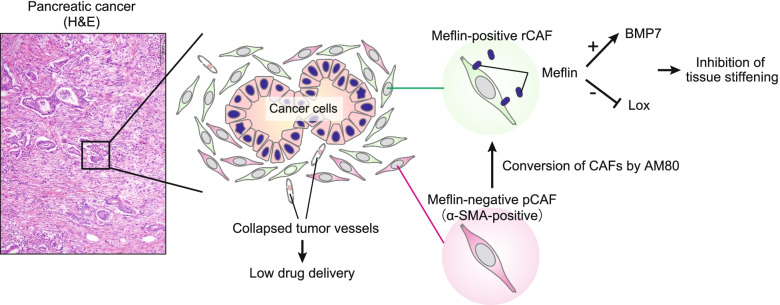
Cancer-associated fibroblasts (CAFs) are an important component of the tumour microenvironment. Recent studies revealed CAFs are heterogeneous and CAF subset(s) that suppress cancer progression (cancer-restraining CAFs [rCAFs]) must exist in addition to well-characterised cancer-promoting CAFs (pCAFs). However, the identity and specific markers of rCAFs are not yet reported. We recently identified Meflin as a specific marker of rCAFs in pancreatic and colon cancers. Our studies revealed that rCAFs may represent proliferating resident fibroblasts. Interestingly, a lineage tracing experiment showed Meflin-positive rCAFs differentiate into α-smooth muscle actin-positive and Meflin-negative CAFs, which are generally hypothesised as pCAFs, during cancer progression. Using a pharmacological approach, we identified AM80, a synthetic unnatural retinoid, as a reagent that effectively converts Meflin-negative pCAFs to Meflin-positive rCAFs. We aimed to investigate the efficacy of a combination of AM80 and gemcitabine (GEM) and nab-paclitaxel (nab-PTX) in patients with advanced pancreatic cancer.
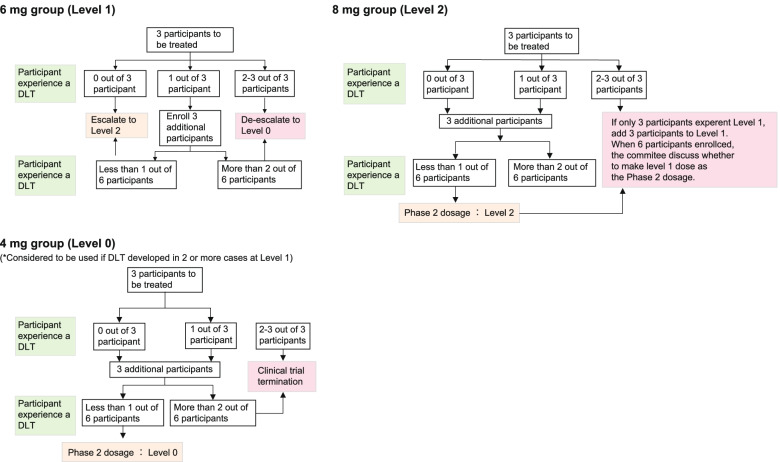
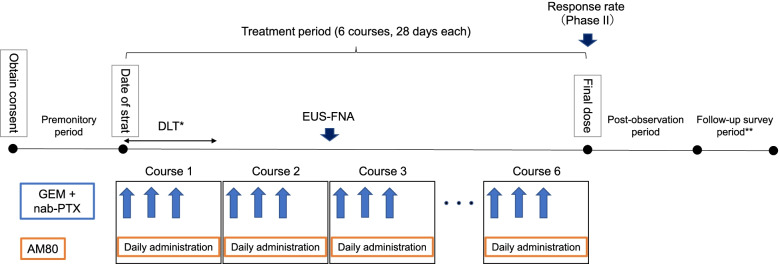
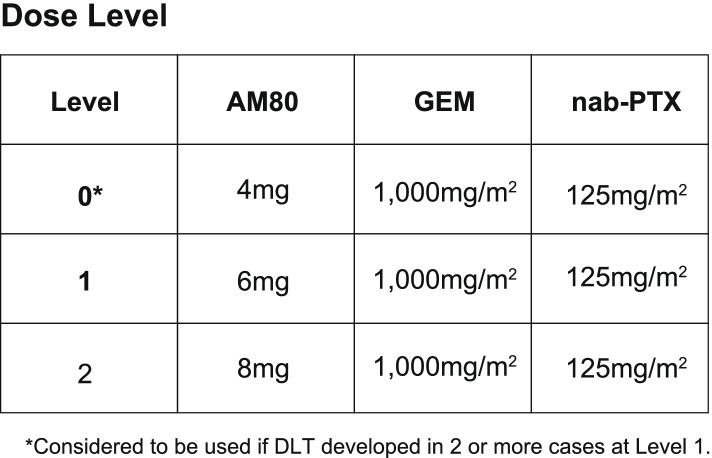
The phase I part is a 3 + 3 design, open-label, and dose-finding study. The dose-limiting toxicity (DLT) of these combination therapies would be evaluated for 4 weeks. After the DLT evaluation period, if no disease progression is noted based on the Response Evaluation Criteria in Solid Tumors (RECIST) version 1.1 or if the patient has no intolerable toxicity, administration of AM80 with GEM and nab-PTX would be continued for up to 24 weeks. The phase II part is an open-label, single-arm study. The maximum tolerated dose (MTD) of AM80 with GEM and nab-PTX, determined in phase I, would be administered until intolerable toxicity or disease progression occurs, up to a maximum of 24 weeks, to confirm efficacy and safety. The primary endpoints are frequency of DLT and MTD of AM80 with GEM and nab-PTX in the phase I part and response rate based on the RECIST in the phase II part. Given the historical control data, we hope that the response rate will be over 23% in phase II.
Strategies to convert pCAFs into rCAFs have been developed in recent years. We hypothesised that AM80 would be a promising enhancer of chemosensitivity and drug distribution through CAF conversion in the stroma.
Clinicaltrial.gov: NCT05064618 , registered on 1 October 2021. jRCT: jRCT2041210056 , registered on 27 August 2021.
癌症相关成纤维细胞(CAFs)是肿瘤微环境的重要组成部分。最近的研究表明,CAFs 具有异质性,除了特征明确的促癌 CAFs(pCAFs)外,还必须存在抑制癌症进展的 CAF 亚群(rCAFs)。然而,rCAFs 的特征和特定标志物尚不清楚。我们最近发现 Meflin 是胰腺和结肠癌症中 rCAFs 的特异性标志物。我们的研究表明,rCAFs 可能代表增殖的常驻成纤维细胞。有趣的是,一项谱系追踪实验表明,在癌症进展过程中,Meflin 阳性的 rCAFs 分化为α-平滑肌肌动蛋白阳性和 Meflin 阴性的 CAFs,这些 CAFs 通常被假设为 pCAFs。通过药理学方法,我们发现 AM80,一种合成的非天然视黄醇,是一种有效的试剂,可以将 Meflin 阴性的 pCAFs 转化为 Meflin 阳性的 rCAFs。我们旨在研究 AM80 联合吉西他滨(GEM)和 nab-紫杉醇(nab-PTX)在晚期胰腺癌患者中的疗效。
I 期部分为 3+3 设计、开放标签、剂量发现研究。将评估这些联合治疗方案的 4 周内的剂量限制毒性(DLT)。在 DLT 评估期结束后,如果根据实体瘤反应评估标准 1.1(RECIST)没有疾病进展或患者没有无法耐受的毒性,则继续给予 AM80 联合 GEM 和 nab-PTX 治疗,最长可达 24 周。II 期部分为开放标签、单臂研究。在 I 期确定的 AM80 联合 GEM 和 nab-PTX 的最大耐受剂量(MTD)将持续使用,直到出现无法耐受的毒性或疾病进展,最长可达 24 周,以确认疗效和安全性。主要终点是 I 期 AM80 联合 GEM 和 nab-PTX 的 DLT 频率和 MTD,以及 II 期基于 RECIST 的反应率。根据历史对照数据,我们希望 II 期的反应率超过 23%。
近年来已经开发了将 pCAFs 转化为 rCAFs 的策略。我们假设 AM80 通过 CAF 转化会成为一种有前途的增强化疗敏感性和药物分布的增强剂。
Clinicaltrial.gov:NCT05064618,2021 年 10 月 1 日注册。jRCT:jRCT2041210056,2021 年 8 月 27 日注册。