Department of Biochemistry, University of Cambridge, 80 Tennis Court road, CambridgeCB2 1GA, UK.
Division of Genetics and Genomics, Boston Children's Hospital; Department of Pediatrics, Harvard Medical School, Boston, MA 02215, USA.
Nucleic Acids Res. 2022 Mar 21;50(5):2700-2718. doi: 10.1093/nar/gkac104.
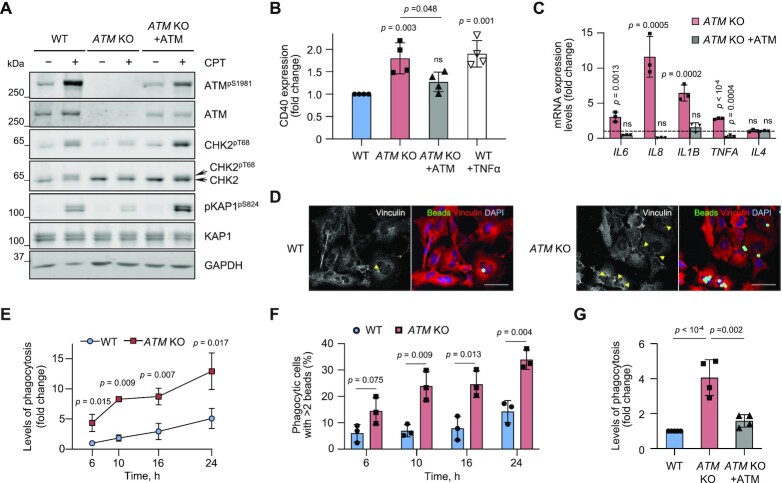
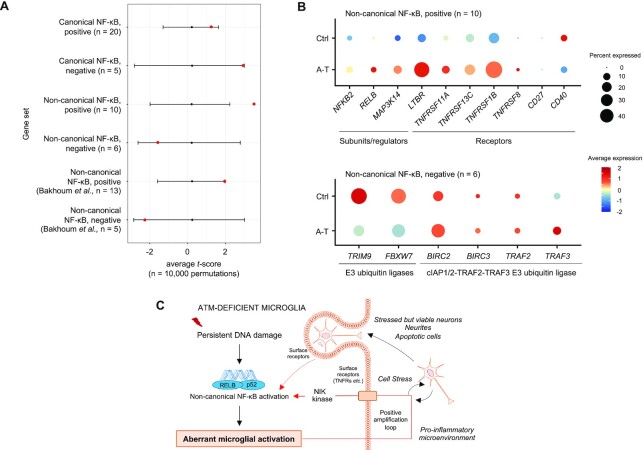
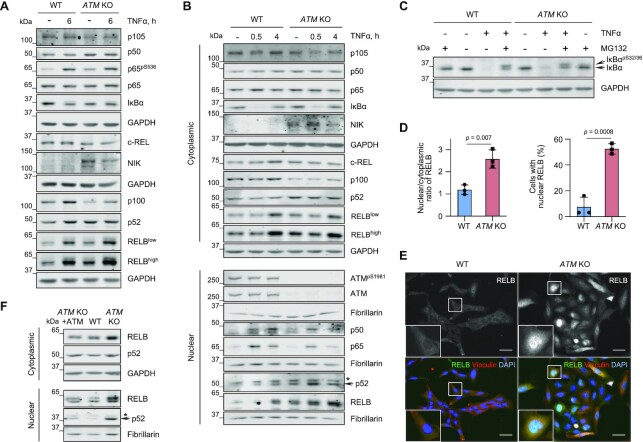
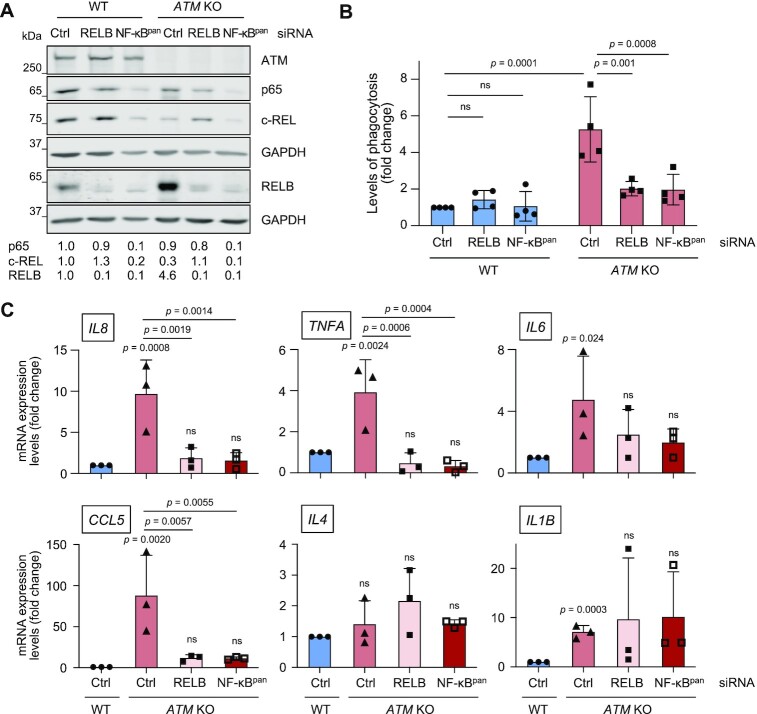
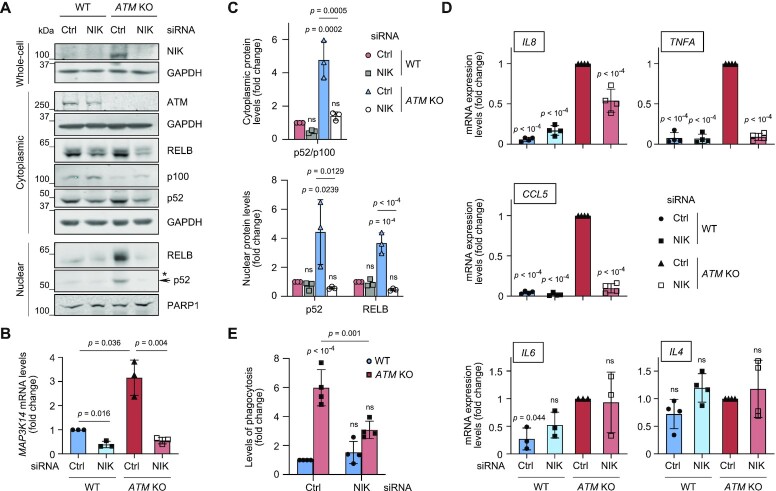
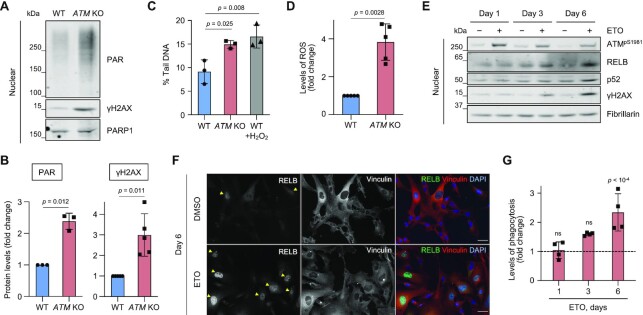
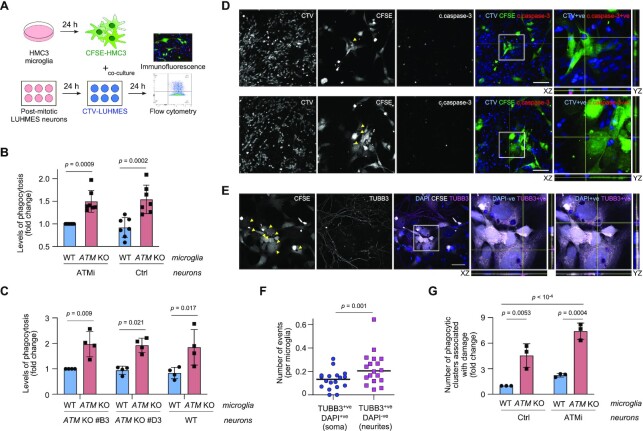
The autosomal recessive genome instability disorder Ataxia-telangiectasia, caused by mutations in ATM kinase, is characterized by the progressive loss of cerebellar neurons. We find that DNA damage associated with ATM loss results in dysfunctional behaviour of human microglia, immune cells of the central nervous system. Microglial dysfunction is mediated by the pro-inflammatory RELB/p52 non-canonical NF-κB transcriptional pathway and leads to excessive phagocytic clearance of neuronal material. Activation of the RELB/p52 pathway in ATM-deficient microglia is driven by persistent DNA damage and is dependent on the NIK kinase. Activation of non-canonical NF-κB signalling is also observed in cerebellar microglia of individuals with Ataxia-telangiectasia. These results provide insights into the underlying mechanisms of aberrant microglial behaviour in ATM deficiency, potentially contributing to neurodegeneration in Ataxia-telangiectasia.
常染色体隐性遗传基因组不稳定疾病共济失调-毛细血管扩张症,由 ATM 激酶突变引起,其特征是小脑神经元的进行性丧失。我们发现,与 ATM 缺失相关的 DNA 损伤导致中枢神经系统免疫细胞人小胶质细胞功能失调。小胶质细胞功能障碍是由促炎 RELB/p52 非经典 NF-κB 转录途径介导的,并导致神经元物质的过度吞噬清除。ATM 缺陷型小胶质细胞中 RELB/p52 途径的激活是由持续的 DNA 损伤驱动的,并且依赖于 NIK 激酶。在共济失调-毛细血管扩张症患者的小脑小胶质细胞中也观察到非经典 NF-κB 信号的激活。这些结果提供了对 ATM 缺陷中小胶质细胞行为异常的潜在机制的深入了解,可能导致共济失调-毛细血管扩张症的神经退行性变。