School of Neurobiology, Biochemistry and Biophysics, Faculty of Life Sciences, Tel-Aviv University, Tel-Aviv 6997801, Israel.
Pediatric Neurology Unit, Hadassah Medical Center and Faculty of Medicine, Hebrew University of Jerusalem, Jerusalem 91120, Israel.
Int J Mol Sci. 2022 Feb 21;23(4):2373. doi: 10.3390/ijms23042373.
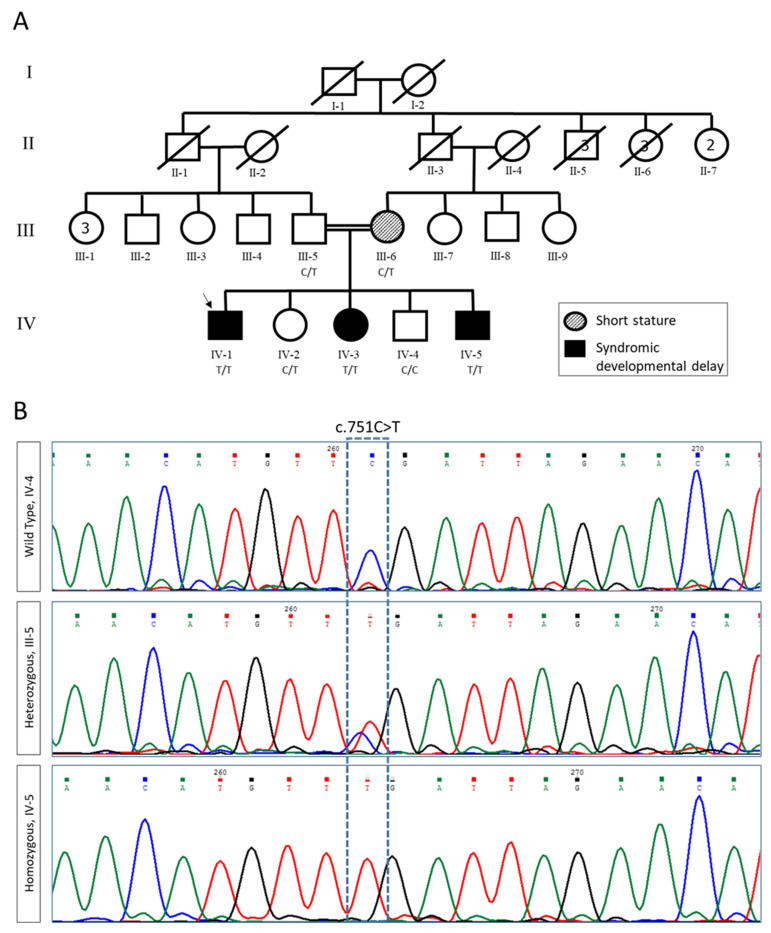
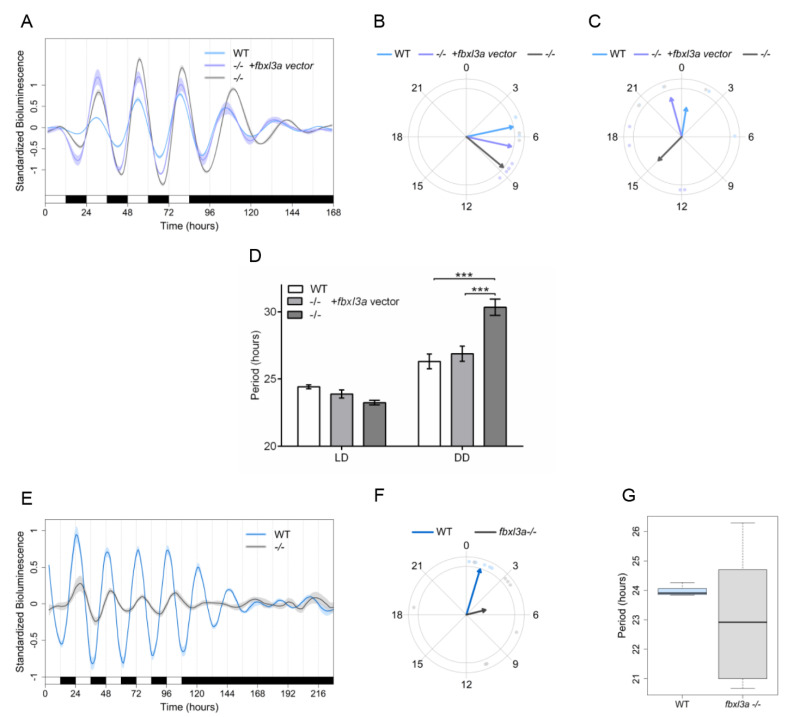
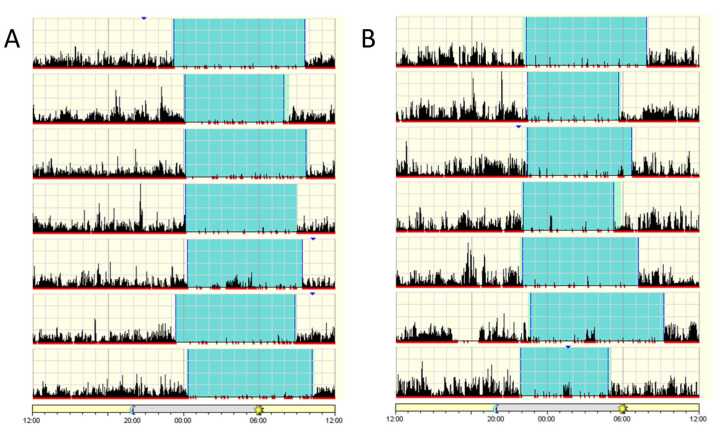
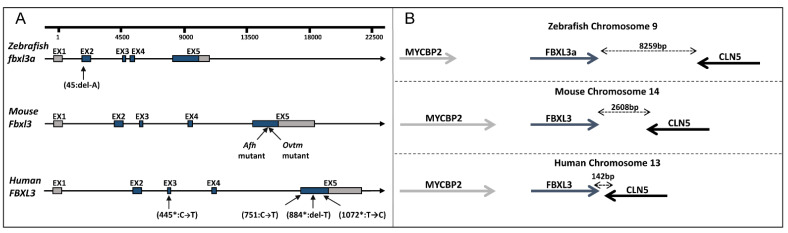
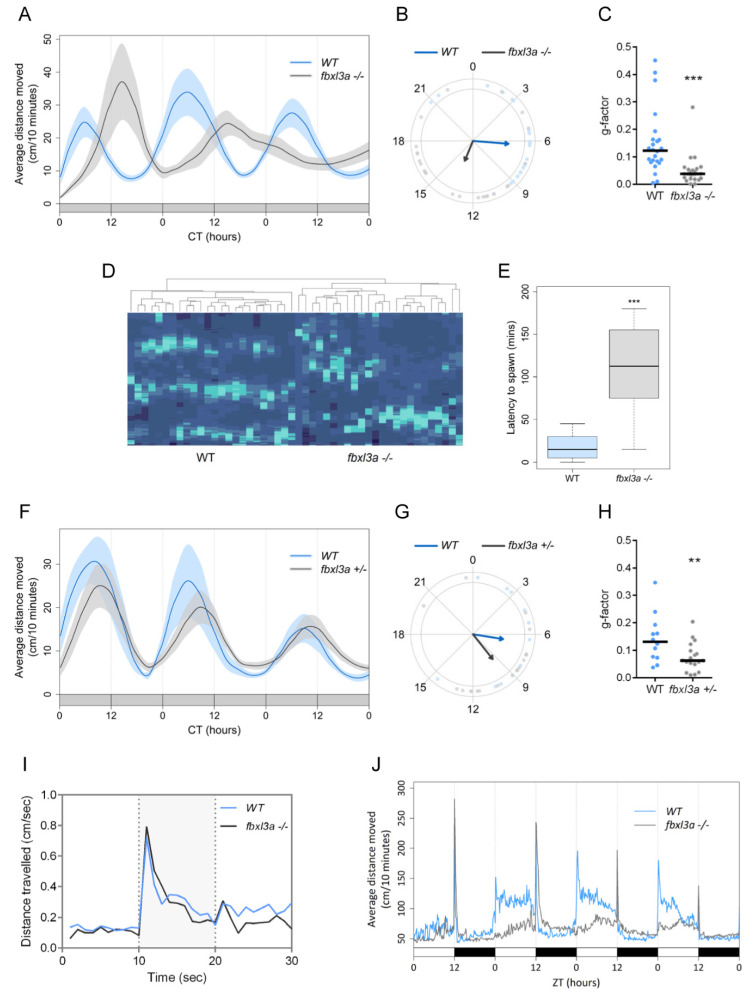
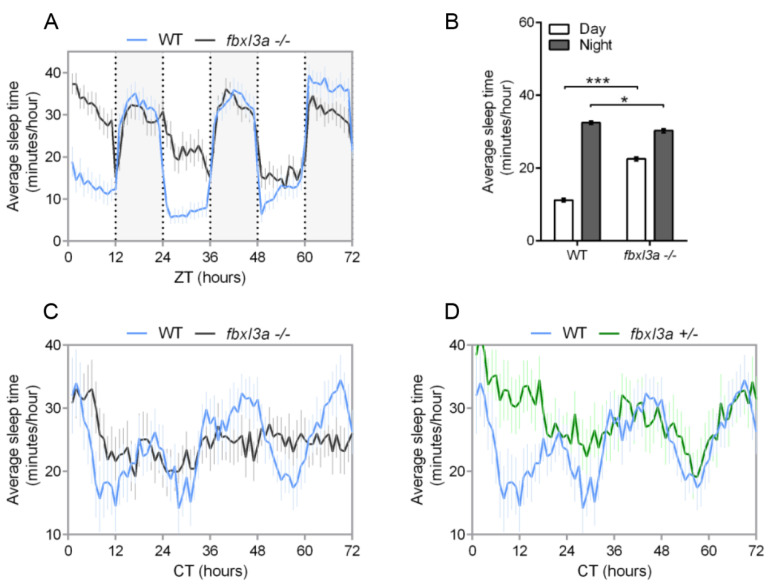
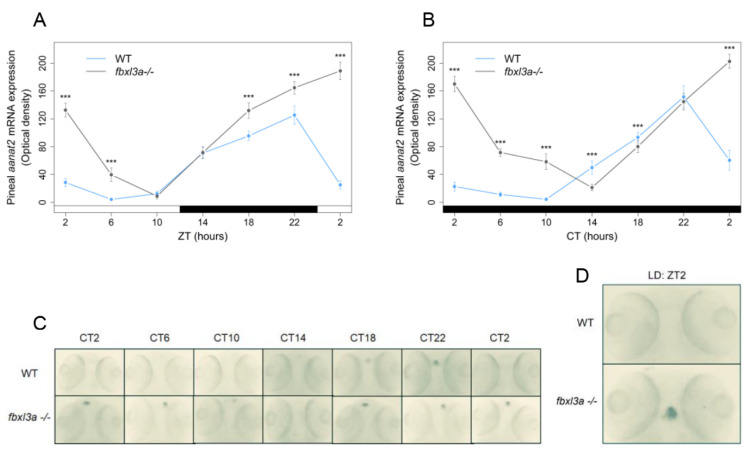
The circadian clock, which drives a wide range of bodily rhythms in synchrony with the day-night cycle, is based on a molecular oscillator that ticks with a period of approximately 24 h. Timed proteasomal degradation of clock components is central to the fine-tuning of the oscillator's period. FBXL3 is a protein that functions as a substrate-recognition factor in the E3 ubiquitin ligase complex, and was originally shown in mice to mediate degradation of CRY proteins and thus contribute to the mammalian circadian clock mechanism. By exome sequencing, we have identified a mutation in patients with syndromic developmental delay accompanied by morphological abnormalities and intellectual disability, albeit with a normal sleep pattern. We have investigated the function of FBXL3 in the zebrafish, an excellent model to study both vertebrate development and circadian clock function and, like humans, a diurnal species. Loss of function in zebrafish led to disruption of circadian rhythms of promoter activity and mRNA expression as well as locomotor activity and sleep-wake cycles. However, unlike humans, no morphological effects were evident. These findings point to an evolutionary conserved role for FBXL3 in the circadian clock system across vertebrates and to the acquisition of developmental roles in humans.
生物钟驱动着与昼夜周期同步的广泛的身体节律,它基于一个分子振荡器,其周期约为 24 小时。时钟组件的定时蛋白酶体降解是微调振荡器周期的核心。FBXL3 是一种作为 E3 泛素连接酶复合物中的底物识别因子发挥作用的蛋白质,最初在小鼠中被证明介导 CRY 蛋白的降解,从而有助于哺乳动物生物钟机制。通过外显子组测序,我们在伴有形态异常和智力障碍的综合征性发育迟缓患者中发现了一个突变,尽管他们的睡眠模式正常。我们研究了 FBXL3 在斑马鱼中的功能,斑马鱼是研究脊椎动物发育和生物钟功能的优秀模型,并且与人类一样,是一种昼行性物种。斑马鱼中 FBXL3 的功能丧失导致启动子活性和 mRNA 表达以及运动活性和睡眠-觉醒周期的生物钟节律紊乱。然而,与人类不同的是,没有明显的形态效应。这些发现表明 FBXL3 在整个脊椎动物的生物钟系统中具有进化保守的作用,并在人类中获得了发育作用。