Department of Political Science, University of Toronto, Canada.
Department of Political Science, Munk School of Global Affairs & Public Policy, University of Toronto, Canada.
Vaccine. 2022 Mar 18;40(13):2020-2027. doi: 10.1016/j.vaccine.2022.02.033. Epub 2022 Feb 17.
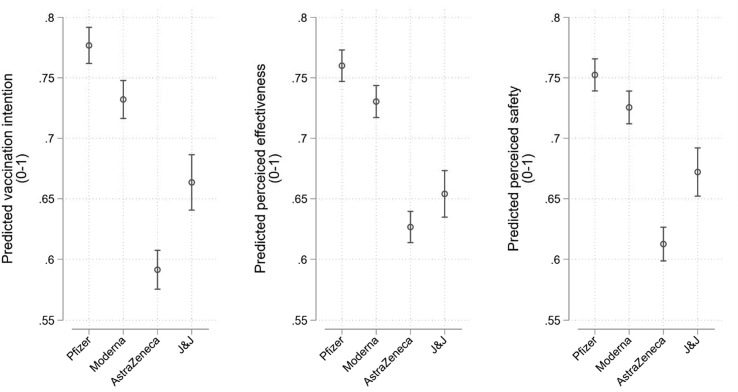
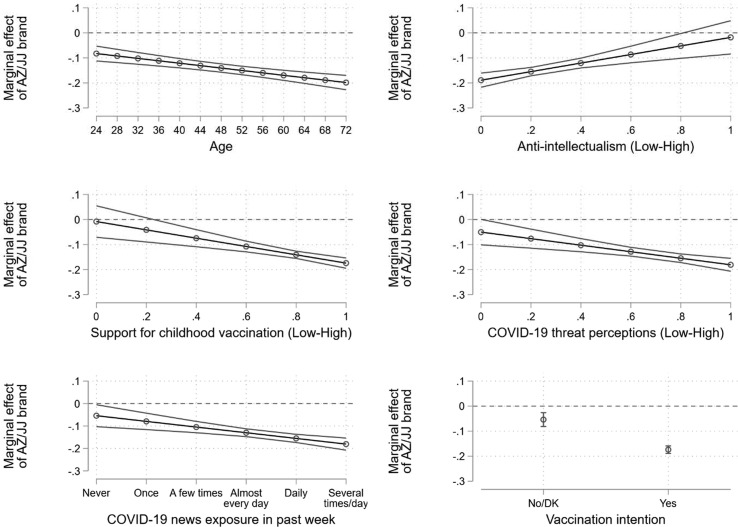
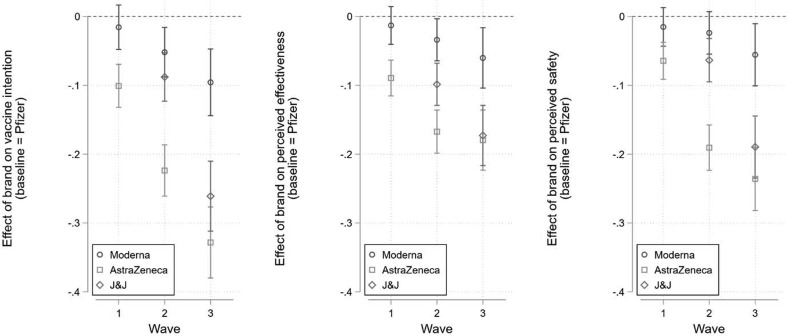
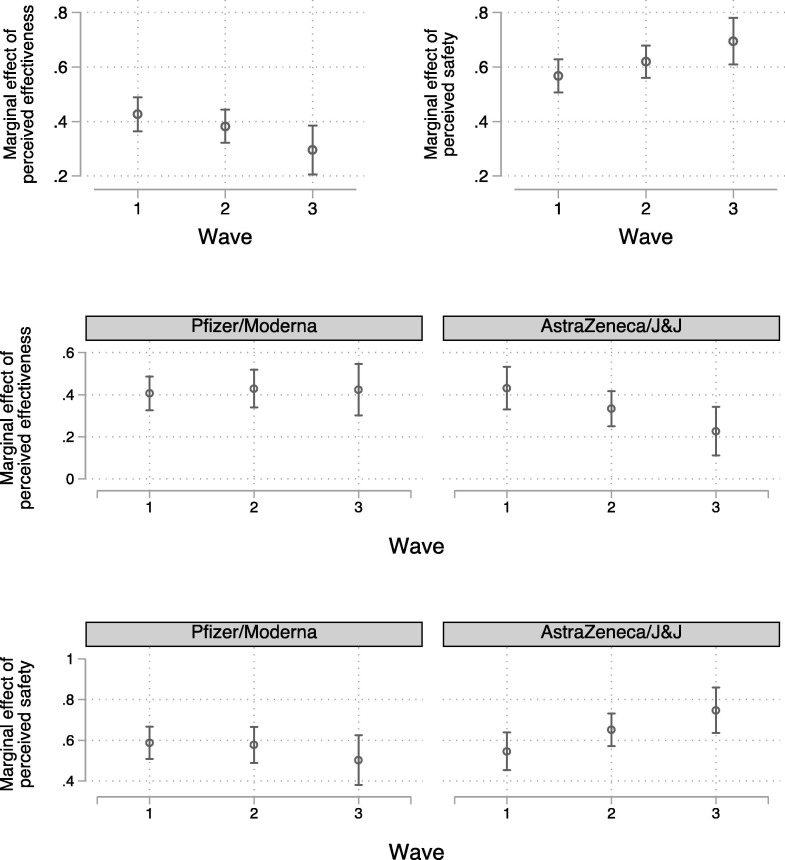
Most work on COVID-19 vaccine hesitancy has focused on its attitudinal and demographic correlates among individuals, but the characteristics of vaccines themselves also appear to be important. People are more willing to take vaccines with higher reported levels of efficacy and safety. Has this dynamic sparked comparative hesitancy towards specific COVID-19 vaccines? We conduct a series of cross-sectional survey experiments to test for brand-based differences in perceived effectiveness, perceived safety, and vaccination intention. Examining more than 6,200 individuals in a series of cross-sectional surveys, we find considerably more reluctance to take the AstraZeneca and Johnson & Johnson vaccines compared to those from Pfizer and Moderna if offered, despite all vaccines being approved and deemed safe and effective by a federal regulator. Comparative hesitancy towards these vaccines grew over the course of fielding as controversy arose over their link to extremely rare, but serious side effects. Comparative vaccine-specific hesitancy is strongest among people who are usually most open to mass vaccination efforts. Its effects are substantial: most respondents reported a willingness to wait months for their preferred vaccine rather than receive either the AstraZeneca or Johnson & Johnson vaccine immediately. Our findings call for additional research on the determinants and consequences of COVID-19 vaccine-specific hesitancy and communication strategies to minimize this challenge.
大多数关于 COVID-19 疫苗犹豫的研究都集中在个人的态度和人口统计学相关性上,但疫苗本身的特性似乎也很重要。人们更愿意接种报告的疗效和安全性更高的疫苗。这种动态是否引发了对特定 COVID-19 疫苗的比较犹豫?我们进行了一系列横断面调查实验,以测试疫苗品牌在感知有效性、感知安全性和接种意愿方面的差异。在一系列横断面调查中,我们对超过 6200 人进行了调查,发现与辉瑞和 Moderna 疫苗相比,如果提供阿斯利康和强生疫苗,人们更不愿意接种,尽管所有疫苗都获得了批准,并被联邦监管机构认为是安全有效的。随着关于它们与极其罕见但严重的副作用之间关联的争议不断出现,对这些疫苗的比较犹豫感在调查过程中不断增加。在通常最愿意接受大规模疫苗接种的人群中,对这些疫苗的特定犹豫感最强。其影响是巨大的:大多数受访者表示愿意等待数月接种他们首选的疫苗,而不是立即接种阿斯利康或强生疫苗。我们的研究结果呼吁对 COVID-19 疫苗特定犹豫的决定因素和后果以及沟通策略进行更多研究,以最小化这一挑战。