Small Animal Department, Faculty of Veterinary Science, Ghent University, Merelbeke, Belgium.
Department of Clinical Sciences and Public Health, Faculty of Veterinary Science, Mahidol University, Nakhon Pathom, Thailand.
J Vet Intern Med. 2022 Mar;36(2):379-396. doi: 10.1111/jvim.16377. Epub 2022 Feb 26.
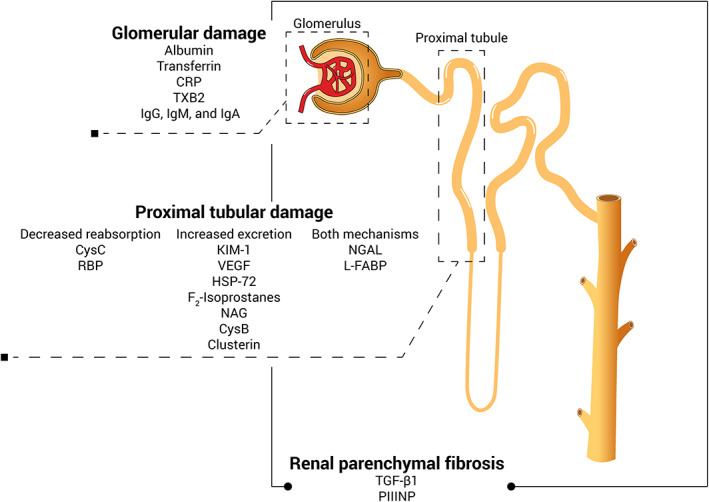
Serum creatinine concentration, the classical biomarker of chronic kidney disease (CKD) in cats, has important limitations that decrease its value as a biomarker of early CKD. Recently, serum symmetric dimethylarginine concentration was introduced as a novel glomerular filtration rate biomarker for the early detection of CKD in cats. However, data on its specificity are still limited. The limitations of conventional biomarkers and the desire for early therapeutic intervention in cats with CKD to improve outcomes have prompted the discovery and validation of novel renal biomarkers to detect glomerular or tubular dysfunction. Changes in the serum or urinary concentrations of these biomarkers may indicate early kidney damage or predict the progression of kidney before changes in conventional biomarkers are detectable. This review summarizes current knowledge on renal biomarkers in CKD in cats, a field that has progressed substantially over the last 5 years.
血清肌酐浓度是猫慢性肾脏病(CKD)的经典生物标志物,但存在重要局限性,降低了其作为早期 CKD 生物标志物的价值。最近,血清对称二甲基精氨酸浓度被引入作为一种新型的肾小球滤过率生物标志物,用于早期检测猫的 CKD。然而,其特异性的数据仍然有限。传统生物标志物的局限性以及希望对 CKD 猫进行早期治疗干预以改善预后,促使人们发现和验证新型的肾脏生物标志物,以检测肾小球或肾小管功能障碍。这些生物标志物在血清或尿液中的浓度变化可能表明早期肾损伤,或在常规生物标志物可检测到之前预测肾脏的进展。本综述总结了过去 5 年来猫 CKD 中肾脏生物标志物的最新知识,该领域取得了实质性进展。