Institute of Public Health, Riga Stradiņš University, Riga, Latvia.
Department of Public Health and Epidemiology, Riga Stradiņš University, Riga, Latvia.
BMC Health Serv Res. 2022 Feb 26;22(1):263. doi: 10.1186/s12913-022-07634-x.
The COVID-19 pandemic has challenged the ability of healthcare systems to ensure the continuity of health services for patients with non-communicable diseases (NCDs). The issue of remote consultations has emerged. Before the COVID-19 pandemic, remote consultations were not routinely provided or covered by public health funding in Latvia. This study aimed to describe the dynamics of consultations and the volume of remote consultations provided for patients with particular NCD and explore clinicians' experiences of providing remote consultations during the first wave of the COVID-19 pandemic in Latvia.
A mixed-method study focusing on the first wave of the COVID-19 pandemic in Latvia in Spring 2020 was conducted. Quantitative data from the National Health Services were analysed to assess the dynamics of consultations for patients with selected NCDs. Qualitative data were collected through 34 semi-structured interviews with general practitioners (GPs) and specialists and were analysed using an inductive thematic analysis. Purposive maximum variation sampling was used for participant selection.
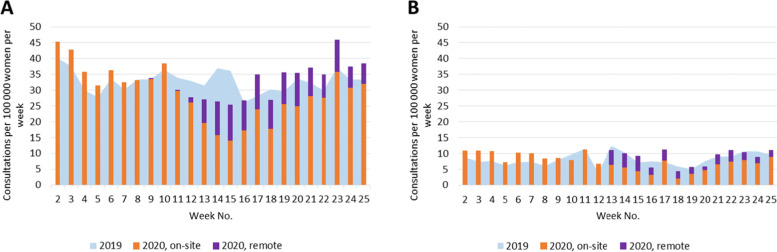
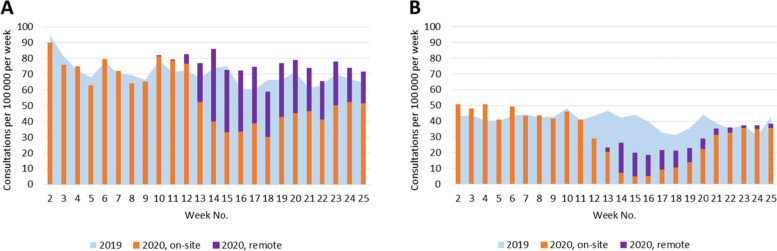
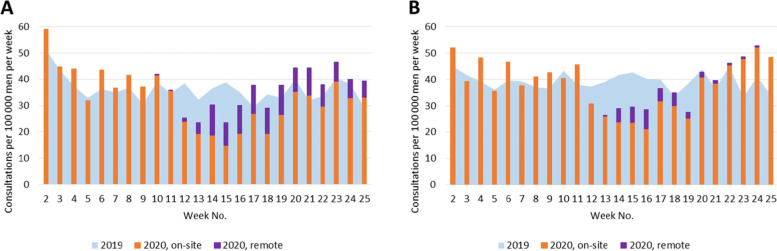
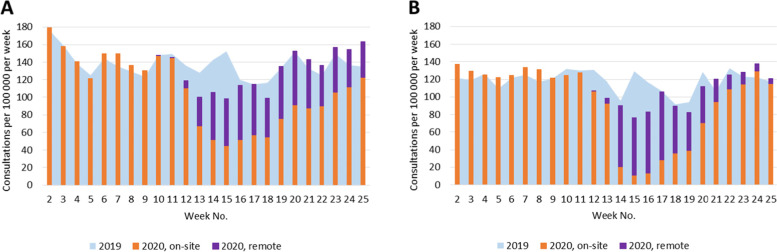
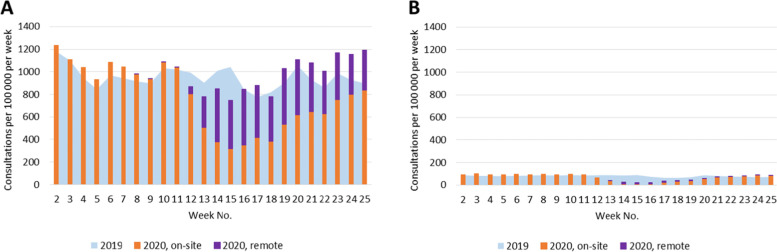
During the period with the strongest restrictions of scheduled on-site consultations, a decrease in the total number of consultations was observed for a variety of NCDs. A significant proportion of consultations in this period were provided remotely. GPs provided approximately one-third of cancer-related consultations and almost half of consultations for the other selected conditions remotely. Among specialists, endocrinologists had the highest proportion of remote consultations (up to 72.0%), while urologists had the lowest (16.4%). Thematic analysis of the semi-structured interviews revealed five themes: 1) Adjusting in a time of confusion and fear, 2) Remote consultations: safety versus availability, 3) Sacrifice and loss of privacy, 4) Advantages and disadvantages of communication technologies, and 5) Different form of communication and a health literacy challenge.
During the first wave of the COVID-19 pandemic in Latvia, disruptions to health care services decreased the total number of consultations for patients with NCDs provided by both GPs and specialists. In this period, remote consultations proved to be an important instrument for ensuring the continuity of health care for patients with NCDs, and the necessity to develop a well-designed system for telemedicine in Latvia was highlighted.
COVID-19 大流行挑战了医疗保健系统确保非传染性疾病(NCD)患者医疗服务连续性的能力。远程咨询的问题已经出现。在 COVID-19 大流行之前,远程咨询在拉脱维亚并没有常规提供,也没有公共卫生资金覆盖。本研究旨在描述咨询的动态以及为特定 NCD 患者提供的远程咨询量,并探讨临床医生在拉脱维亚 COVID-19 大流行第一波期间提供远程咨询的经验。
本研究采用混合方法,重点关注 2020 年春季拉脱维亚 COVID-19 大流行的第一波。对国家卫生服务的定量数据进行分析,以评估选定 NCD 患者咨询的动态。通过对 34 名全科医生(GP)和专家的半结构化访谈收集定性数据,并使用归纳主题分析进行分析。采用目的性最大变异抽样选择参与者。
在限制现场预约咨询最强的时期,各种 NCD 的总咨询量均有所下降。在此期间,相当一部分咨询是通过远程提供的。GP 提供了大约三分之一的癌症相关咨询,以及其他选定条件的近一半咨询是通过远程提供的。在专家中,内分泌学家远程咨询的比例最高(高达 72.0%),而泌尿科医生的比例最低(16.4%)。对半结构访谈的主题分析揭示了五个主题:1)在困惑和恐惧的时期进行调整,2)远程咨询:安全与可用性,3)牺牲和隐私的丧失,4)沟通技术的优缺点,5)不同形式的沟通和健康素养挑战。
在拉脱维亚 COVID-19 大流行的第一波期间,医疗服务的中断减少了全科医生和专家为 NCD 患者提供的总咨询量。在此期间,远程咨询被证明是确保 NCD 患者医疗保健连续性的重要手段,突显了在拉脱维亚制定远程医疗精心设计系统的必要性。