Department of Hepatobiliary Surgery, Shandong Provincial Hospital, Cheeloo College of Medicine, Shandong University, Jinan, Shandong, China.
Department of Physiology and Pathophysiology, School of Basic Medical Sciences, Cheeloo College of Medicine, Shandong University, Jinan, Shandong, China.
Cell Mol Gastroenterol Hepatol. 2022;13(5):1592-1609.e9. doi: 10.1016/j.jcmgh.2022.02.014. Epub 2022 Feb 24.
BACKGROUND & AIMS: Distal cholangiocarcinoma (dCCA) are a group of epithelial cell malignancies that occurs at the distal common bile duct, and account for approximately 40% of all cholangiocarcinoma cases. dCCA remains a highly lethal disease as it typically features remarkable cellular heterogeneity. A comprehensive exploration of cellular diversity and the tumor microenvironment is essential to depict the mechanisms driving dCCA progression.
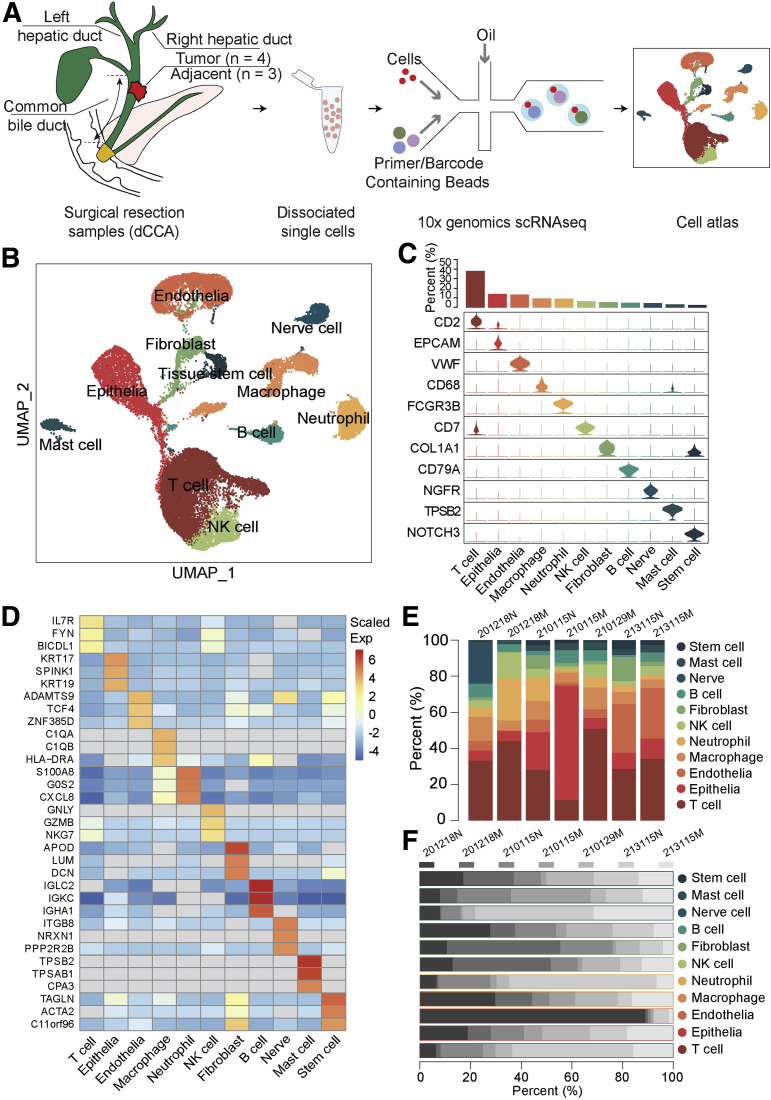
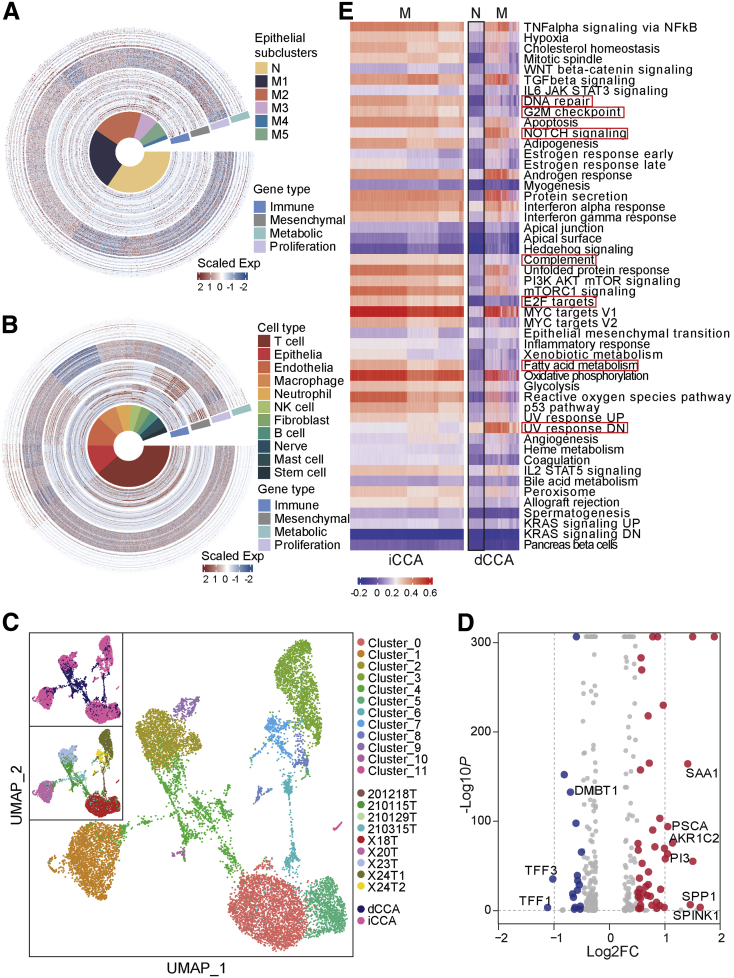
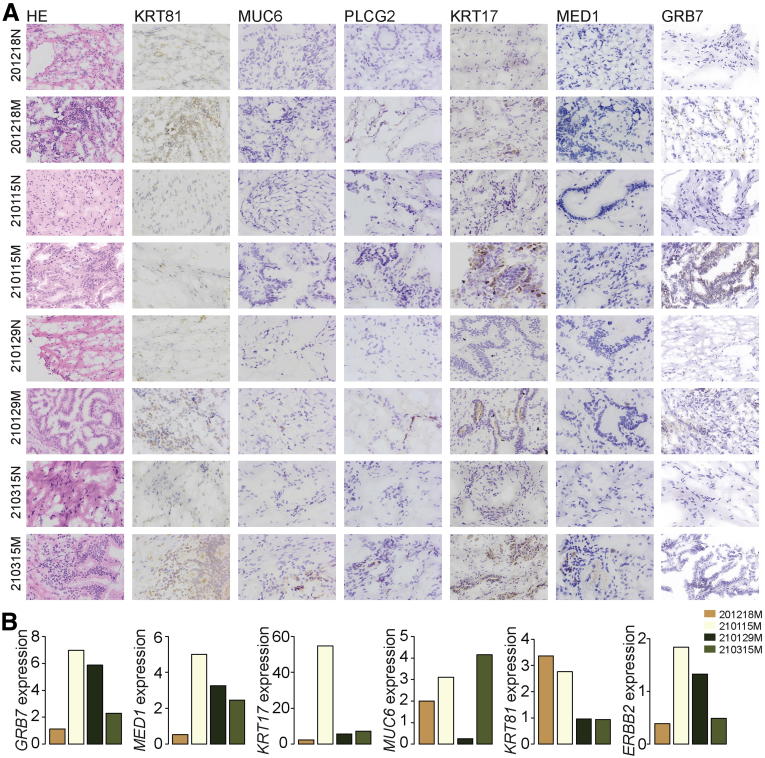
Single-cell RNA sequencing was used here to dissect the heterogeneity landscape and tumor microenvironment composition of human dCCAs. Seven human dCCAs and adjacent normal bile duct samples were included in the current study for single-cell RNA sequencing and subsequent validation approaches. Additionally, the results of the analyses were compared with bulk transcriptomic datasets from extrahepatic cholangiocarcinoma and single-cell RNA data from intrahepatic cholangiocarcinoma.
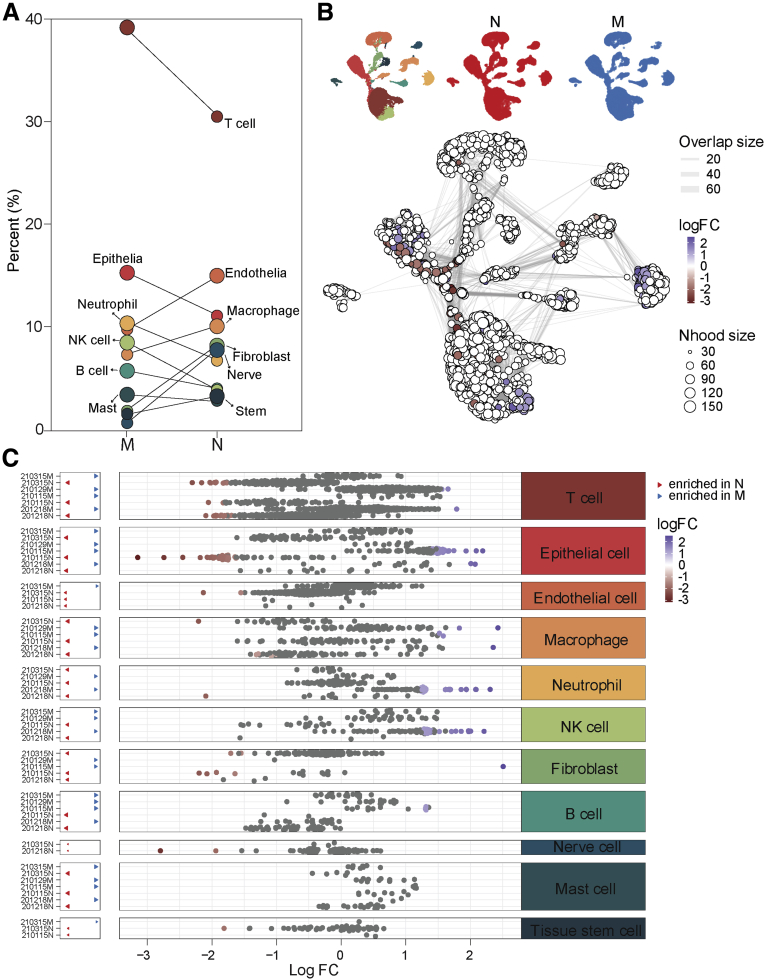
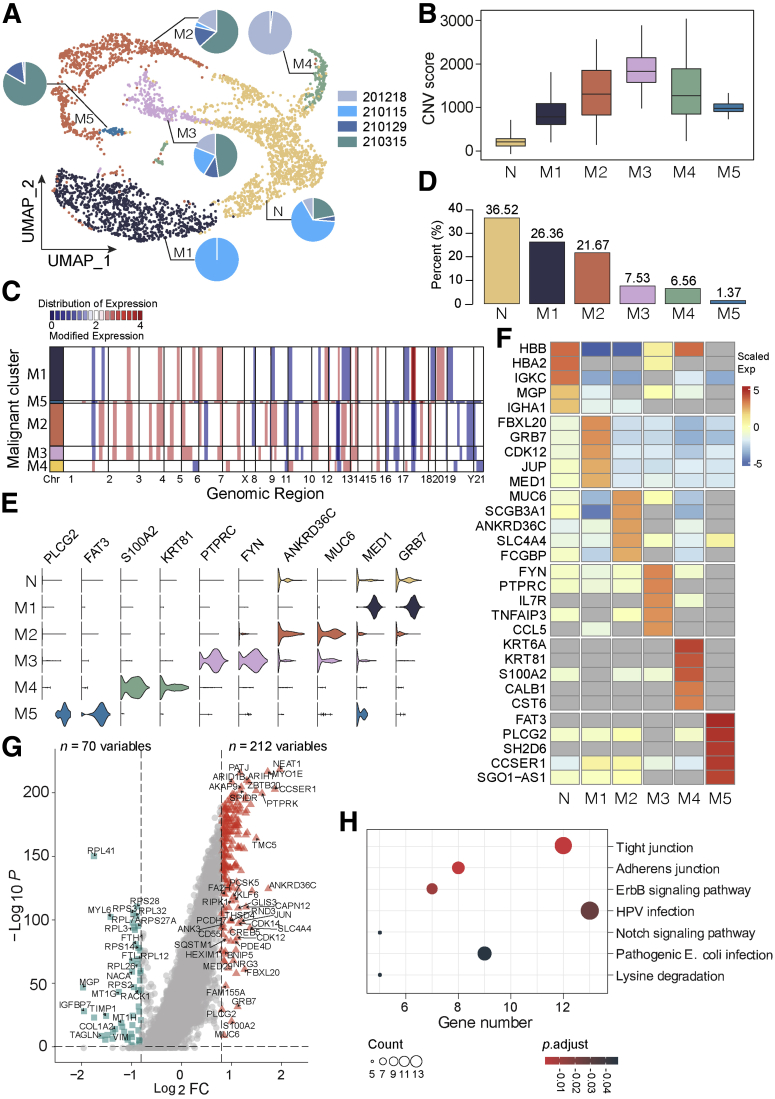
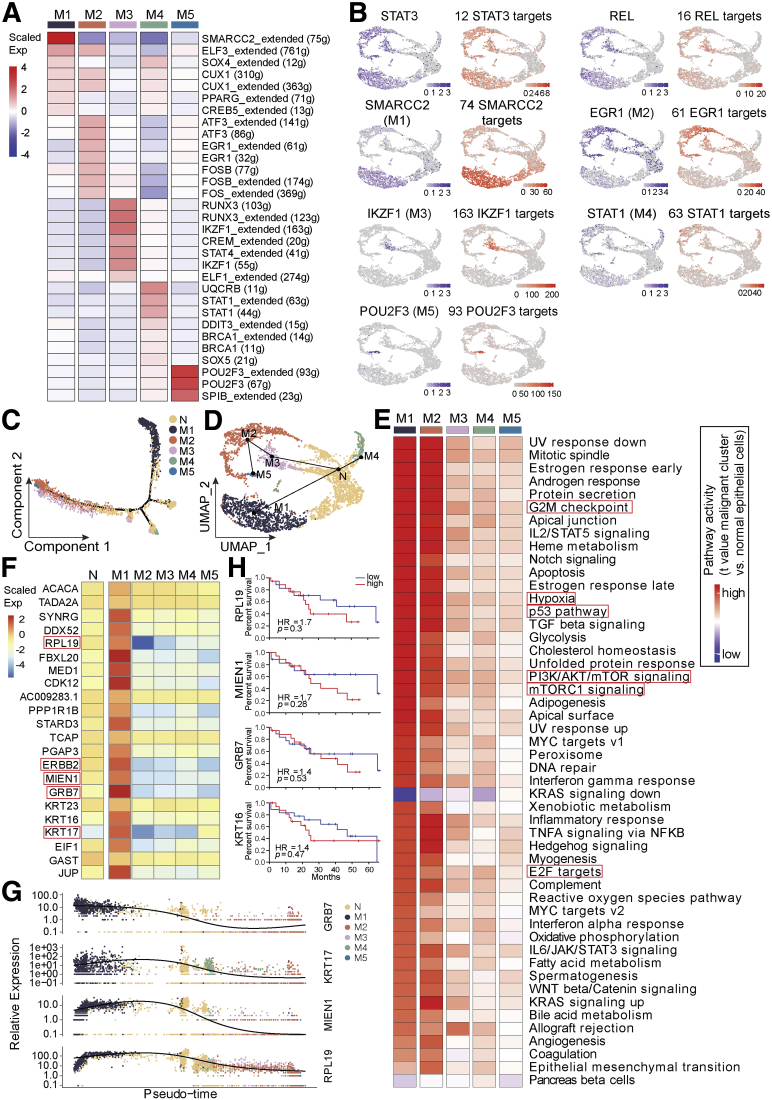
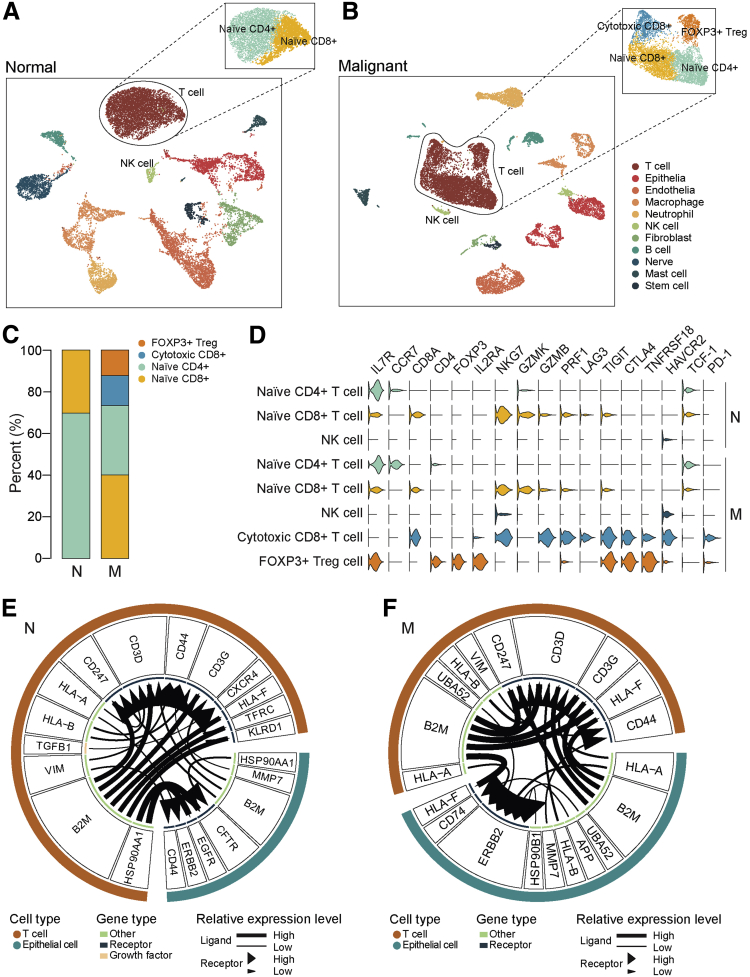
We sequenced a total of 49,717 single cells derived from human dCCAs and adjacent tissues, identifying 11 distinct cell types. Malignant cells displayed remarkable inter- and intra-tumor heterogeneity with 5 distinct subsets were defined in tumor samples. The malignant cells displayed variable degree of aneuploidy, which can be classified into low- and high-copy number variation groups based on either amplification or deletion of chr17q12 - chr17q21.2. Additionally, we identified 4 distinct T lymphocytes subsets, of which cytotoxic CD8+ T cells predominated as effectors in tumor tissues, whereas tumor infiltrating FOXP3+ CD4+ regulatory T cells exhibited highly immunosuppressive characteristics.
Our single-cell transcriptomic dataset depicts the inter- and intra-tumor heterogeneity of human dCCAs at the expression level.
远端胆管癌(dCCA)是一组发生在远端胆总管的上皮细胞恶性肿瘤,约占所有胆管癌病例的 40%。由于其典型的显著细胞异质性,dCCA 仍然是一种高度致命的疾病。全面探索细胞多样性和肿瘤微环境对于描绘驱动 dCCA 进展的机制至关重要。
本研究采用单细胞 RNA 测序技术剖析人类 dCCA 的异质性景观和肿瘤微环境组成。共纳入 7 例人类 dCCA 及相邻正常胆管样本进行单细胞 RNA 测序及后续验证。此外,还将分析结果与肝外胆管癌的批量转录组数据集和肝内胆管癌的单细胞 RNA 数据进行了比较。
我们总共对来自人类 dCCA 和相邻组织的 49717 个单细胞进行了测序,鉴定出 11 种不同的细胞类型。恶性细胞表现出显著的肿瘤内和肿瘤间异质性,在肿瘤样本中定义了 5 种不同的亚群。恶性细胞表现出不同程度的非整倍体性,根据 chr17q12-chr17q21.2 的扩增或缺失,可将其分为低拷贝数变异和高拷贝数变异组。此外,我们还鉴定出 4 种不同的 T 淋巴细胞亚群,其中细胞毒性 CD8+T 细胞作为效应细胞在肿瘤组织中占主导地位,而肿瘤浸润的 FOXP3+CD4+调节性 T 细胞则表现出高度免疫抑制的特征。
我们的单细胞转录组数据集描绘了人类 dCCA 在表达水平上的肿瘤内和肿瘤间异质性。