Li Lin, Feng Jin, Sun Lei, Xuan Yao-Wei, Wen Li, Li Yun-Xia, Yang Shuo, Zhu Biao, Tian Xiao-Yu, Li Shuang, Zhao Li-Sheng, Dang Rui-Jie, Jiao Ting, Zhang Hai-Song, Wen Ning
Medical School of Chinese PLA, Beijing, China.
Department of Stomatology, The First Medical Center, Chinese PLA General Hospital, Beijing, China.
Int J Stem Cells. 2022 Nov 30;15(4):405-414. doi: 10.15283/ijsc21152. Epub 2022 Feb 28.
Chronic inflammation of bone tissue often results in bone defects and hazards to tissue repair and regeneration. Cannabidiol (CBD) is a natural cannabinoid with multiple biological activities, including anti-inflammatory and osteogenic potential. This study aimed to investigate the efficacy and mechanisms of CBD in the promotion of bone marrow mesenchymal stem cells (BMSCs) osteogenic differentiation in the inflammatory microenvironment.
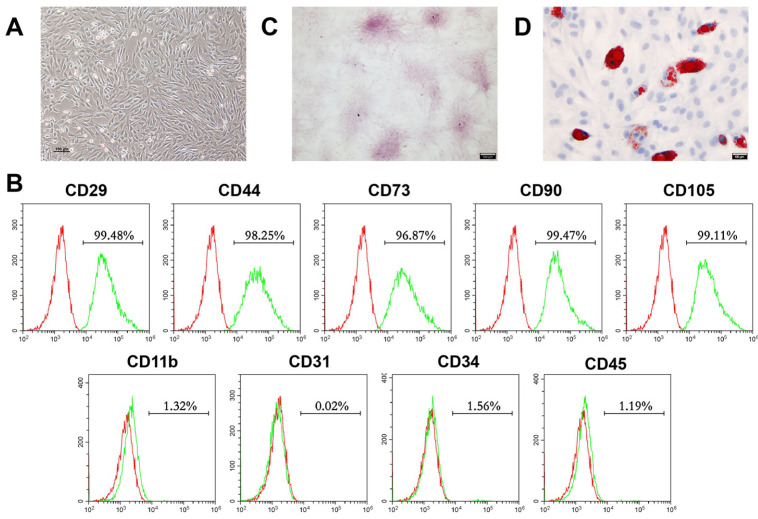
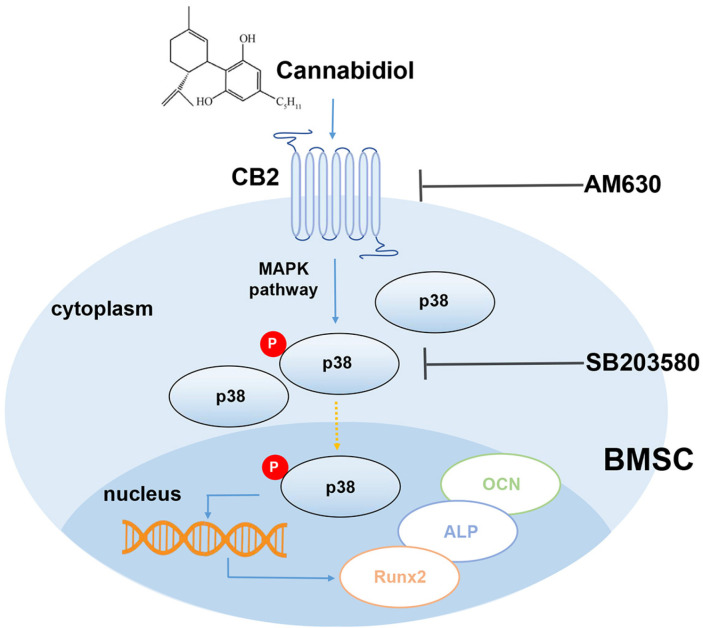
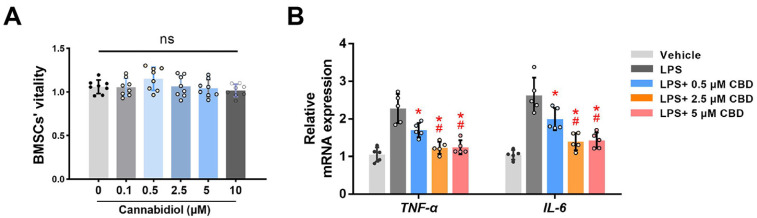
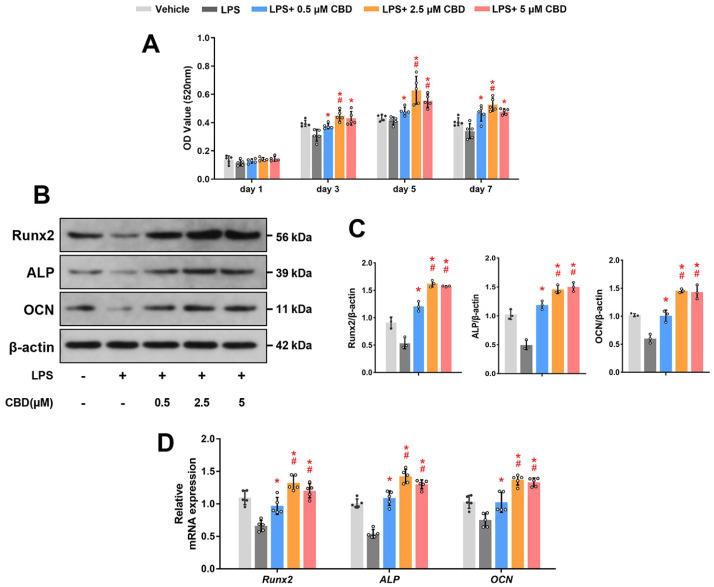
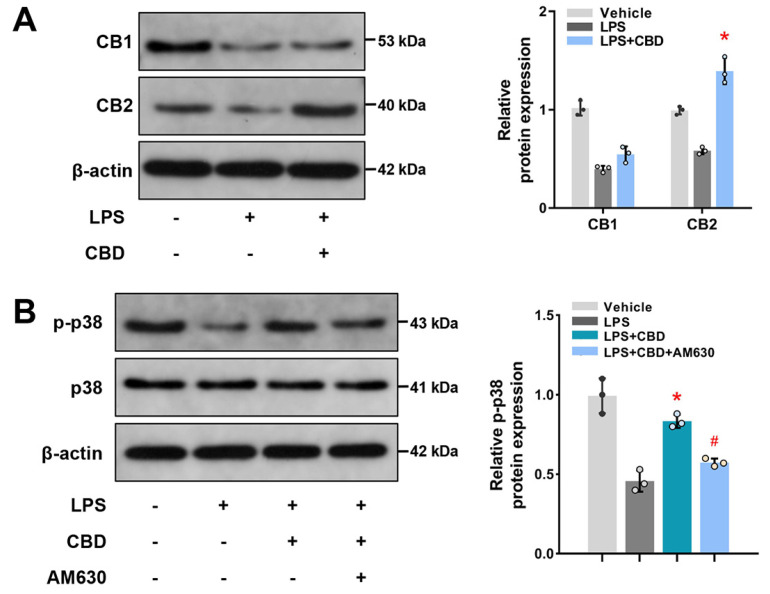
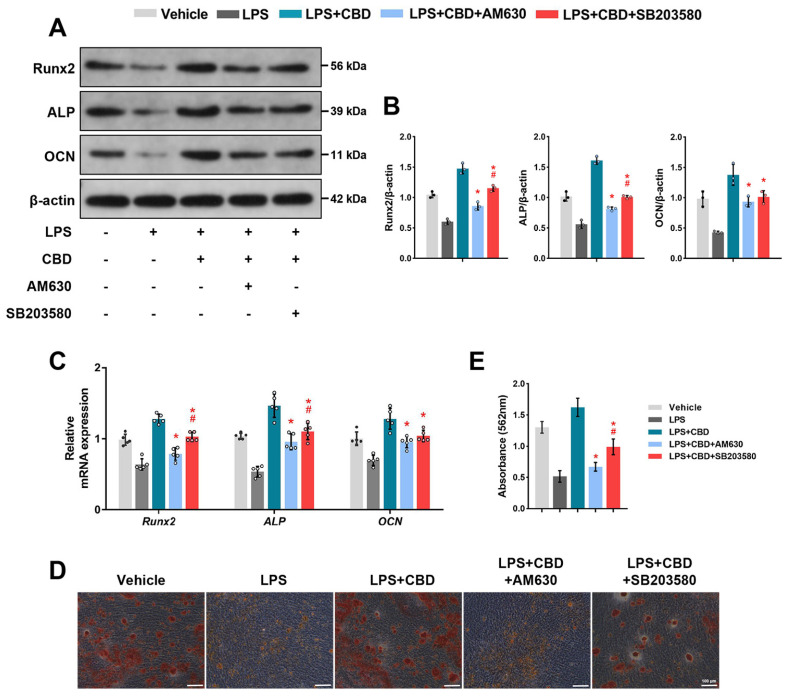
BMSCs isolated from C57BL/6 mice, expressed stem cell characteristic surface markers and presented multidirectional differentiation potential. The CCK-8 assay was applied to evaluate the effects of CBD on BMSCs' vitality, and demonstrating the safety of CBD on BMSCs. Then, BMSCs were stimulated with lipopolysaccharide (LPS) to induce inflammatory microenvironment. We found that CBD intervention down-regulated mRNA expression levels of inflammatory cytokines and promoted cells proliferation in LPS-treated BMSCs, also reversed the protein and mRNA levels downregulation of osteogenic markers caused by LPS treatment. Moreover, CBD intervention activated the cannabinoid receptor 2 (CB2) and the p38 mitogen-activated protein kinase (MAPK) signaling pathway. While AM630, a selective CB2 inhibitor, reduced phosphorylated (p)-p38 levels. In addition, AM630 and SB530689, a selective p38 MAPK inhibitor, attenuated the enhancement of osteogenic markers expression levels by CBD in inflammatory microenvironment, respectively.
CBD promoted osteogenic differentiation of BMSCs via the CB2/p38 MAPK signaling pathway in the inflammatory microenvironment.
骨组织的慢性炎症常导致骨缺损,并对组织修复和再生造成危害。大麻二酚(CBD)是一种具有多种生物活性的天然大麻素,包括抗炎和成骨潜力。本研究旨在探讨CBD在炎症微环境中促进骨髓间充质干细胞(BMSCs)成骨分化的疗效及机制。
从C57BL/6小鼠分离的BMSCs表达干细胞特征性表面标志物,并具有多向分化潜能。采用CCK-8法评估CBD对BMSCs活力的影响,证明CBD对BMSCs的安全性。然后,用脂多糖(LPS)刺激BMSCs以诱导炎症微环境。我们发现,CBD干预下调了炎症细胞因子的mRNA表达水平,促进了LPS处理的BMSCs中的细胞增殖,还逆转了LPS处理导致的成骨标志物蛋白和mRNA水平的下调。此外,CBD干预激活了大麻素受体2(CB2)和p38丝裂原活化蛋白激酶(MAPK)信号通路。而选择性CB2抑制剂AM630降低了磷酸化(p)-p38水平。此外,AM630和选择性p38 MAPK抑制剂SB530689分别减弱了CBD在炎症微环境中对成骨标志物表达水平的增强作用。
在炎症微环境中,CBD通过CB2/p38 MAPK信号通路促进BMSCs的成骨分化。