Section of Electrophysiology, Division of Cardiovascular Medicine, University of Pennsylvania, Philadelphia, PA, USA.
Section of Electrophysiology, Division of Cardiovascular Medicine, University of Pennsylvania, Philadelphia, PA, USA.
Card Electrophysiol Clin. 2022 Mar;14(1):105-110. doi: 10.1016/j.ccep.2021.10.011. Epub 2021 Oct 30.
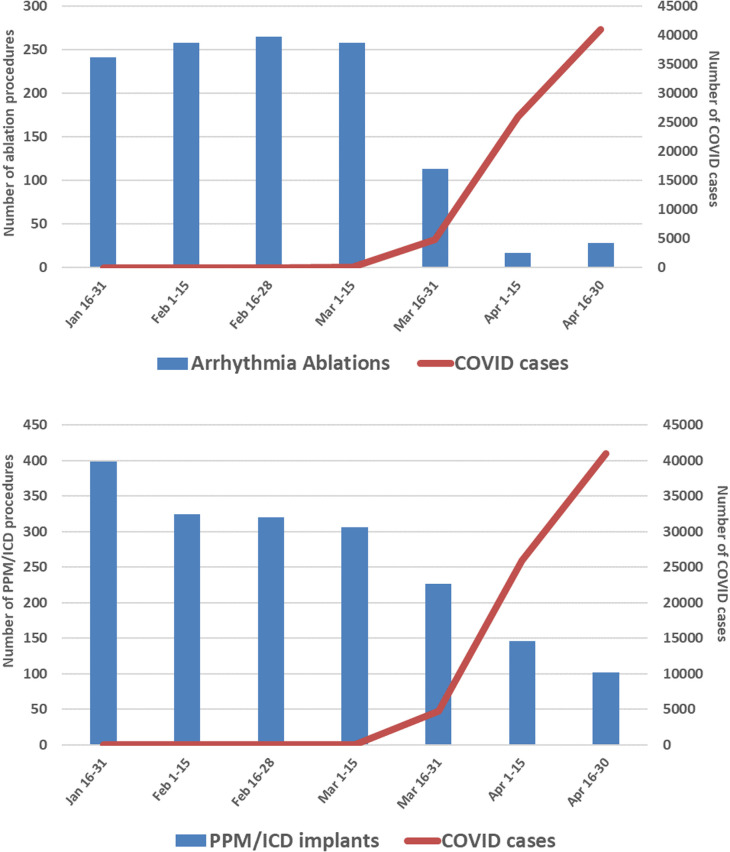
The coronavirus disease 2019 (COVID-19) pandemic, caused by the severe acute respiratory syndrome coronavirus 2 (SARS-CoV-2), has imposed an unprecedented health care crisis across the globe. Health care efforts across the world have been diverted to tackling the pandemic since early 2020. Hospitals and health care systems have undertaken major restructuring in an effort to deliver health care to an increasing number of patients affected by COVID-19. Although great focus has been placed on treating those individuals suffering from COVID-19, clinicians must simultaneously balance caring for patients who are not actively infected. In anticipation of an exponential increase in COVID-19 cases, health care systems developed strategies to channel available resources to meet the rapidly rising demands of COVID-19. This change was noticed significantly in the field of invasive cardiology as well. Many cardiac catheterization and electrophysiology (EP) laboratories canceled elective procedures to limit the burden on hospital resources and preserve personal protective equipment (PPE). Major societies published guidance statements delineating patient selection for procedures during the exponential phase of the pandemic growth. Patient care was triaged and those waiting for elective procedures were managed with expectant care or noninvasive approaches to preserve hospital resources and personnel. In the current article, we review the impact of the COVID-19 pandemic and its response to the volume of interventional cardiology (IC) and EP procedures across the world.
2019 年冠状病毒病(COVID-19)大流行是由严重急性呼吸系统综合征冠状病毒 2(SARS-CoV-2)引起的,它在全球范围内造成了前所未有的医疗保健危机。自 2020 年初以来,全世界的医疗保健工作都集中精力应对这一大流行病。医院和医疗保健系统已经进行了重大的结构调整,努力为越来越多的 COVID-19 患者提供医疗服务。尽管人们非常关注那些患有 COVID-19 的人,但临床医生必须同时平衡照顾那些没有受到感染的患者。为了应对 COVID-19 病例的指数级增长,医疗保健系统制定了战略,以引导可用资源满足 COVID-19 迅速增长的需求。这一变化在介入心脏病学领域也得到了显著体现。许多心脏导管插入术和电生理(EP)实验室取消了择期手术,以减轻医院资源的负担并保护个人防护设备(PPE)。主要学会发布了指导声明,划定了在大流行快速增长阶段进行手术的患者选择。对患者进行了分诊,对等待择期手术的患者进行了预期治疗或非侵入性治疗,以保护医院资源和人员。在本文中,我们回顾了 COVID-19 大流行及其对全球介入心脏病学(IC)和 EP 手术数量的影响。