Tehrani Sadra Samavarchi, Zaboli Ehsan, Sadeghi Farzin, Khafri Soraya, Karimian Ansar, Rafie Mahnoosh, Parsian Hadi
Student Research Committee, Babol University of Medical Sciences, Babol, Iran.
Cellular and Molecular Biology Research Center, Health Research Institute, Babol University of Medical Sciences, Babol, Iran.
Biomedicine (Taipei). 2021 Jun 1;11(2):30-39. doi: 10.37796/2211-8039.1150. eCollection 2021.
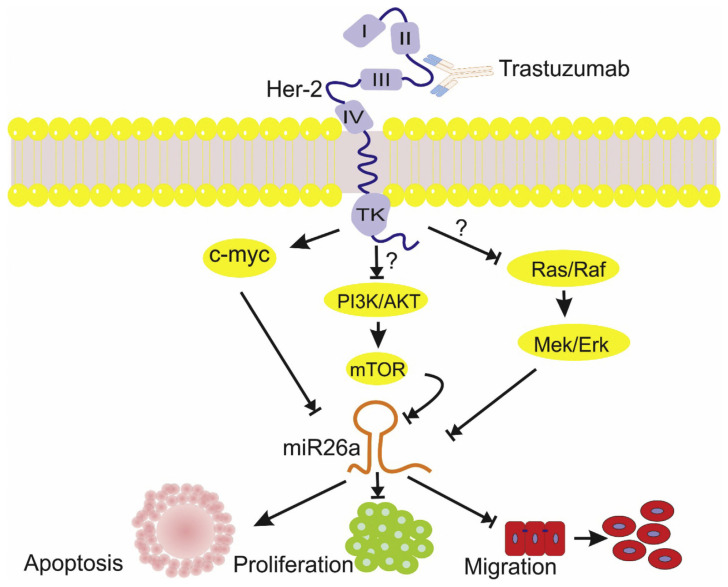
Breast cancer (BC) is known as the most prevalent type of cancer among women. Trastuzumab, as an anticancer drug, has been used broadly in human epidermal growth factor receptor 2 (HER-2) positive (+) BC patients. Moreover, accumulating evidence has demonstrated that microRNAs is involved in the pathogenesis BC. Hence, we aimed to investigate the effect of trastuzumab on the expression levels of microRNA-26a in HER-2 positive BC patients.
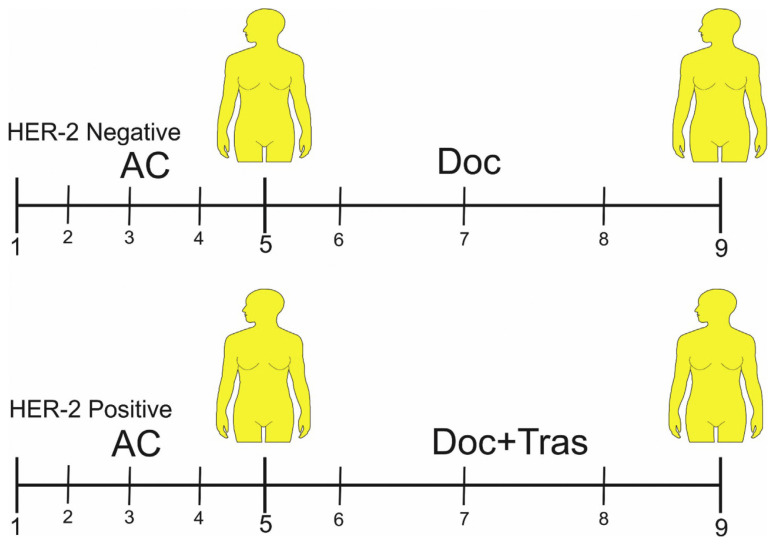
This study was conducted among HER-2 + and HER-2 Negative (-) BC patients. Serum expression of microRNA-26a was detected by real-time PCR. Then, we assessed the correlations of microRNA-26a levels with multiple clinico-pathological characteristics of BC.
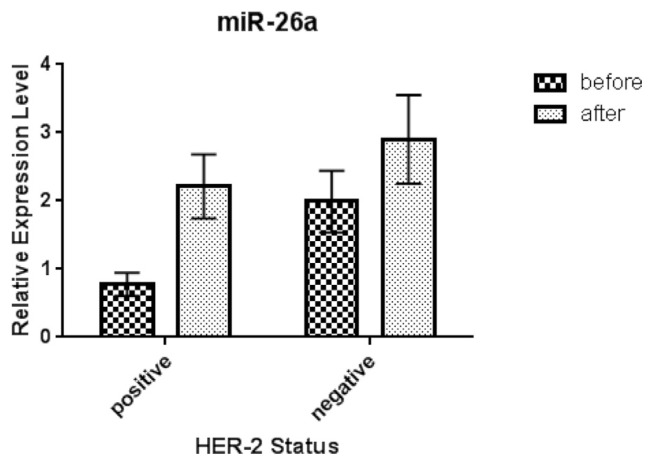
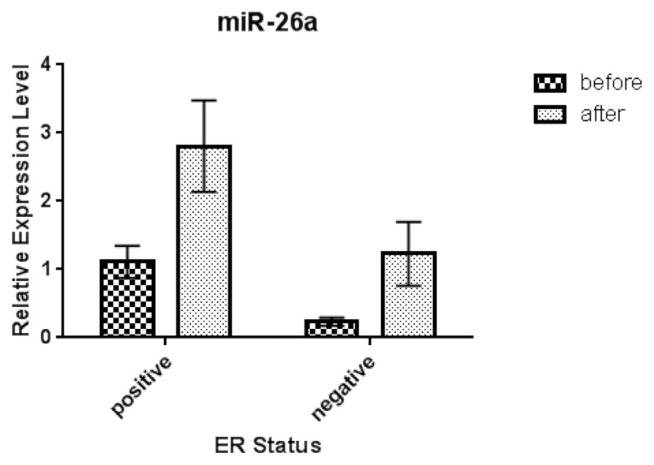
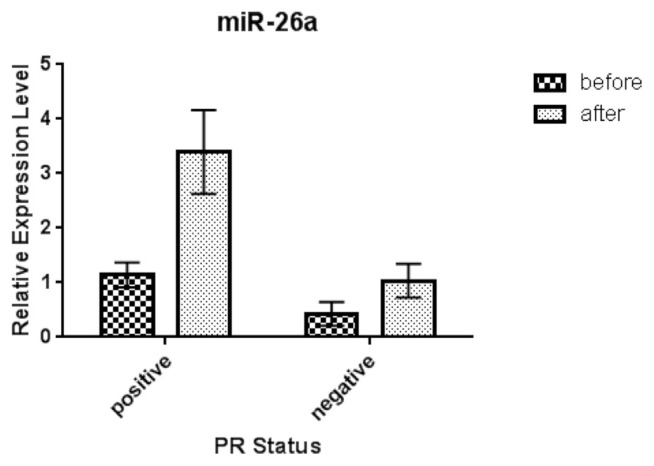
In HER-2 + patients, the microRNA-26a expression significantly increased after treatment with Docetaxel/Trastuzumab in comparison to before the treatment levels (p.value = 0.01). However, this overexpression in HER-2-patients after treatment with Docetaxel was not significant compared to the levels before the treatment (p.value = 0.14). In addition, the expression of microRNA -26a has significantly increased in HER-2 + patients who were ≤48 years old and premenopausal after the treatment with Docetaxel/Trastuzumab when compared to the levels before the treatment (p.value = 0.039 vs. 0.031, respectively). Furthermore, there was a significant correlation between the expression of microRNA -26a and the tumor size, stage, estrogen receptor (ER) and progesterone receptor (PR) status in the HER-2 + group before and after the treatment (p.value = 0.043, 0.042, 0.049 and 0.034 respectively).
Trastuzumab led to overexpression of microRNA-26a in HER-2 + BC patients. It seems that the detecting microRNA -26a expression levels, during or after the trastuzumab therapy could be a useful biomarker for monitoring the therapeutic response in HER-2 + BC patients. However, further studies on large populations of women with HER-2+ BC are needed to explore this possible novel biomarker, in more detail, within various clinical contexts.
乳腺癌(BC)是女性中最常见的癌症类型。曲妥珠单抗作为一种抗癌药物,已广泛应用于人类表皮生长因子受体2(HER-2)阳性(+)的乳腺癌患者。此外,越来越多的证据表明,微小RNA参与了乳腺癌的发病机制。因此,我们旨在研究曲妥珠单抗对HER-2阳性乳腺癌患者微小RNA-26a表达水平的影响。
本研究在HER-2 +和HER-2阴性(-)的乳腺癌患者中进行。通过实时PCR检测微小RNA-26a的血清表达。然后,我们评估了微小RNA-26a水平与乳腺癌多种临床病理特征的相关性。
在HER-2 +患者中,与治疗前水平相比,多西他赛/曲妥珠单抗治疗后微小RNA-26a表达显著增加(p值 = 0.01)。然而,与治疗前水平相比,HER-2-患者多西他赛治疗后这种过表达并不显著(p值 = 0.14)。此外,与治疗前水平相比,年龄≤48岁且绝经前的HER-2 +患者在多西他赛/曲妥珠单抗治疗后微小RNA -26a的表达显著增加(p值分别为0.039和0.031)。此外,在HER-2 +组治疗前后,微小RNA -26a的表达与肿瘤大小、分期、雌激素受体(ER)和孕激素受体(PR)状态之间存在显著相关性(p值分别为0.043、0.042、0.049和0.034)。
曲妥珠单抗导致HER-2 +乳腺癌患者微小RNA-26a过表达。似乎在曲妥珠单抗治疗期间或之后检测微小RNA -26a表达水平可能是监测HER-2 +乳腺癌患者治疗反应的有用生物标志物。然而,需要对更多HER-2 +乳腺癌女性人群进行进一步研究,以更详细地探索这种可能的新型生物标志物在各种临床背景下的情况。