Ma Yaping, Li Chaofan, He Yan, Fu Tiwei, Song Li, Ye Qingsong, Zhang Fugui
Chongqing Key Laboratory of Oral Diseases and Biomedical Sciences, Chongqing 401147, PR China.
Department of Oral and Maxillofacial Surgery, Stomatological Hospital of Chongqing Medical University, Chongqing 401147, PR China.
Genes Dis. 2021 Mar 1;9(2):549-561. doi: 10.1016/j.gendis.2021.02.010. eCollection 2022 Mar.
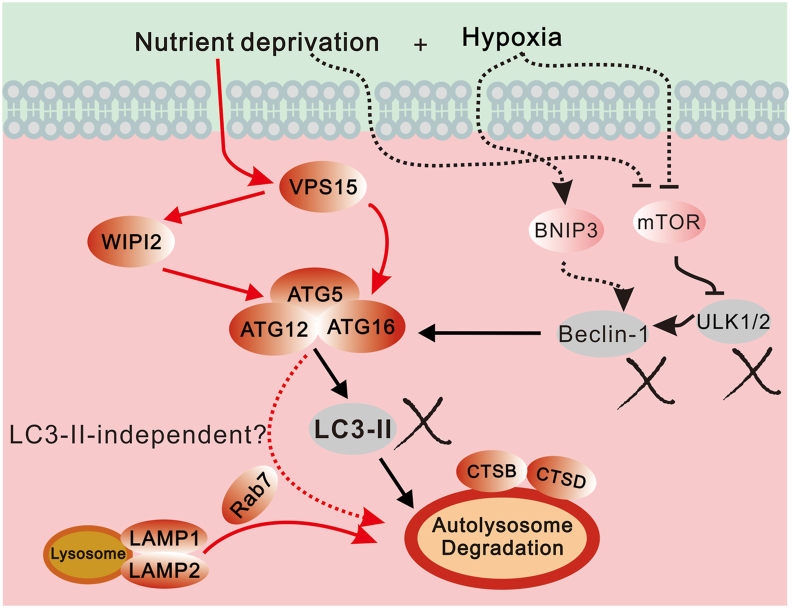
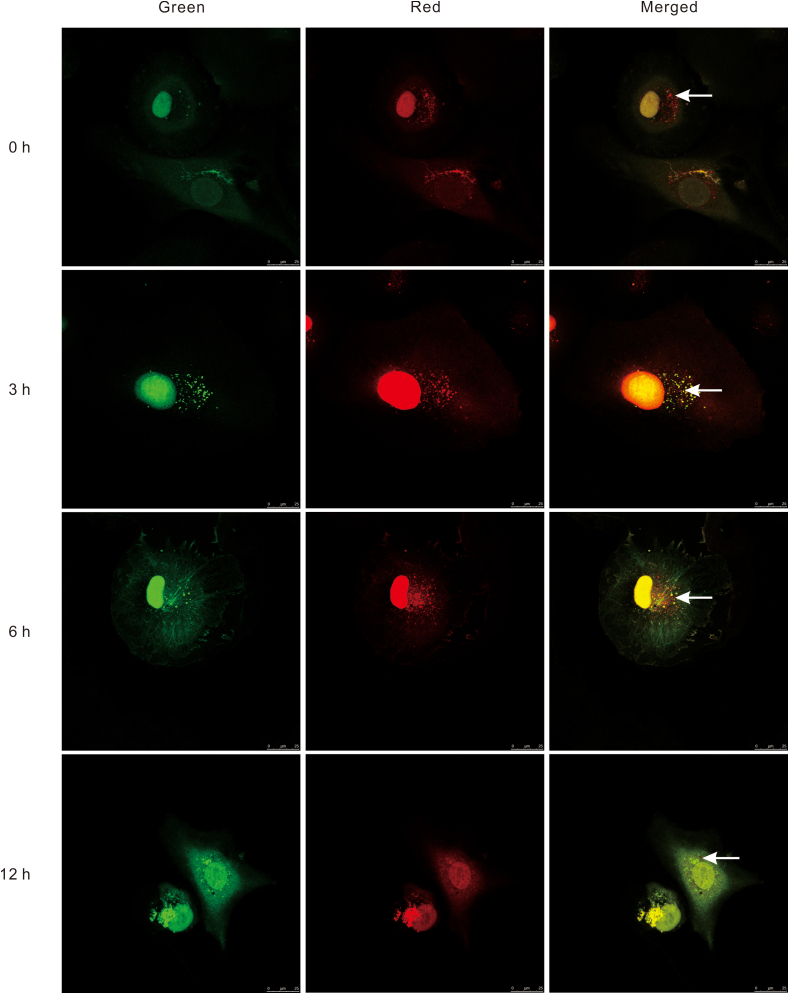
Autophagy has been extensively studied and occurs in many biological settings. However, a question remains as to whether ischemia enhances Beclin-1/LC3-II-dependent macroautophagy in vascular endothelial cells, as has been previously thought. Furthermore, the effect of the level of autophagy on cell or skin flap survival still requires elucidation. We created a lethal ischemia model in human umbilical vascular endothelial cells (HUVECs), performed quantitative proteomics and bioinformatics analyses, and verified the autophagic status and effect both and . The significantly upregulated proteins encoded by autophagy-related genes (ATGs) included , , , , , , , , and . The significantly enhanced lysosomal proteins were cathepsin B, cathepsin D, lysosome-associated membrane protein 1 (LAMP1), and LAMP2. However, the differentially expressed proteins excluded Beclin-1, microtubule-associated protein light chain 3 (LC3)-I, and LC3-II. Western blot analyses verified that the protein expression levels of Beclin-1, LC3-I, and LC3-II were neither upregulated nor downregulated in ischemia-challenged HUVECs. The autophagic status was not enhanced by rapamycin in ischemic HUVECs but appeared to be inhibited by chloroquine. Our study on rats showed that a downregulation in autophagic status jeopardized skin flap survival. In conclusion, Ischemia neither enhanced nor inhibited Beclin-1/LC3-II-dependent canonical macroautophagy both and , in contradiction to previous studies. An appropriate autophagic homeostasis can minimize cell or skin flap damage.
自噬已得到广泛研究,且存在于多种生物学环境中。然而,缺血是否如之前所认为的那样增强血管内皮细胞中Beclin-1/LC3-II依赖性巨自噬,仍是一个问题。此外,自噬水平对细胞或皮瓣存活的影响仍有待阐明。我们在人脐血管内皮细胞(HUVECs)中建立了致死性缺血模型,进行了定量蛋白质组学和生物信息学分析,并在体内和体外验证了自噬状态及作用。自噬相关基因(ATGs)编码的显著上调蛋白包括[具体蛋白名称未给出]、[具体蛋白名称未给出]、[具体蛋白名称未给出]、[具体蛋白名称未给出]、[具体蛋白名称未给出]、[具体蛋白名称未给出]、[具体蛋白名称未给出]、[具体蛋白名称未给出]和[具体蛋白名称未给出]。显著增强的溶酶体蛋白是组织蛋白酶B、组织蛋白酶D、溶酶体相关膜蛋白1(LAMP1)和LAMP2。然而,差异表达蛋白不包括Beclin-1、微管相关蛋白轻链3(LC3)-I和LC3-II。蛋白质印迹分析证实,在缺血刺激的HUVECs中,Beclin-1、LC3-I和LC3-II的蛋白表达水平既未上调也未下调。在缺血的HUVECs中,雷帕霉素未增强自噬状态,但氯喹似乎抑制了自噬状态。我们对大鼠的体内研究表明,自噬状态下调危及皮瓣存活。总之,与之前的研究相反,缺血在体内和体外均未增强或抑制Beclin-1/LC3-II依赖性经典巨自噬。适当的自噬稳态可使细胞或皮瓣损伤最小化。