Onoyama Kaoru, Matsui Shohei, Kikuchi Mariko, Sato Daisuke, Fukamachi Haruka, Kadena Miki, Funatsu Takahiro, Maruoka Yasubumi, Baba Kazuyoshi, Maki Kotaro, Kuwata Hirotaka
Division of Community-Based Comprehensive Dentistry, Department of Special Needs Dentistry, Faculty of Dentistry, Showa University, Tokyo, Japan.
Department of Implant Dentistry, Faculty of Dentistry, Showa University, Tokyo, Japan.
Front Oral Health. 2022 Feb 11;3:804314. doi: 10.3389/froh.2022.804314. eCollection 2022.
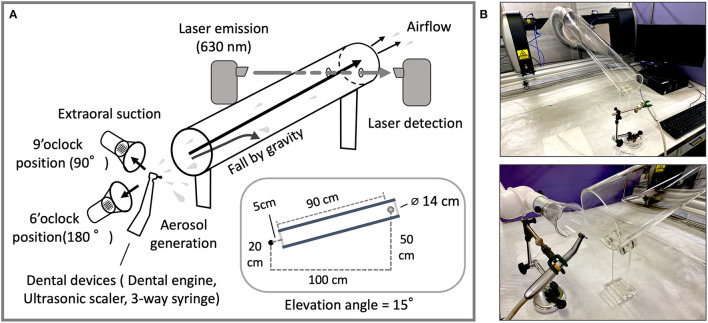
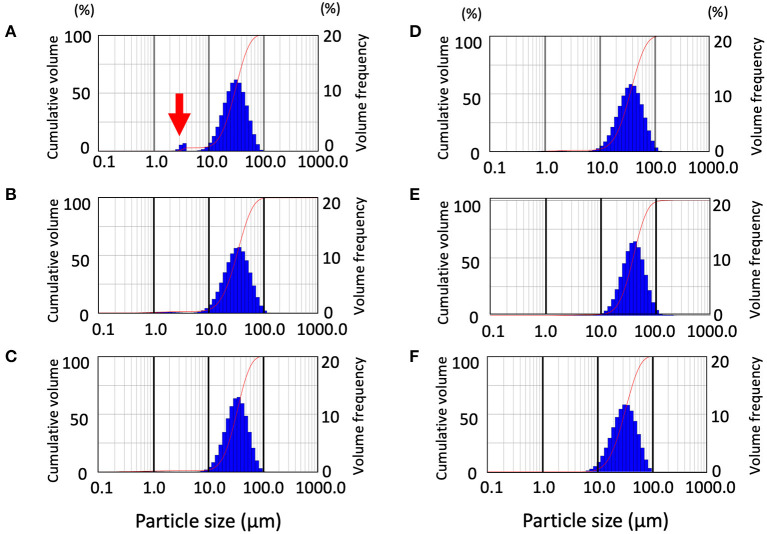
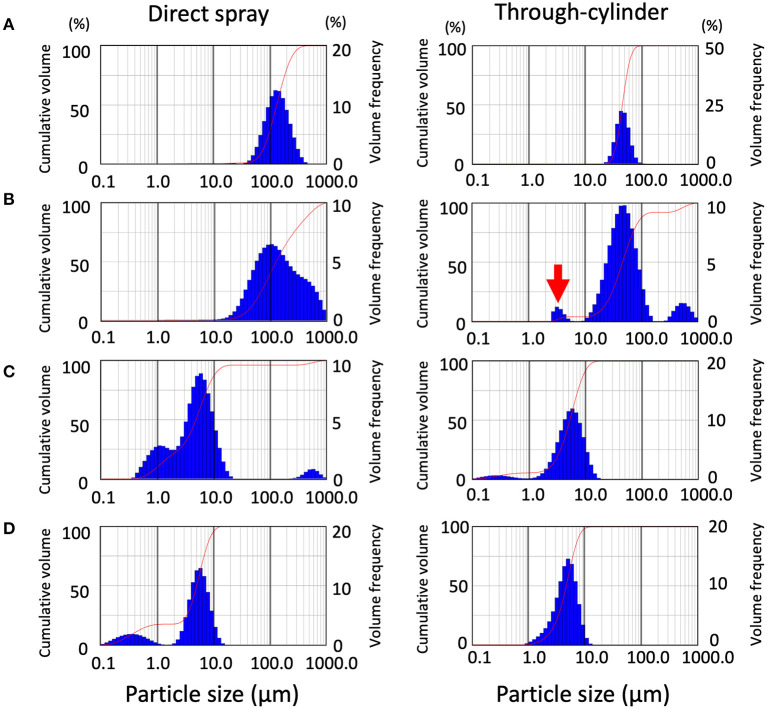
The global outbreak of coronavirus disease 2019 (COVID-19) has raised concerns about the risk of airborne infection during dental treatment. Aerosol-generating dental procedures (AGDP) produce droplets and aerosols, but the details of the risks of COVID-19 transmission in AGDP are not well-understood. By discriminating between droplets and aerosols, we devised a method to measure particle size using laser diffraction analysis and evaluated aerosols generated from dental devices for providing a basis for proper infection control procedures. The droplets and aerosols generated from dental devices were characterized by multimodal properties and a wide range of droplet sizes, with the majority of droplets larger than 50 μm. AGDP emitted few aerosols smaller than 5 μm, which are of concern for pulmonary infections due to airborne transmission. In addition, the use of extraoral suction was found to prevent the spread of aerosols from high-speed dental engines. This study suggests that the risk of aerosol infections is considerably limited in regular dental practice and that current standard precautions, such as mainly focusing on protection against droplet and contact infections, are sufficient. While several cases of airborne transmission of COVID-19 in general clinics and emergency hospitals have been reported, cluster outbreaks in dental clinics have not yet been reported, which may indicate that AGDP does not pose a significant threat in contributing to the spread of SARS-CoV-2.
2019年冠状病毒病(COVID-19)的全球爆发引发了人们对牙科治疗期间空气传播感染风险的担忧。产生气溶胶的牙科操作(AGDP)会产生飞沫和气溶胶,但AGDP中COVID-19传播风险的具体细节尚不清楚。通过区分飞沫和气溶胶,我们设计了一种使用激光衍射分析测量粒径的方法,并评估了牙科设备产生的气溶胶,为适当的感染控制程序提供依据。牙科设备产生的飞沫和气溶胶具有多峰特性和广泛的粒径范围,大多数飞沫大于50μm。AGDP产生的小于5μm的气溶胶很少,而这些气溶胶因空气传播而引发肺部感染。此外,发现使用口外抽吸可防止高速牙科手机产生的气溶胶扩散。本研究表明,在常规牙科实践中,气溶胶感染的风险相当有限,目前的标准预防措施,如主要侧重于预防飞沫和接触感染,就足够了。虽然已有数例COVID-19在综合诊所和急诊医院通过空气传播的报道,但尚未有牙科诊所发生聚集性疫情的报道,这可能表明AGDP对严重急性呼吸综合征冠状病毒2传播的贡献并不构成重大威胁。