Iwata Eiji, Susukida Yuriko, Kusumoto Junya, Tachibana Akira, Akashi Masaya
Department of Oral and Maxillofacial Surgery, Kakogawa Central City Hospital, Kakogawa, JPN.
Department of Oral and Maxillofacial Surgery, Kobe University Graduate School of Medicine, Kobe, JPN.
Cureus. 2025 Mar 29;17(3):e81414. doi: 10.7759/cureus.81414. eCollection 2025 Mar.
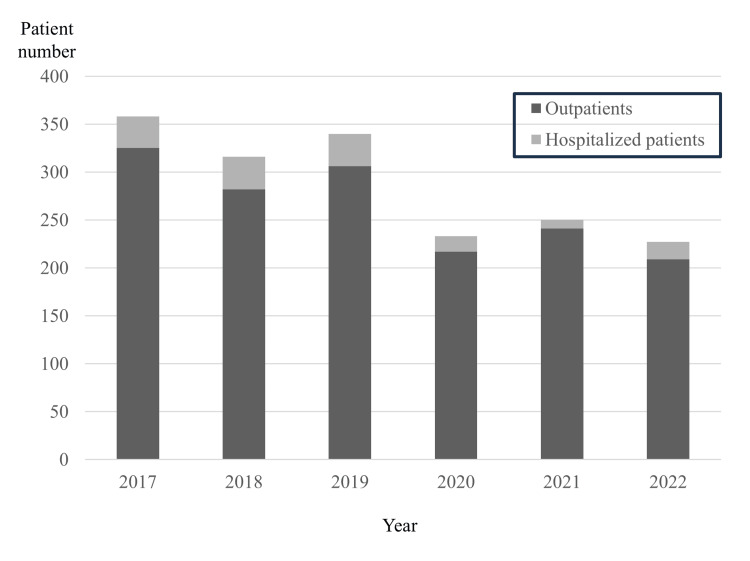
Using a severity scale, this study aimed to investigate the treatment behavior of patients with odontogenic infections during the COVID-19 pandemic.
This study included patients admitted for odontogenic deep neck infection (DNI) treatment at a single center in Japan between 2017 and 2022. Participants were divided into two groups: a pre-COVID group before 2019 and a COVID group after 2020. Patient characteristics, clinical data, and DNI severity were compared.
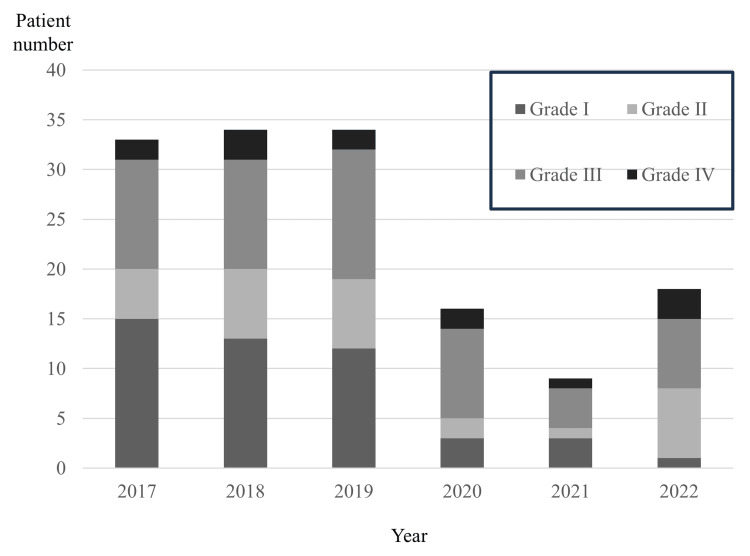
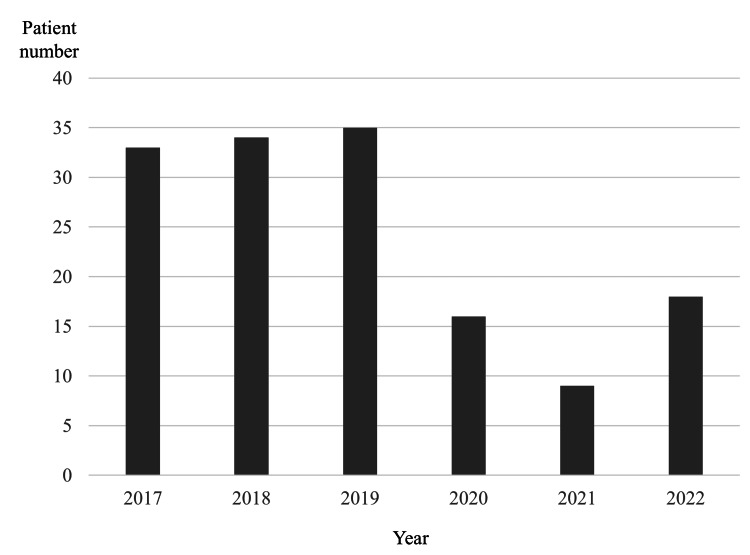
During the pandemic, the number of patients with mild DNIs decreased significantly, whereas the number of patients with severe DNIs did not change significantly, resulting in a significant increase in the latter proportion (42/101 (41.6%) vs. 26/43 (60.5%); p=0.045). In addition, the patients in the COVID group were significantly older than those in the pre-COVID group (median 66.0 years vs. 56.0 years; p=0.018).
Our results suggest that patients with odontogenic infections, especially the elderly, may have avoided hospitals until their symptoms became severe during the COVID-19 pandemic.
本研究旨在使用严重程度量表调查新冠疫情期间牙源性感染患者的治疗行为。
本研究纳入了2017年至2022年期间在日本某单一中心接受牙源性深部颈部感染(DNI)治疗的患者。参与者被分为两组:2019年之前的新冠疫情前组和2020年之后的新冠疫情组。比较了患者特征、临床数据和DNI严重程度。
在疫情期间,轻度DNI患者数量显著减少,而重度DNI患者数量没有显著变化,导致后者比例显著增加(42/101(41.6%)对26/43(60.5%);p=0.045)。此外,新冠疫情组患者的年龄显著高于新冠疫情前组(中位数66.0岁对56.0岁;p=0.018)。
我们的结果表明,在新冠疫情期间,牙源性感染患者,尤其是老年人,可能会避免前往医院,直到症状变得严重。