Department of Microbiology, University of Manitobagrid.21613.37, Winnipeg, Manitoba, Canada.
Michael G. DeGroote Institute for Infectious Disease Research, McMaster Universitygrid.25073.33, Hamilton, Ontario, Canada.
mSphere. 2022 Apr 27;7(2):e0099821. doi: 10.1128/msphere.00998-21. Epub 2022 Feb 28.
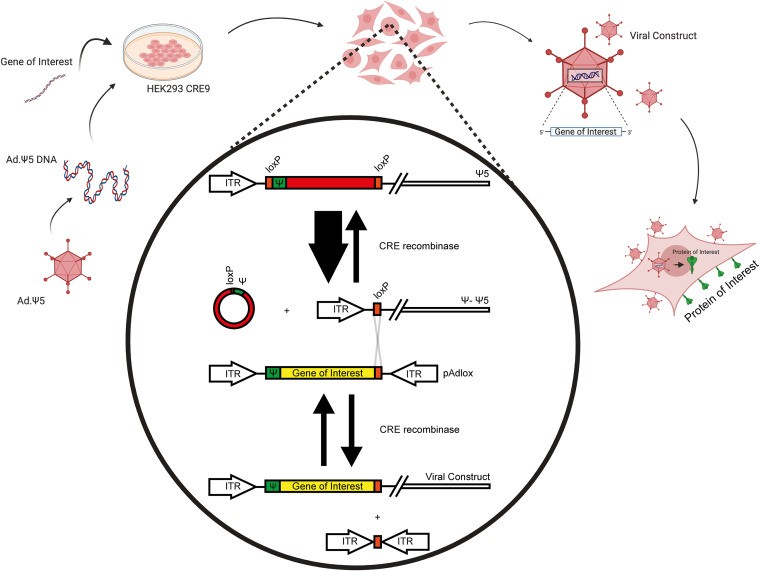
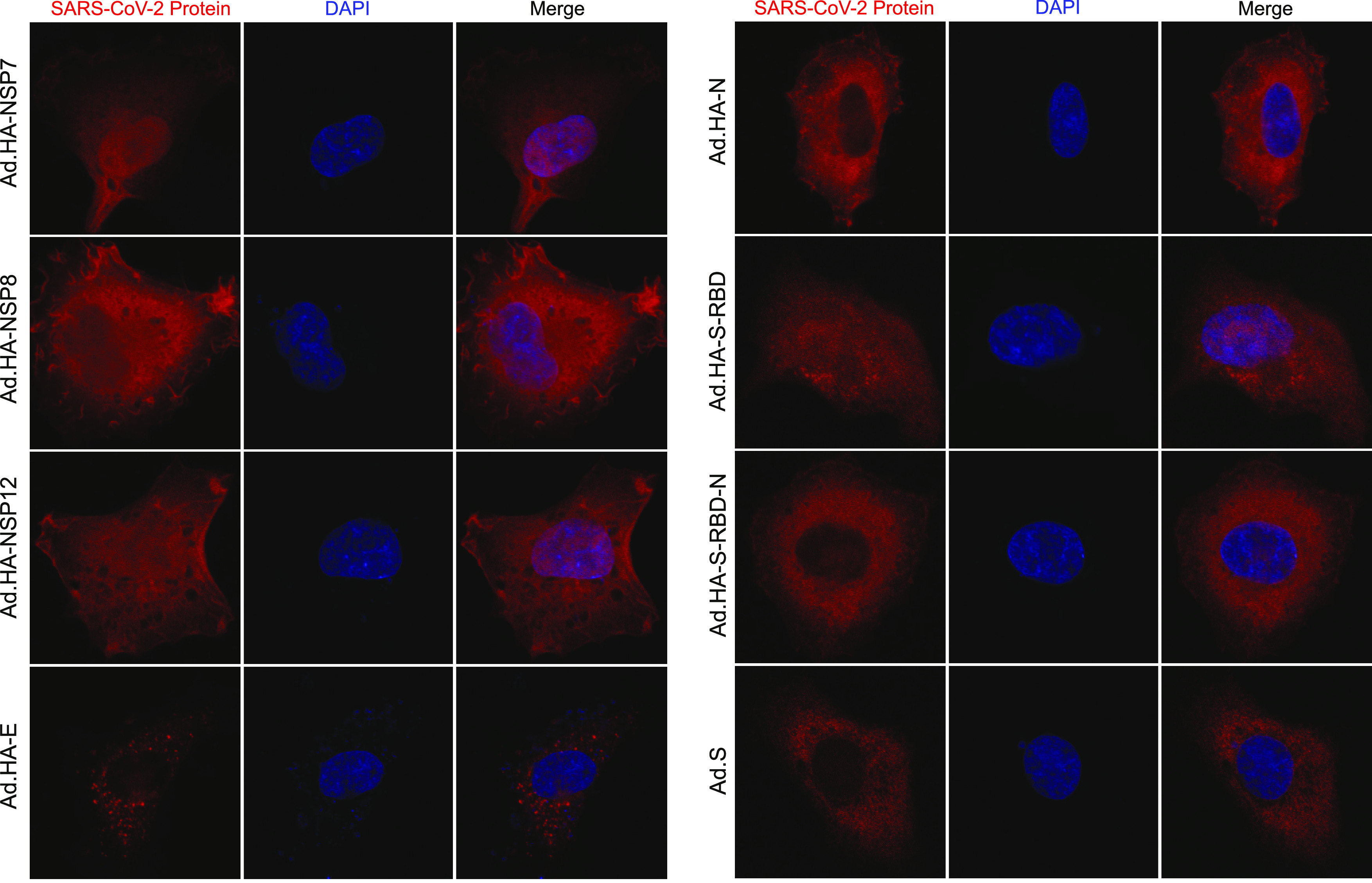
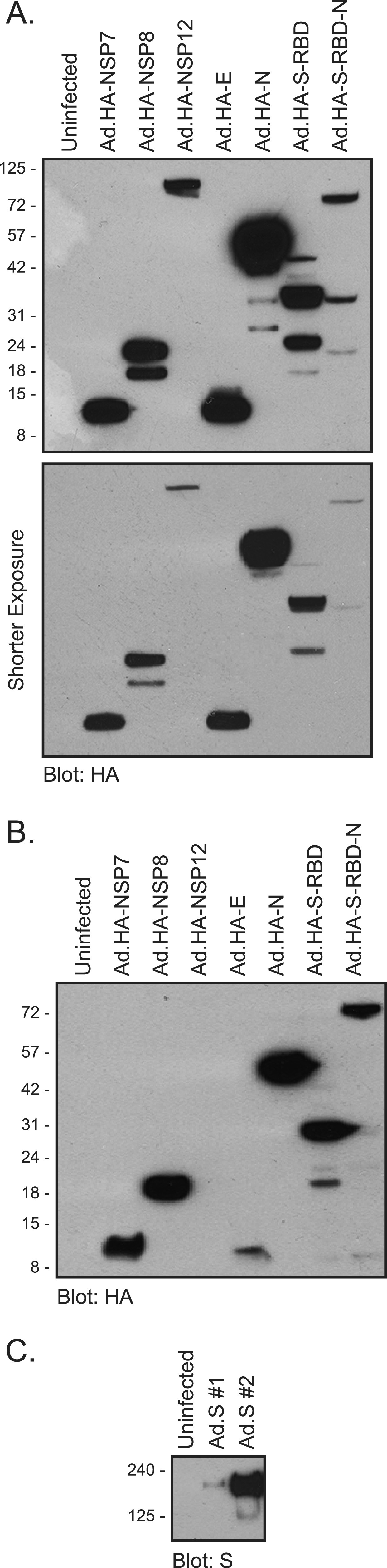
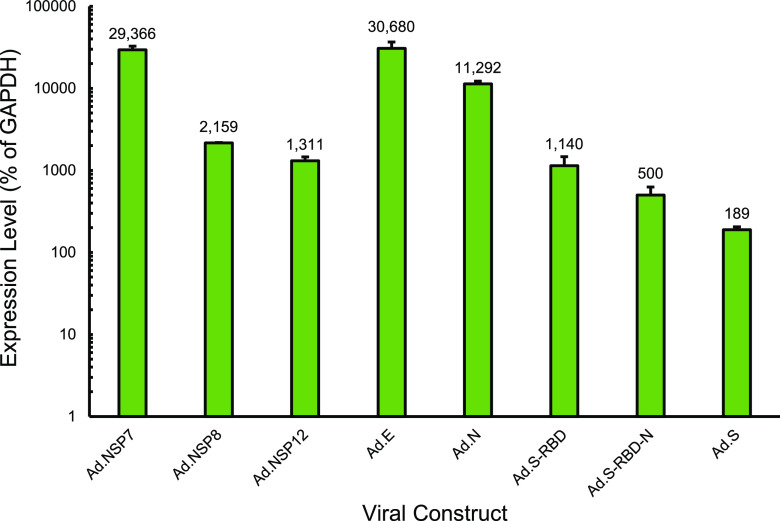
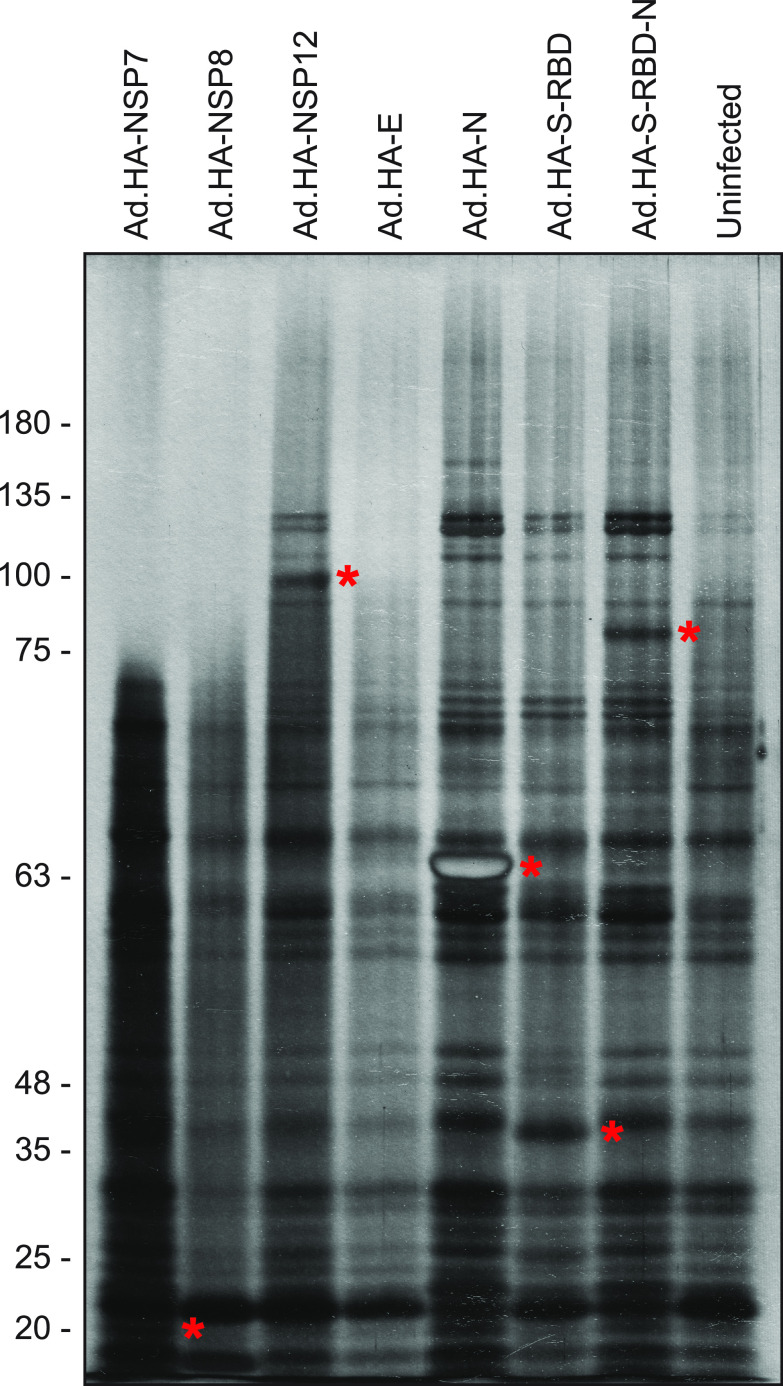
SARS-CoV-2 coronavirus is a recently identified novel coronavirus that is the causative agent of the COVID-19 pandemic that began in 2020. An intense research effort has been undertaken by the research community in order to better understand the molecular etiology of this virus and its mechanisms of host cell subjugation and immune system evasion. To facilitate further research into the SARS-CoV-2 coronavirus we have generated adenovirus 5-based viral vectors that express SARS-CoV-2 proteins-S, N, E, NSP7, NSP8, and NSP12 as hemagglutinin (HA)-tagged and untagged variants. We have also engineered two additional viruses that express the S protein receptor binding domain and a fusion of the receptor binding domain to the N protein. We show that these vectors are expressed in several different cell lines by Western blotting and real-time quantitative reverse transcriptase (qRT-PCR), we evaluate the subcellular localization of these viral proteins, and we show that these coronavirus proteins bind to a variety of cellular targets. The flexibility of adenovirus vectors allows them to be used in a variety of cell models and, importantly, in animal models as well. The COVID-19 pandemic caused by the SARS-CoV-2 coronavirus has brought untold personal and economic suffering to the world. Intense research has made tremendous progress in understanding how this virus works, yet much research remains to be done as new variants and continued evolution of the virus keep shifting the rules of engagement on the pandemic battlefield. Therefore, wide availability of resources and reagents to study SARS-CoV-2 is essential in overcoming the pandemic and for the prevention of future outbreaks. Our viral vectors provide additional tools for researchers to use in order to better understand the molecular biology of virus-host interactions and other aspects of SARS-CoV-2.
SARS-CoV-2 冠状病毒是一种新鉴定的新型冠状病毒,是 2020 年开始的 COVID-19 大流行的病原体。研究界已经进行了大量的研究,以便更好地了解这种病毒的分子病因及其宿主细胞征服和免疫系统逃避的机制。为了促进对 SARS-CoV-2 冠状病毒的进一步研究,我们已经生成了基于腺病毒 5 的病毒载体,该载体表达 SARS-CoV-2 蛋白-S、N、E、NSP7、NSP8 和 NSP12,作为血凝素(HA)标记和未标记的变体。我们还设计了另外两种表达 S 蛋白受体结合域和受体结合域与 N 蛋白融合的病毒。我们通过 Western blot 和实时定量逆转录(qRT-PCR)显示这些载体在几种不同的细胞系中表达,我们评估了这些病毒蛋白的亚细胞定位,并表明这些冠状病毒蛋白与多种细胞靶标结合。腺病毒载体的灵活性允许它们在多种细胞模型中使用,重要的是,也可以在动物模型中使用。由 SARS-CoV-2 冠状病毒引起的 COVID-19 大流行给全世界带来了难以言喻的个人和经济痛苦。对这种病毒如何工作的深入研究已经取得了巨大的进展,但仍有许多研究工作要做,因为新的变体和病毒的持续进化不断改变着大流行战场上的规则。因此,广泛提供资源和试剂来研究 SARS-CoV-2 对于克服大流行和预防未来的爆发至关重要。我们的病毒载体为研究人员提供了额外的工具,以更好地了解病毒-宿主相互作用的分子生物学和 SARS-CoV-2 的其他方面。