Brunet Mitchell J, Monteith Kevin L, Huggler Katey S, Clapp Justin G, Thompson Daniel J, Burke Patrick W, Zornes Mark, Lionberger Patrick, Valdez Miguel, Holbrook Joseph D
Haub School of Environment and Natural Resources University of Wyoming Laramie Wyoming USA.
Wyoming Cooperative Fish and Wildlife Research Unit University of Wyoming Laramie Wyoming USA.
Ecol Evol. 2022 Feb 22;12(2):e8641. doi: 10.1002/ece3.8641. eCollection 2022 Feb.
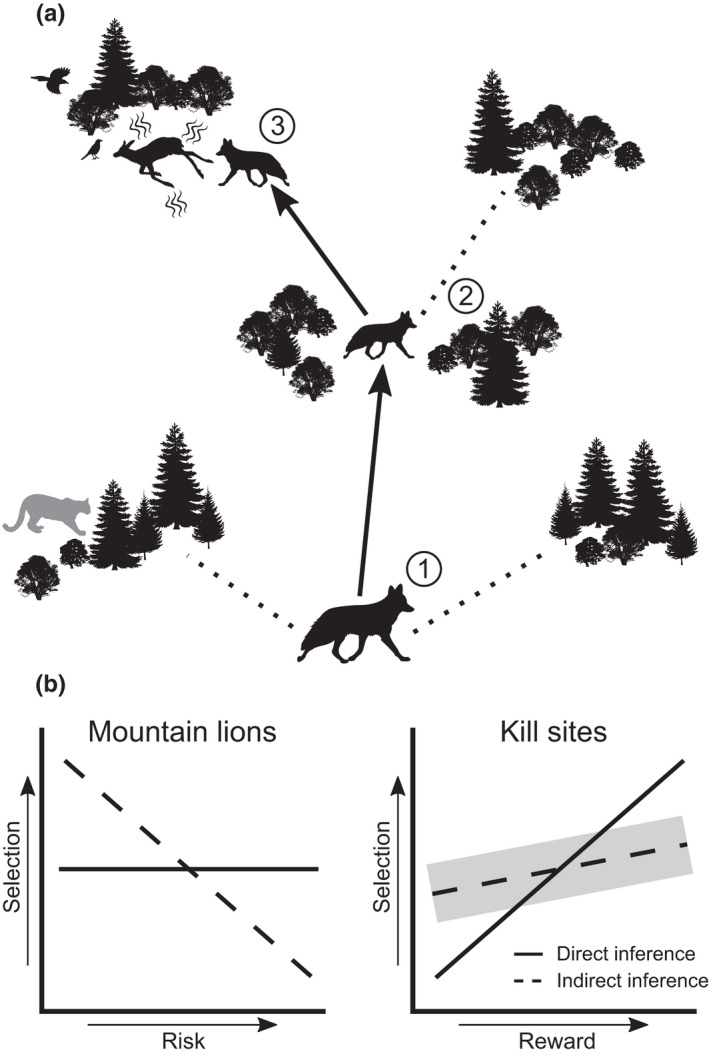
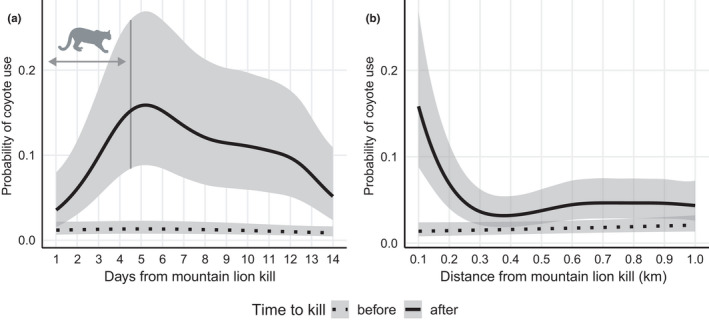
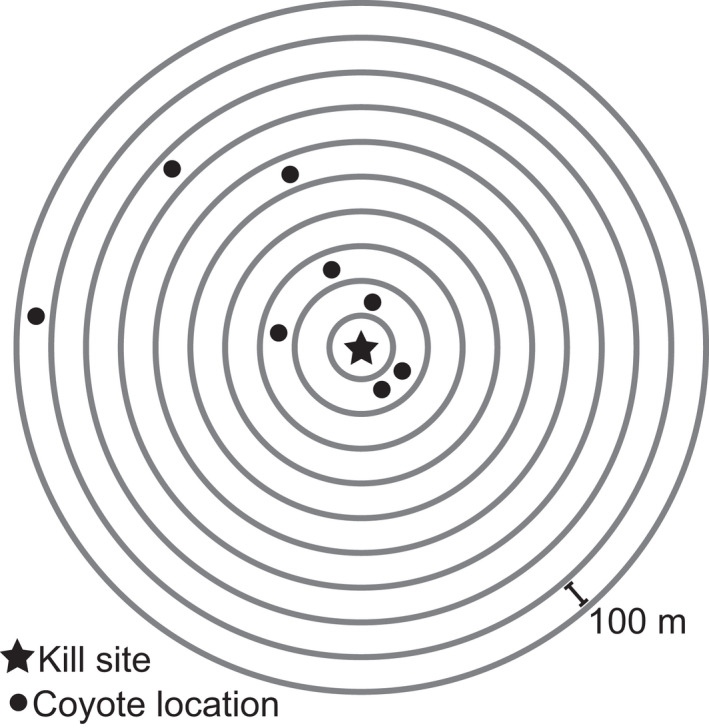
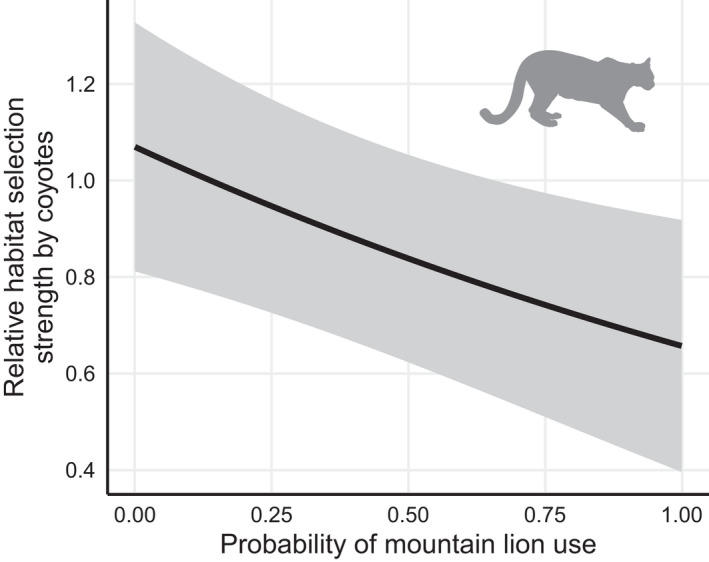
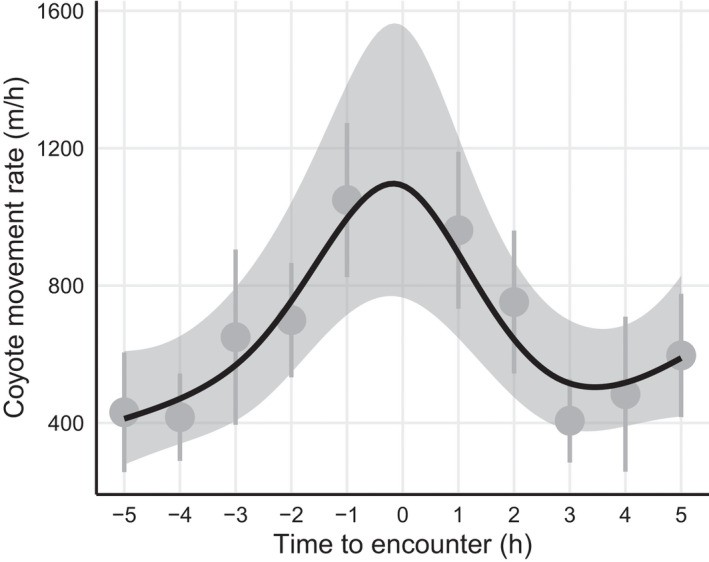
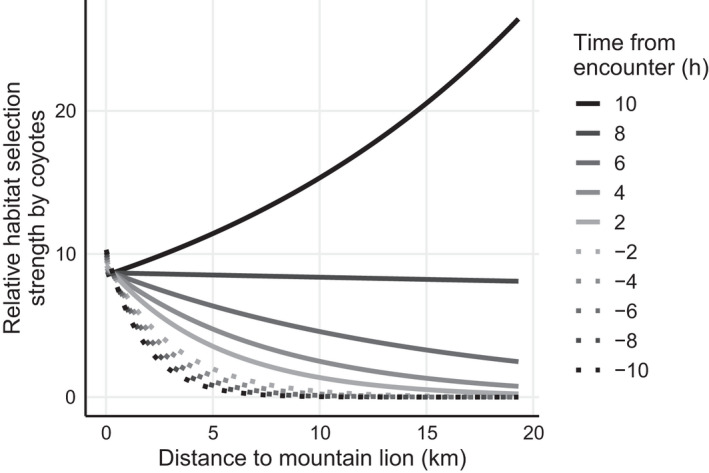
Successfully perceiving risk and reward is fundamental to the fitness of an animal, and can be achieved through a variety of perception tactics. For example, mesopredators may "directly" perceive risk by visually observing apex predators, or may "indirectly" perceive risk by observing habitats used by predators. Direct assessments should more accurately characterize the arrangement of risk and reward; however, indirect assessments are used more frequently in studies concerning the response of GPS-marked animals to spatiotemporally variable sources of risk and reward. We investigated the response of a mesopredator to the presence of risk and reward created by an apex predator, where risk and reward likely vary in relative perceptibility (i.e., degree of being perceptible). First, we tested whether coyotes () use direct or indirect assessments to navigate the presence of mountain lions (; risk) and kills made by mountain lions (reward) in an area where coyotes were a common prey item for mountain lions. Second, we assessed the behavioral response of coyotes to direct encounters with mountain lions. Third, we evaluated spatiotemporal use of carrion by coyotes at kills made by mountain lions. Indirect assessments generally outperformed direct assessments when integrating analyses into a unified framework; nevertheless, our ability to detect direct perception in navigating to mountain lion kills was likely restricted by scale and sampling limitations (e.g., collar fix rates, unsampled kill sites). Rather than responding to the risk of direct encounters with mountain lions, coyotes facilitated encounters by increasing their movement rate, and engaged in risky behavior by scavenging at mountain lion kills. Coyotes appear to mitigate risk by using indirect perception to avoid mountain lions. Our predator-predator interactions and insights are nuanced and counter to the conventional predator-prey systems that have generated much of the predation risk literature.
成功感知风险和回报是动物适应环境的基础,并且可以通过多种感知策略来实现。例如,中级食肉动物可能通过视觉观察顶级食肉动物来“直接”感知风险,或者通过观察食肉动物使用的栖息地来“间接”感知风险。直接评估应该能更准确地描述风险和回报的分布情况;然而,在关于佩戴GPS标记的动物对时空变化的风险和回报源的反应的研究中,间接评估的使用更为频繁。我们研究了一种中级食肉动物对顶级食肉动物所带来的风险和回报的反应,在这种情况下,风险和回报的相对可感知性(即可感知程度)可能会有所不同。首先,我们测试了郊狼()是否利用直接或间接评估来应对美洲狮(;风险)的存在以及美洲狮捕杀猎物(回报)的情况,在该地区郊狼是美洲狮常见的猎物。其次,我们评估了郊狼与美洲狮直接遭遇时的行为反应。第三,我们评估了郊狼在美洲狮捕杀地点对腐肉的时空利用情况。当将分析整合到一个统一框架中时,间接评估通常比直接评估表现更好;然而,我们在检测郊狼前往美洲狮捕杀地点时直接感知的能力可能受到规模和采样限制(例如,项圈定位率、未采样的捕杀地点)的制约。郊狼不是对与美洲狮直接遭遇的风险做出反应,而是通过提高移动速度来促成遭遇,并在美洲狮捕杀地点觅食时采取冒险行为。郊狼似乎通过利用间接感知来避开美洲狮从而降低风险。我们的捕食者 - 捕食者相互作用及见解较为细微,与产生了许多捕食风险文献的传统捕食者 - 猎物系统相反。