• 文献检索
  • 文档翻译
  • 深度研究
  • 学术资讯
  • Suppr Zotero 插件Zotero 插件
  • 邀请有礼
  • 套餐&价格
  • 历史记录
应用&插件
Suppr Zotero 插件Zotero 插件浏览器插件Mac 客户端Windows 客户端微信小程序
定价
高级版会员购买积分包购买API积分包
服务
文献检索文档翻译深度研究API 文档MCP 服务
关于我们
关于 Suppr公司介绍联系我们用户协议隐私条款
关注我们

Suppr 超能文献

核心技术专利:CN118964589B侵权必究
粤ICP备2023148730 号-1Suppr @ 2026

文献检索

告别复杂PubMed语法,用中文像聊天一样搜索,搜遍4000万医学文献。AI智能推荐,让科研检索更轻松。

立即免费搜索

文件翻译

保留排版,准确专业,支持PDF/Word/PPT等文件格式,支持 12+语言互译。

免费翻译文档

深度研究

AI帮你快速写综述,25分钟生成高质量综述,智能提取关键信息,辅助科研写作。

立即免费体验

用于COVID-19传播的具有未报告感染人群和动态参数的SEIR模型。

SEIR model with unreported infected population and dynamic parameters for the spread of COVID-19.

作者信息

Chen Ziren, Feng Lin, Lay Harold A, Furati Khaled, Khaliq Abdul

机构信息

Department of Mathematics, Middle Tennessee State University, Murfreesboro, TN 37132, USA.

Thompson Machinery Commerce Corporation, 1245 Bridgestone Blvd LaVergne, TN 37086, USA.

出版信息

Math Comput Simul. 2022 Aug;198:31-46. doi: 10.1016/j.matcom.2022.02.025. Epub 2022 Feb 25.

DOI:10.1016/j.matcom.2022.02.025
PMID:35233147
原文链接:https://pmc.ncbi.nlm.nih.gov/articles/PMC8876059/
Abstract

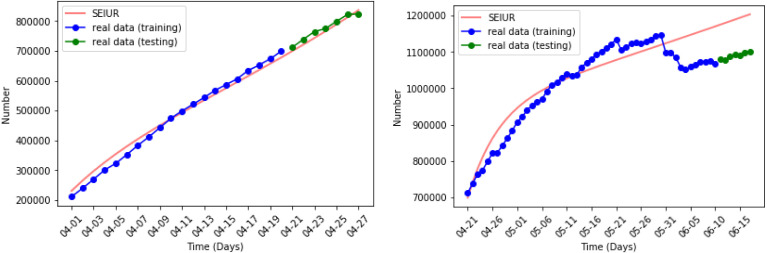
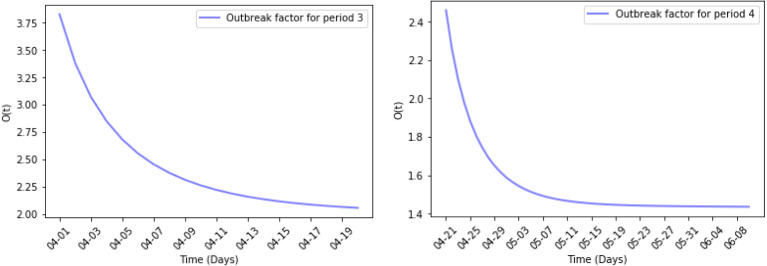
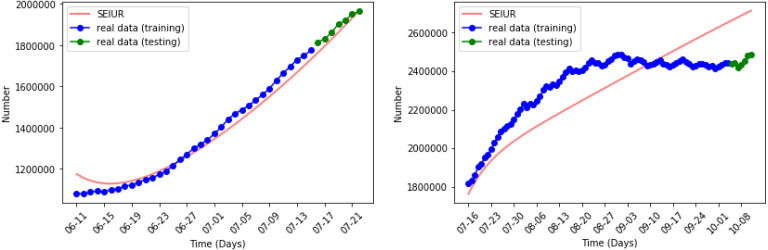
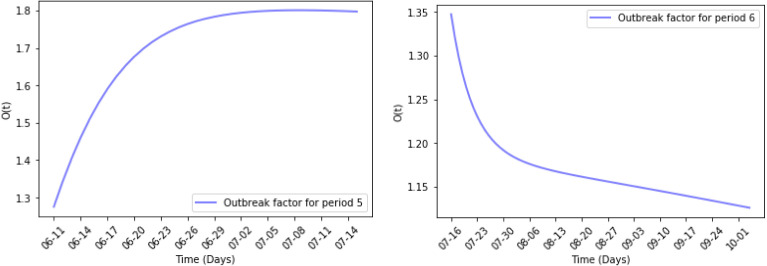
Coronavirus disease 2019 (COVID-19) is a contagious disease caused by severe acute respiratory syndrome coronavirus 2 (SARS-CoV-2) that can be transmitted through human interaction. In this paper, we present a Piecewise Susceptible-Exposed-Infectious-Unreported-Removed model for infectious diseases and discuss qualitatively and quantitatively. The parameters are explored by mathematical and statistical methods. Numerical simulations of these models are performed on COVID-19 US data and Python is used in the visualization of results. Outbreak factor is generated by piecewise model to explore the future trend of the US pandemic. Several error metrics are given to discuss the accuracy of the models. The main achievement of this paper is to propose the piecewise model and find the relationship between spread of pandemic and mitigation measures to control it by observing the results of numerical simulations. Performance analysis of piecewise model is presented based on COVID-19 data obtained by 'worldmeter'.

摘要

2019冠状病毒病(COVID-19)是一种由严重急性呼吸综合征冠状病毒2(SARS-CoV-2)引起的传染病,可通过人际接触传播。在本文中,我们提出了一种用于传染病的分段易感-暴露-感染-未报告-清除模型,并进行了定性和定量讨论。通过数学和统计方法探索参数。这些模型在美国COVID-19数据上进行了数值模拟,并使用Python进行结果可视化。分段模型生成爆发因子以探索美国大流行的未来趋势。给出了几个误差指标来讨论模型的准确性。本文的主要成果是提出了分段模型,并通过观察数值模拟结果,找出了大流行传播与控制其的缓解措施之间的关系。基于从“世界ometers”获得的COVID-19数据,对分段模型进行了性能分析。

https://cdn.ncbi.nlm.nih.gov/pmc/blobs/b743/8876059/be20a1cfbe5d/gr21_lrg.jpg
https://cdn.ncbi.nlm.nih.gov/pmc/blobs/b743/8876059/d4937748509b/gr1_lrg.jpg
https://cdn.ncbi.nlm.nih.gov/pmc/blobs/b743/8876059/91473e5b501f/gr2_lrg.jpg
https://cdn.ncbi.nlm.nih.gov/pmc/blobs/b743/8876059/a4da9ce0430c/gr3_lrg.jpg
https://cdn.ncbi.nlm.nih.gov/pmc/blobs/b743/8876059/acc6e211540b/gr4_lrg.jpg
https://cdn.ncbi.nlm.nih.gov/pmc/blobs/b743/8876059/66a993cde966/gr5_lrg.jpg
https://cdn.ncbi.nlm.nih.gov/pmc/blobs/b743/8876059/6c07756422ab/gr6_lrg.jpg
https://cdn.ncbi.nlm.nih.gov/pmc/blobs/b743/8876059/a640b3e0b41f/gr7_lrg.jpg
https://cdn.ncbi.nlm.nih.gov/pmc/blobs/b743/8876059/b97c63ecdf7d/gr8_lrg.jpg
https://cdn.ncbi.nlm.nih.gov/pmc/blobs/b743/8876059/139959b2dda7/gr9_lrg.jpg
https://cdn.ncbi.nlm.nih.gov/pmc/blobs/b743/8876059/9a38177140e4/gr10_lrg.jpg
https://cdn.ncbi.nlm.nih.gov/pmc/blobs/b743/8876059/3611e4f177e8/gr11_lrg.jpg
https://cdn.ncbi.nlm.nih.gov/pmc/blobs/b743/8876059/d9be171f0254/gr12_lrg.jpg
https://cdn.ncbi.nlm.nih.gov/pmc/blobs/b743/8876059/77f434d3bb1f/gr13_lrg.jpg
https://cdn.ncbi.nlm.nih.gov/pmc/blobs/b743/8876059/8ef952a22fc6/gr14_lrg.jpg
https://cdn.ncbi.nlm.nih.gov/pmc/blobs/b743/8876059/0048fbff770e/gr15_lrg.jpg
https://cdn.ncbi.nlm.nih.gov/pmc/blobs/b743/8876059/6c1f3ee65af0/gr16_lrg.jpg
https://cdn.ncbi.nlm.nih.gov/pmc/blobs/b743/8876059/c95c152d5b36/gr17_lrg.jpg
https://cdn.ncbi.nlm.nih.gov/pmc/blobs/b743/8876059/28fdb6ec9972/gr18_lrg.jpg
https://cdn.ncbi.nlm.nih.gov/pmc/blobs/b743/8876059/8c3958d86985/gr19_lrg.jpg
https://cdn.ncbi.nlm.nih.gov/pmc/blobs/b743/8876059/ff89daa0e5f7/gr20_lrg.jpg
https://cdn.ncbi.nlm.nih.gov/pmc/blobs/b743/8876059/be20a1cfbe5d/gr21_lrg.jpg
https://cdn.ncbi.nlm.nih.gov/pmc/blobs/b743/8876059/d4937748509b/gr1_lrg.jpg
https://cdn.ncbi.nlm.nih.gov/pmc/blobs/b743/8876059/91473e5b501f/gr2_lrg.jpg
https://cdn.ncbi.nlm.nih.gov/pmc/blobs/b743/8876059/a4da9ce0430c/gr3_lrg.jpg
https://cdn.ncbi.nlm.nih.gov/pmc/blobs/b743/8876059/acc6e211540b/gr4_lrg.jpg
https://cdn.ncbi.nlm.nih.gov/pmc/blobs/b743/8876059/66a993cde966/gr5_lrg.jpg
https://cdn.ncbi.nlm.nih.gov/pmc/blobs/b743/8876059/6c07756422ab/gr6_lrg.jpg
https://cdn.ncbi.nlm.nih.gov/pmc/blobs/b743/8876059/a640b3e0b41f/gr7_lrg.jpg
https://cdn.ncbi.nlm.nih.gov/pmc/blobs/b743/8876059/b97c63ecdf7d/gr8_lrg.jpg
https://cdn.ncbi.nlm.nih.gov/pmc/blobs/b743/8876059/139959b2dda7/gr9_lrg.jpg
https://cdn.ncbi.nlm.nih.gov/pmc/blobs/b743/8876059/9a38177140e4/gr10_lrg.jpg
https://cdn.ncbi.nlm.nih.gov/pmc/blobs/b743/8876059/3611e4f177e8/gr11_lrg.jpg
https://cdn.ncbi.nlm.nih.gov/pmc/blobs/b743/8876059/d9be171f0254/gr12_lrg.jpg
https://cdn.ncbi.nlm.nih.gov/pmc/blobs/b743/8876059/77f434d3bb1f/gr13_lrg.jpg
https://cdn.ncbi.nlm.nih.gov/pmc/blobs/b743/8876059/8ef952a22fc6/gr14_lrg.jpg
https://cdn.ncbi.nlm.nih.gov/pmc/blobs/b743/8876059/0048fbff770e/gr15_lrg.jpg
https://cdn.ncbi.nlm.nih.gov/pmc/blobs/b743/8876059/6c1f3ee65af0/gr16_lrg.jpg
https://cdn.ncbi.nlm.nih.gov/pmc/blobs/b743/8876059/c95c152d5b36/gr17_lrg.jpg
https://cdn.ncbi.nlm.nih.gov/pmc/blobs/b743/8876059/28fdb6ec9972/gr18_lrg.jpg
https://cdn.ncbi.nlm.nih.gov/pmc/blobs/b743/8876059/8c3958d86985/gr19_lrg.jpg
https://cdn.ncbi.nlm.nih.gov/pmc/blobs/b743/8876059/ff89daa0e5f7/gr20_lrg.jpg
https://cdn.ncbi.nlm.nih.gov/pmc/blobs/b743/8876059/be20a1cfbe5d/gr21_lrg.jpg

相似文献

1
SEIR model with unreported infected population and dynamic parameters for the spread of COVID-19.用于COVID-19传播的具有未报告感染人群和动态参数的SEIR模型。
Math Comput Simul. 2022 Aug;198:31-46. doi: 10.1016/j.matcom.2022.02.025. Epub 2022 Feb 25.
2
A new SEAIRD pandemic prediction model with clinical and epidemiological data analysis on COVID-19 outbreak.一种基于新冠肺炎疫情临床和流行病学数据分析的新型SEAIRD大流行预测模型。
Appl Intell (Dordr). 2021;51(7):4162-4198. doi: 10.1007/s10489-020-01938-3. Epub 2021 Jan 1.
3
A Theoretical Model to Investigate the Influence of Temperature, Reactions of the Population and the Government on the COVID-19 Outbreak in Turkey.一个理论模型,用以调查温度、人群和政府反应对土耳其新冠疫情爆发的影响。
Disaster Med Public Health Prep. 2022 Feb;16(1):214-222. doi: 10.1017/dmp.2020.322. Epub 2020 Sep 9.
4
Data driven time-varying SEIR-LSTM/GRU algorithms to track the spread of COVID-19.基于数据驱动的时变 SEIR-LSTM/GRU 算法追踪 COVID-19 的传播。
Math Biosci Eng. 2022 Jun 20;19(9):8935-8962. doi: 10.3934/mbe.2022415.
5
Perinatology clinic in the coronavirus disease-2019 pandemic: what harms, often teaches.COVID-19 大流行期间的围产医学门诊:有何危害,常能教益。
J Matern Fetal Neonatal Med. 2021 Nov;34(21):3591-3600. doi: 10.1080/14767058.2021.1875440. Epub 2021 Feb 28.
6
Compartmental Models of the COVID-19 Pandemic for Physicians and Physician-Scientists.面向医生和医学科学家的新冠疫情分区模型
SN Compr Clin Med. 2020;2(7):852-858. doi: 10.1007/s42399-020-00330-z. Epub 2020 Jun 4.
7
Qualitative and quantitative analysis of the COVID-19 pandemic by a two-side fractional-order compartmental model.基于双边分数阶 compartmental 模型的 COVID-19 大流行的定性和定量分析。
ISA Trans. 2022 May;124:144-156. doi: 10.1016/j.isatra.2022.01.008. Epub 2022 Jan 12.
8
Modified SEIR and AI prediction of the epidemics trend of COVID-19 in China under public health interventions.公共卫生干预下中国新冠疫情趋势的改进型SEIR模型及人工智能预测
J Thorac Dis. 2020 Mar;12(3):165-174. doi: 10.21037/jtd.2020.02.64.
9
Using a genetic algorithm to fit parameters of a COVID-19 SEIR model for US states.使用遗传算法拟合美国各州新冠病毒易感-暴露-感染-康复(SEIR)模型的参数。
Math Comput Simul. 2021 Jul;185:687-695. doi: 10.1016/j.matcom.2021.01.022. Epub 2021 Feb 13.
10
The SARS-CoV-2 pandemic course in Saudi Arabia: A dynamic epidemiological model.沙特阿拉伯的新冠疫情历程:一个动态流行病学模型。
Infect Dis Model. 2020;5:766-771. doi: 10.1016/j.idm.2020.09.006. Epub 2020 Sep 28.

引用本文的文献

1
New compartment model for COVID-19.COVID-19 的新型隔室模型。
Sci Rep. 2023 Apr 3;13(1):5409. doi: 10.1038/s41598-023-32159-6.
2
Modeling Consequences of COVID-19 and Assessing Its Epidemiological Parameters: A System Dynamics Approach.新冠疫情后果建模及其流行病学参数评估:一种系统动力学方法
Healthcare (Basel). 2023 Jan 13;11(2):260. doi: 10.3390/healthcare11020260.
3
Numerical solution of COVID-19 pandemic model via finite difference and meshless techniques.基于有限差分法和无网格法的新冠肺炎疫情模型数值解

本文引用的文献

1
Study on the SEIQR model and applying the epidemiological rates of COVID-19 epidemic spread in Saudi Arabia.沙特阿拉伯COVID-19疫情传播的流行病学比率的SEIQR模型及应用研究。
Infect Dis Model. 2021;6:678-692. doi: 10.1016/j.idm.2021.04.005. Epub 2021 Apr 18.
2
A Recursive Model of the Spread of COVID-19: Modelling Study.COVID-19 传播的递归模型:建模研究。
JMIR Public Health Surveill. 2021 Apr 19;7(4):e21468. doi: 10.2196/21468.
3
A new dynamical modeling SEIR with global analysis applied to the real data of spreading COVID-19 in Saudi Arabia.
Eng Anal Bound Elem. 2023 Feb;147:76-89. doi: 10.1016/j.enganabound.2022.11.026. Epub 2022 Nov 28.
4
Global stability and analysing the sensitivity of parameters of a multiple-susceptible population model of SARS-CoV-2 emphasising vaccination drive.强调疫苗接种推动的新冠病毒多易感人群模型的全局稳定性及参数敏感性分析
Math Comput Simul. 2023 Jan;203:741-766. doi: 10.1016/j.matcom.2022.07.012. Epub 2022 Jul 23.
一种新的动力学 SEIR 模型与全球分析应用于沙特阿拉伯 COVID-19 传播的真实数据。
Math Biosci Eng. 2020 Oct 16;17(6):7018-7044. doi: 10.3934/mbe.2020362.
4
A Simulation of a COVID-19 Epidemic Based on a Deterministic SEIR Model.基于确定性 SEIR 模型的 COVID-19 疫情模拟。
Front Public Health. 2020 May 28;8:230. doi: 10.3389/fpubh.2020.00230. eCollection 2020.
5
Incubation period of 2019 novel coronavirus (2019-nCoV) infections among travellers from Wuhan, China, 20-28 January 2020.2020 年 1 月 20 日至 28 日,中国武汉旅行者感染 2019 年新型冠状病毒(2019-nCoV)的潜伏期。
Euro Surveill. 2020 Feb;25(5). doi: 10.2807/1560-7917.ES.2020.25.5.2000062.
6
Mathematical epidemiology: Past, present, and future.数学流行病学:过去、现在与未来。
Infect Dis Model. 2017 Feb 4;2(2):113-127. doi: 10.1016/j.idm.2017.02.001. eCollection 2017 May.
7
Effect of infection age on an SIS epidemic model on complex networks.感染年龄对复杂网络上SIS传染病模型的影响。
J Math Biol. 2016 Nov;73(5):1227-1249. doi: 10.1007/s00285-016-0991-7. Epub 2016 Mar 23.
8
Mathematical modeling of infectious disease dynamics.传染病动力学的数学建模。
Virulence. 2013 May 15;4(4):295-306. doi: 10.4161/viru.24041. Epub 2013 Apr 3.