Lau Tin Man Mandy, Daniel Rhian, Hughes Kathryn, Wootton Mandy, Hood Kerry, Gillespie David
Centre for Trials Research, Cardiff University, Cardiff, UK.
Division of Population Medicine, Cardiff University, Cardiff, UK.
JAC Antimicrob Resist. 2022 Feb 24;4(1):dlac013. doi: 10.1093/jacamr/dlac013. eCollection 2022 Mar.
Antimicrobial stewardship interventions (ASIs) aim to reduce the emergence of antimicrobial resistance. We sought to systematically evaluate how microbiological outcomes have been handled and analysed in randomized controlled trials (RCTs) evaluating ASIs.
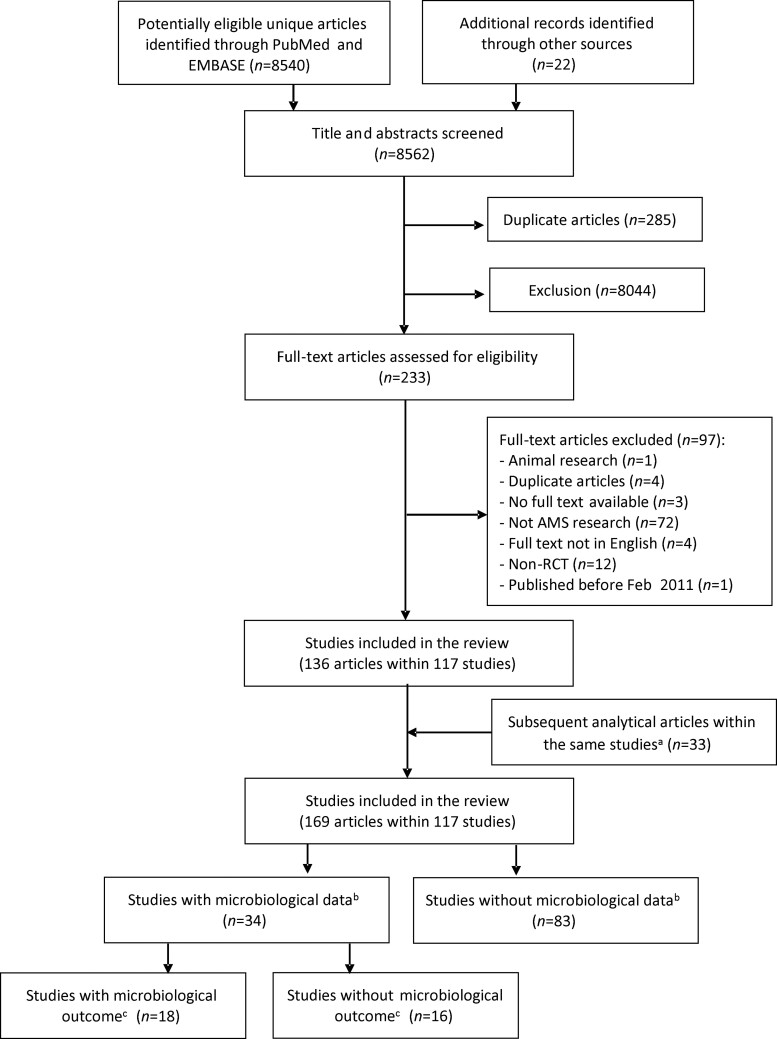
We searched PubMed and Embase from 2011-21. Studies were selected if they were RCTs evaluating ASIs. A narrative synthesis approach was taken, identifying whether the study reported any microbiological data (bacterial genus/species; bacterial colony counts; prevalence of bacterial, microbiologically defined infections; and antibiotic susceptibility, measured pre-randomization or post-randomization in one arm only) or outcomes (post-randomization data compared between arms). Studies with or without microbiological data/outcomes were summarized in terms of study characteristics, methods of reporting and analysis of these outcomes.
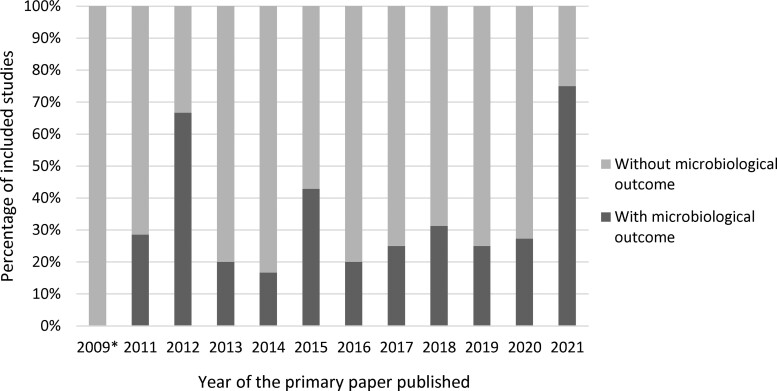
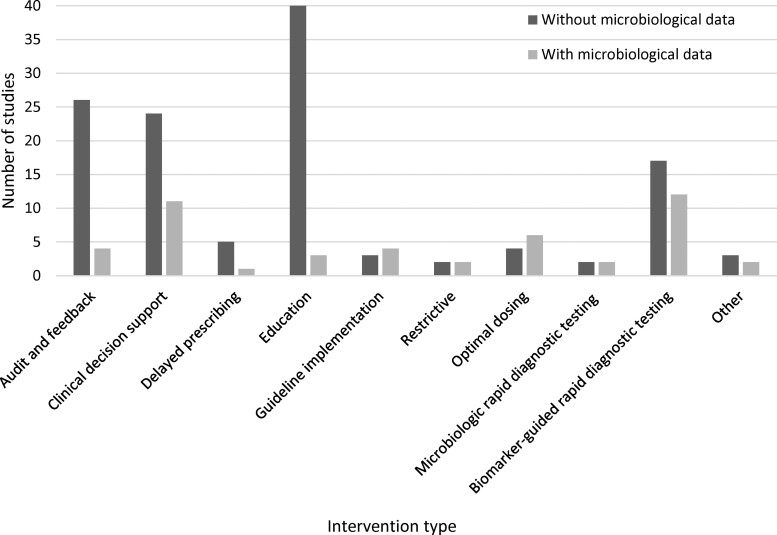
We identified 117 studies, with 34 (29.1%) collecting microbiological data and 18 (15.4%) reporting microbiological outcomes. Most studies with microbiological outcomes were conducted in secondary care (12/18, 66.7%) and targeted adult populations (14/18, 77.8%), and the intervention involved biomarker-guided rapid diagnostic testing (7/18, 38.9%). The overall quality of reporting and analysing microbiological outcomes was low and inconsistent. The selected study population in analyses and methods of handling missing data were unclear.
This review demonstrates that the quality of handling and reporting microbiological outcomes in RCTs of ASIs was low. The lack of consistency and clarity made it difficult to compare the findings across studies, limiting policy- and clinical decision-making. Therefore, there is a clear need for the development of guidance for handling microbiological outcomes in RCTs and adopting appropriate methods to evaluate these data carefully.
抗菌药物管理干预措施(ASIs)旨在减少抗菌药物耐药性的出现。我们试图系统地评估在评估ASIs的随机对照试验(RCTs)中,微生物学结果是如何处理和分析的。
我们检索了2011年至2021年的PubMed和Embase。如果研究是评估ASIs的RCTs,则将其纳入。采用叙述性综合分析方法,确定该研究是否报告了任何微生物学数据(细菌属/种;细菌菌落计数;细菌学定义的感染患病率;以及仅在一个研究组中随机分组前或随机分组后测量的抗生素敏感性)或结果(研究组之间比较的随机分组后数据)。对有或没有微生物学数据/结果的研究,从研究特征、这些结果的报告和分析方法方面进行了总结。
我们确定了117项研究,其中34项(29.1%)收集了微生物学数据,18项(15.4%)报告了微生物学结果。大多数有微生物学结果的研究是在二级医疗机构进行的(12/18,66.7%),针对成年人群(14/18,77.8%),干预措施包括生物标志物引导的快速诊断检测(7/18,38.9%)。微生物学结果报告和分析的总体质量较低且不一致。分析中所选的研究人群以及处理缺失数据的方法不明确。
本综述表明,在ASIs的RCTs中,微生物学结果的处理和报告质量较低。缺乏一致性和清晰度使得难以在不同研究间比较结果,限制了政策和临床决策。因此,显然需要制定关于在RCTs中处理微生物学结果并采用适当方法仔细评估这些数据的指南。