Rajan Sukanya, Paton Lewis W, Chowdhury Asiful Haidar, Zavala Gerardo A, Aslam Faiza, Huque Rumana, Khalid Humaira, Murthy Pratima, Nizami Asad T, Prasad Muliyala Krishna, Shiers David, Siddiqi Najma, Boehnke Jan R
Department of Psychiatry, National Institute of Mental Health and Neurosciences (NIMHANS), Bangalore, India.
Department of Health Sciences, University of York, York, United Kingdom.
Front Psychiatry. 2022 Feb 14;13:785059. doi: 10.3389/fpsyt.2022.785059. eCollection 2022.
People with severe mental illnesses (SMIs) are likely to face disproportionate challenges during a pandemic. They may not receive or be able to respond to public health messages to prevent infection or to limit its spread. Additionally, they may be more severely affected, particularly in low- and middle-income countries.
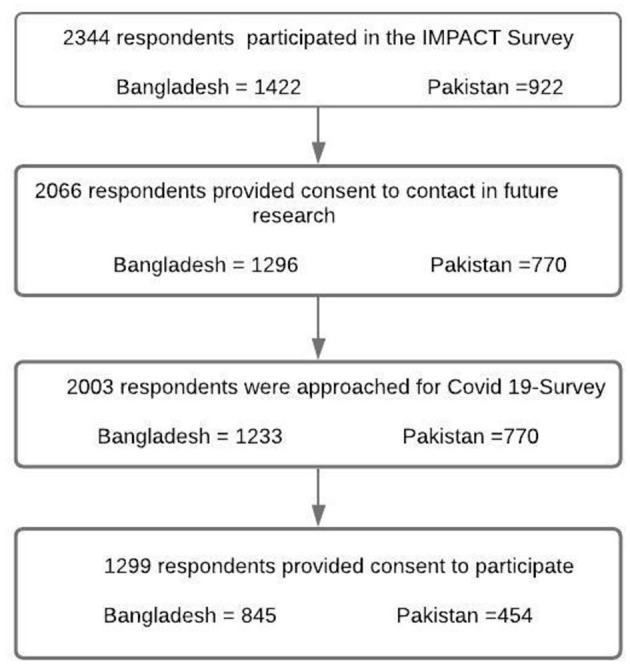
We conducted a telephone survey (May-June 2020) in a sample of 1,299 people with SMI who had attended national mental health institutes in Bangladesh and Pakistan before the pandemic. We collected information on top worries, socioeconomic impact of the pandemic, knowledge of COVID-19 (symptoms, prevention), and prevention-related practices (social distancing, hygiene). We explored the predictive value of socio-demographic and health-related variables for relative levels of COVID-19 knowledge and practice using regularized logistic regression models.
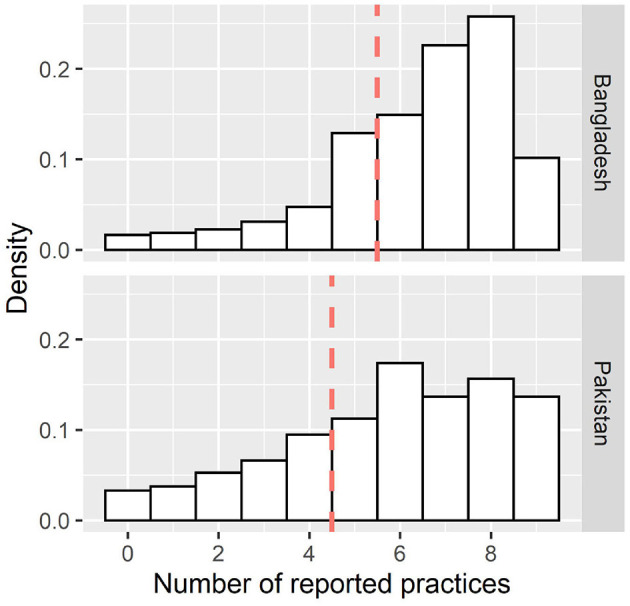
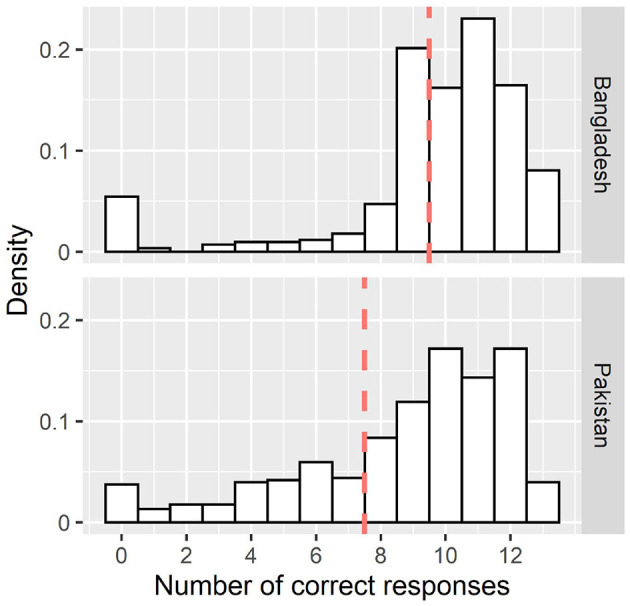
Mass media were the major source of information about COVID-19. Finances, employment, and physical health were the most frequently mentioned concerns. Overall, participants reported good knowledge and following advice. In Bangladesh, being female and higher levels of health-related quality of life (HRQoL) predicted poor and better knowledge, respectively, while in Pakistan being female predicted better knowledge. Receiving information from television predicted better knowledge in both countries. In Bangladesh, being female, accessing information from multiple media sources, and better HRQoL predicted better practice. In Pakistan, poorer knowledge of COVID-19 prevention measures predicted poorer practice.
Our paper adds to the literature on people living with SMIs and their knowledge and practices relevant to COVID-19 prevention. Our results emphasize the importance of access to mass and social media for the dissemination of advice and that the likely gendered uptake of both knowledge and practice requires further attention.
严重精神疾病患者在大流行期间可能面临不成比例的挑战。他们可能无法接收或回应公共卫生信息以预防感染或限制其传播。此外,他们可能受到更严重的影响,尤其是在低收入和中等收入国家。
我们在2020年5月至6月对1299名严重精神疾病患者进行了电话调查,这些患者在大流行之前曾就诊于孟加拉国和巴基斯坦的国家精神卫生机构。我们收集了关于主要担忧、大流行的社会经济影响、对COVID-19的了解(症状、预防)以及与预防相关的做法(社交距离、卫生)的信息。我们使用正则化逻辑回归模型探讨了社会人口统计学和健康相关变量对COVID-19知识和做法相对水平的预测价值。
大众媒体是关于COVID-19的主要信息来源。财务、就业和身体健康是最常提到的担忧。总体而言,参与者报告了良好的知识并遵循了建议。在孟加拉国,女性和较高的健康相关生活质量(HRQoL)分别预测了较差和较好的知识水平,而在巴基斯坦,女性预测了较好的知识水平。从电视获取信息在两国都预测了较好的知识水平。在孟加拉国,女性、从多种媒体来源获取信息以及较好的HRQoL预测了较好的做法。在巴基斯坦,对COVID-19预防措施的了解较差预测了较差的做法。
我们的论文补充了关于严重精神疾病患者及其与COVID-19预防相关的知识和做法的文献。我们的结果强调了获取大众和社交媒体以传播建议的重要性,并且知识和做法可能存在的性别差异需要进一步关注。