Wang Ning, Wu Tao, Du Di, Mei Jie, Luo Huibo, Liu Zishan, Saleemi Muhammad Kashif, Zhang Runhui, Chang Candace, Mehmood Muhammad Aamer, Zhu Hui
College of Bioengineering, Sichuan University of Science and Engineering, Zigong, China.
School of Food and Biological Engineering, Xihua University, Chengdu, China.
Front Microbiol. 2022 Feb 14;12:748594. doi: 10.3389/fmicb.2021.748594. eCollection 2021.
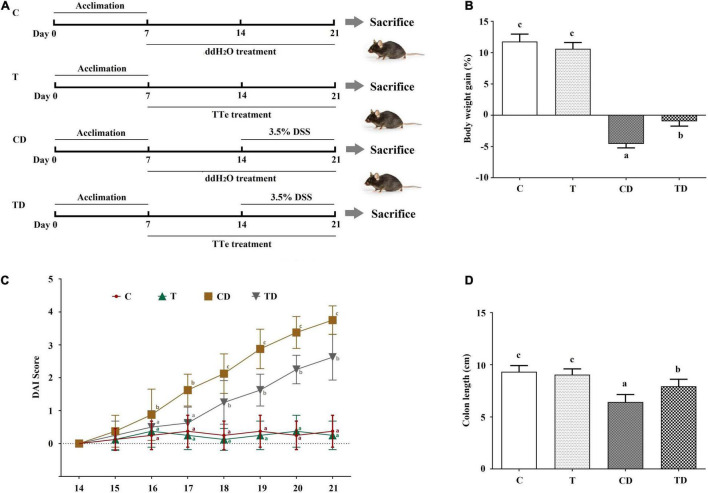
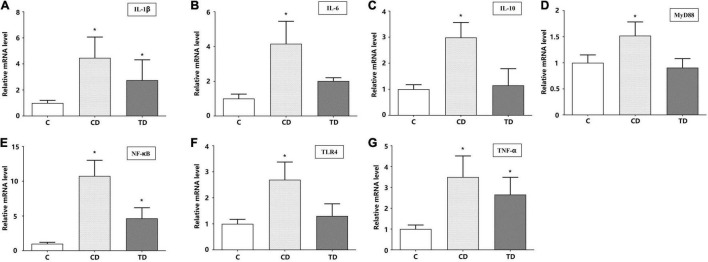
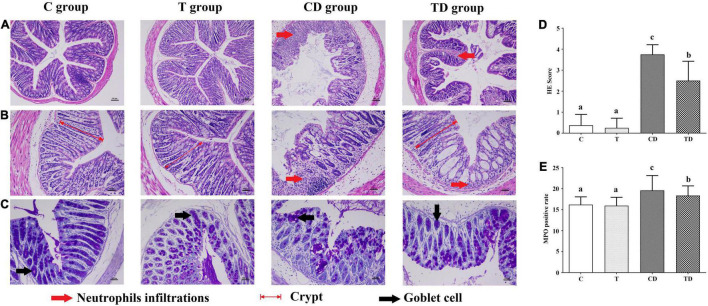
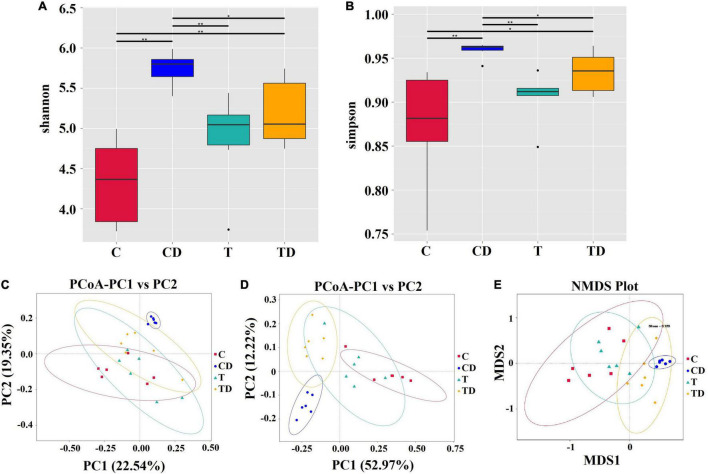
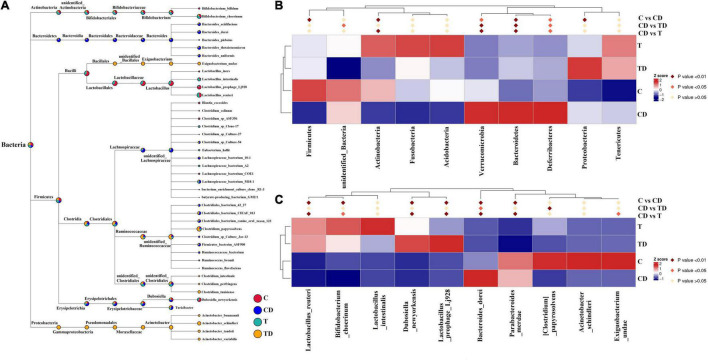
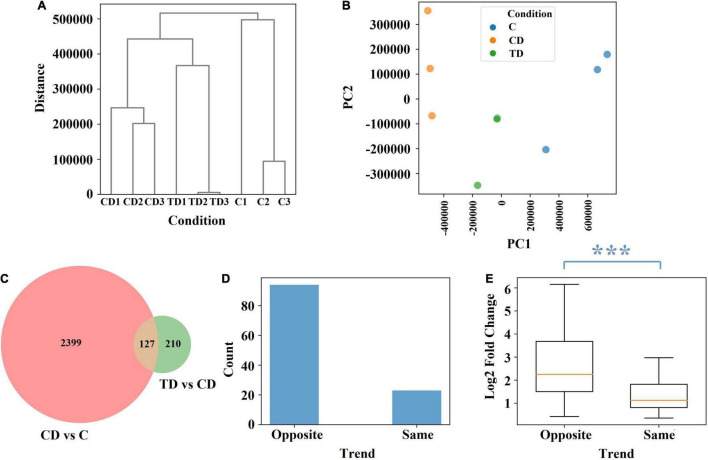
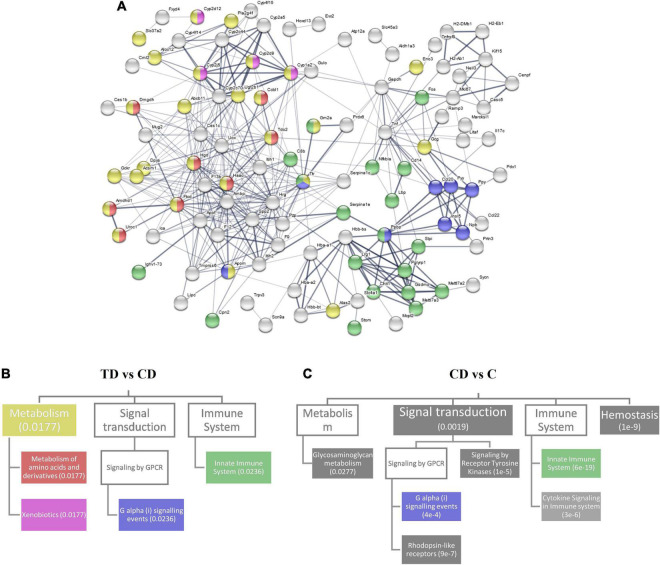
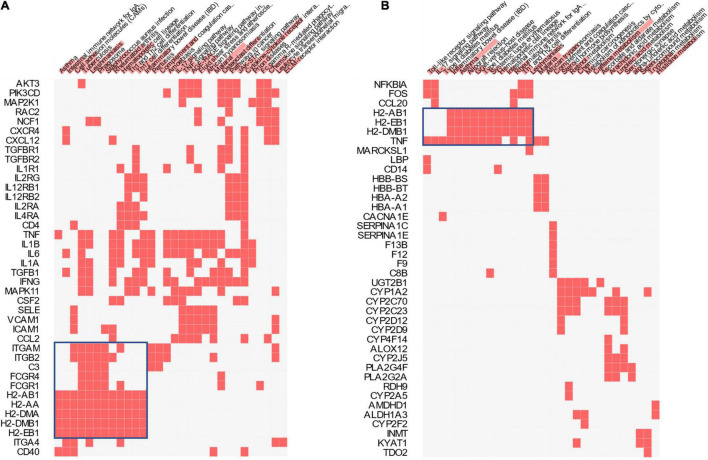
Traditionally, Ya'an Tibetan tea is routinely consumed by local people in the Tibet region. It is believed to possess promising anti-inflammatory benefits. This study was conducted to elucidate the protective impact of Tibetan tea extract (TTE) on dextran sodium sulfate (DSS)-induced colitis in mice. Mice were split into four groups: control (C) group, Tibetan tea (T) group, DSS-induced model (CD) group, and Tibetan tea + DSS (TD) group. The intake of TTE significantly reduced the clinical symptoms of ulcerative colitis (UC) by alleviating the impact of cellular damage and reducing glandular hypertrophy and the infiltration of inflammatory cells. UC led to a prominent shift of the microbial communities in the gut. Interestingly, the beneficial microbes, such as , , and , were significantly increased in TTE-treated mice when compared to any other experimental group. The transcriptome analysis revealed that the positive effect of TTE on UC could be attributed to changes in the G alpha (i) signaling pathway and the innate immune system. The genes related to inflammation and immune system pathways were differentially expressed in the TTE-treated group. Moreover, the relative expression of genes linked to the inflammatory TLR4/MyD88/NF-κB signaling pathway was significantly downregulated toward the level of normal control samples in the TD group. Overall, this study revealed the modulatory effect by which TTE reversed the development and severity of chronic colon damage.
传统上,雅安藏茶是西藏地区当地人日常饮用的茶。人们认为它具有良好的抗炎功效。本研究旨在阐明藏茶提取物(TTE)对葡聚糖硫酸钠(DSS)诱导的小鼠结肠炎的保护作用。将小鼠分为四组:对照组(C组)、藏茶组(T组)、DSS诱导模型组(CD组)和藏茶+DSS组(TD组)。TTE的摄入通过减轻细胞损伤的影响、减少腺体肥大和炎症细胞浸润,显著减轻了溃疡性结肠炎(UC)的临床症状。UC导致肠道微生物群落发生显著变化。有趣的是,与其他任何实验组相比,TTE处理的小鼠体内有益微生物,如 、 和 显著增加。转录组分析表明,TTE对UC的积极作用可能归因于Gα(i)信号通路和先天免疫系统的变化。与炎症和免疫系统途径相关的基因在TTE处理组中差异表达。此外,在TD组中,与炎症性TLR4/MyD88/NF-κB信号通路相关的基因相对表达显著下调至正常对照样本水平。总体而言,本研究揭示了TTE逆转慢性结肠损伤发展和严重程度的调节作用。