Medical Research Council Unit, The Gambia at London School of Hygiene and Tropical Medicine, Banjul, Gambia.
Chair for Public Health and Health Services Research, Institute for Medical Information Processing, Biometry and Epidemiology (IBE), Ludwig-Maximilians-Universität München, Munich, Germany.
Front Public Health. 2022 Feb 10;10:785254. doi: 10.3389/fpubh.2022.785254. eCollection 2022.
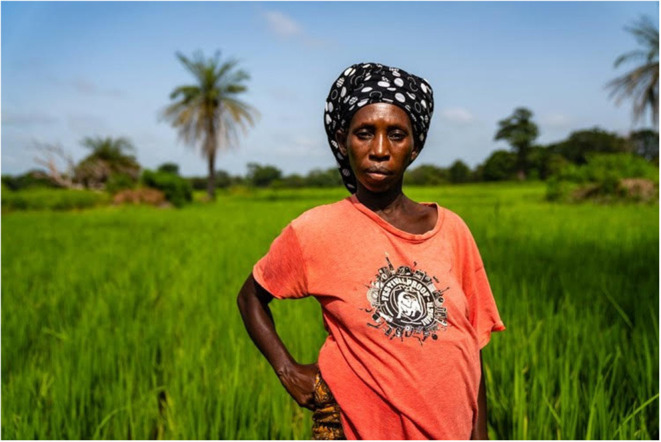
The expected increase in heat in The Gambia is one of the most significant health threats caused by climate change. However, little is known about the gendered dynamics of exposure and response to heat stress, including women's perceived health risks, their adaptation strategies to heat, and their perceptions of climate change. This research project aims to answer the question of whether and how pregnant farmers in The Gambia perceive and act upon occupational heat stress and its health impacts on both themselves and their unborn children, against the backdrop of current and expected climatic changes.
In-depth semi-structured interviews were conducted with 12 women who practice subsistence farming and were either pregnant or had delivered within the past month in West Kiang, The Gambia. Participants were selected using purposive sampling. Translated interview transcripts were coded and qualitative thematic content analysis with an intersectional lens was used to arrive at the results.
All women who participated in the study experience significant heat stress while working outdoors during pregnancy, with symptoms often including headache, dizziness, nausea, and chills. The most common adaptive techniques included resting in the shade while working, completing their work in multiple shorter time increments, taking medicine to reduce symptoms like headache, using water to cool down, and reducing the amount of area they cultivate. Layered identities, experiences, and household power structures related to age, migration, marital situation, socioeconomic status, and supportive social relationships shaped the extent to which women were able to prevent and reduce the effects of heat exposure during their work whilst pregnant. Women who participated in this study demonstrated high awareness of climate change and offered important insights into potential values, priorities, and mechanisms to enable effective adaptation.
Our findings reveal many intersecting social and economic factors that shape the space within which women can make decisions and take adaptive action to reduce the impact of heat during their pregnancy. To improve the health of pregnant working women exposed to heat, these intersectionalities must be considered when supporting women to adapt their working practices and cope with heat stress.
冈比亚预计会出现更多高温天气,这是气候变化带来的最严重健康威胁之一。然而,人们对热应激的性别动态,包括女性对健康风险的感知、她们适应热应激的策略以及对气候变化的看法,知之甚少。本研究旨在回答以下问题:在当前和预期的气候变化背景下,冈比亚的孕妇农民是否以及如何感知和应对职业性热应激及其对自身和未出生子女的健康影响。
在冈比亚西部的凯因,我们对 12 名从事自给性农业且处于孕期或产后一个月内的女性进行了深入的半结构式访谈。采用目的抽样法选择参与者。翻译后的访谈记录进行编码,采用带有交叉视角的定性主题内容分析方法得出结果。
所有参与研究的女性在孕期户外工作时都经历了严重的热应激,症状通常包括头痛、头晕、恶心和发冷。最常见的适应技术包括在工作时在阴凉处休息、将工作分成多个较短的时间增量完成、服用药物来减轻头痛等症状、用水降温以及减少种植面积。与年龄、迁移、婚姻状况、社会经济地位和支持性社会关系相关的分层身份、经历和家庭权力结构,影响了女性在怀孕期间工作时预防和减轻热暴露影响的能力。参与本研究的女性表现出对气候变化的高度认识,并为潜在的价值观、优先事项和机制提供了重要见解,这些机制可以使她们有效地适应气候变化。
我们的研究结果揭示了许多相互交织的社会和经济因素,这些因素塑造了女性做出决策和采取适应行动以减轻孕期热应激影响的空间。为了改善暴露于热应激下的孕妇工作女性的健康,在支持女性调整工作实践和应对热应激时,必须考虑这些交叉因素。