Liu Li, Huang Liu, Chen Wenzheng, Zhang Guoyang, Li Yebei, Wu Yukang, Xiong Jianbo, Jie Zhigang
Department of Gastrointestinal Surgery, The First Affiliated Hospital of Nanchang University, Nanchang, China.
The Second Affiliated Hospital of Nanchang University, Nanchang, China.
Front Mol Biosci. 2022 Feb 14;9:811269. doi: 10.3389/fmolb.2022.811269. eCollection 2022.
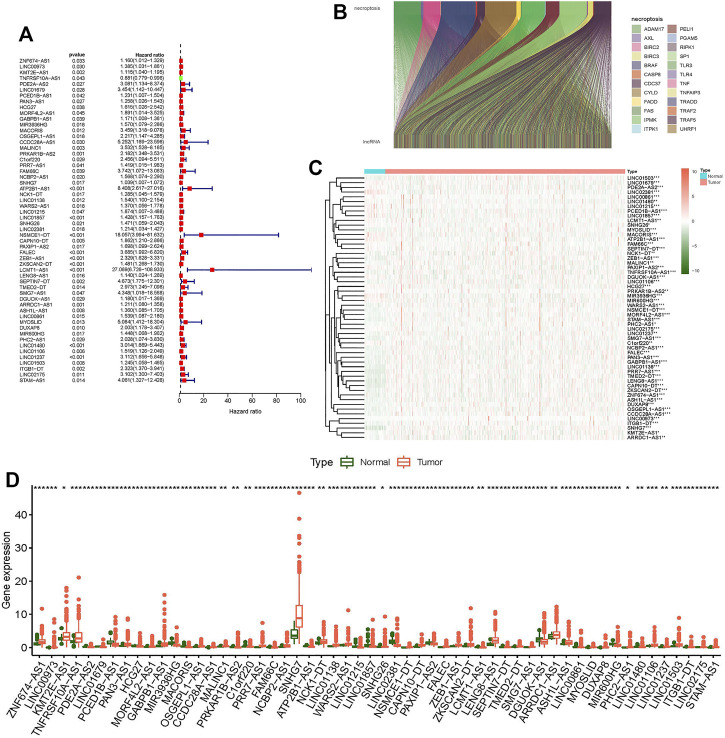
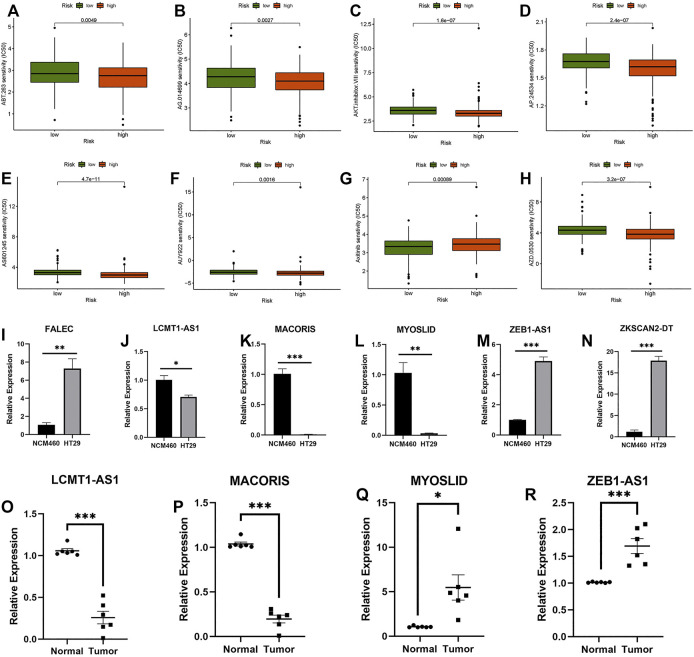
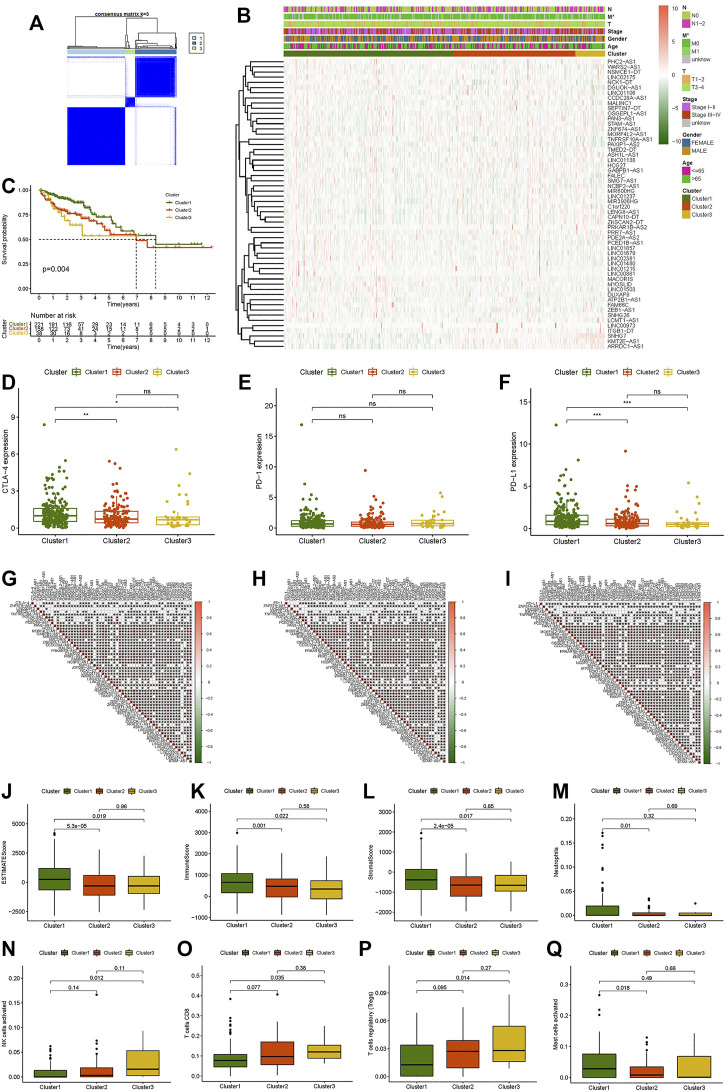
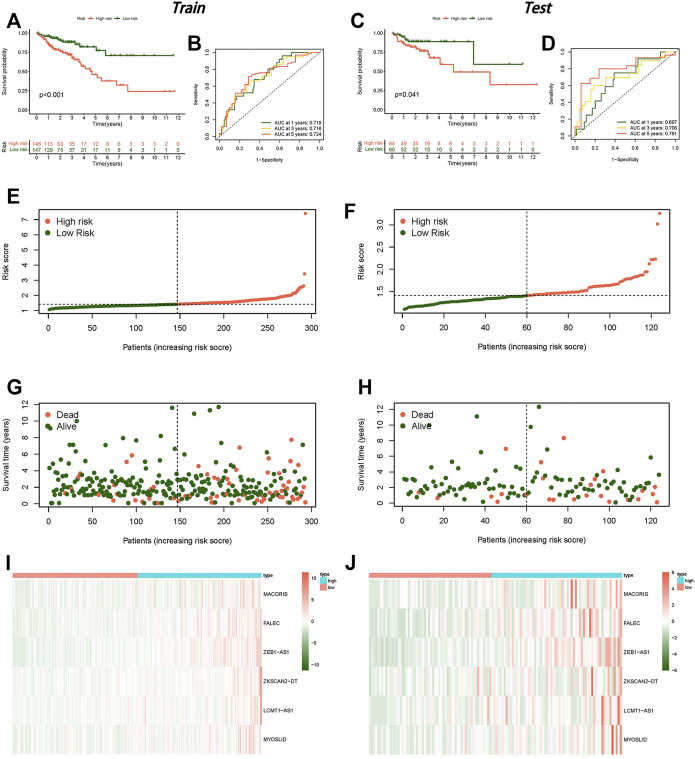
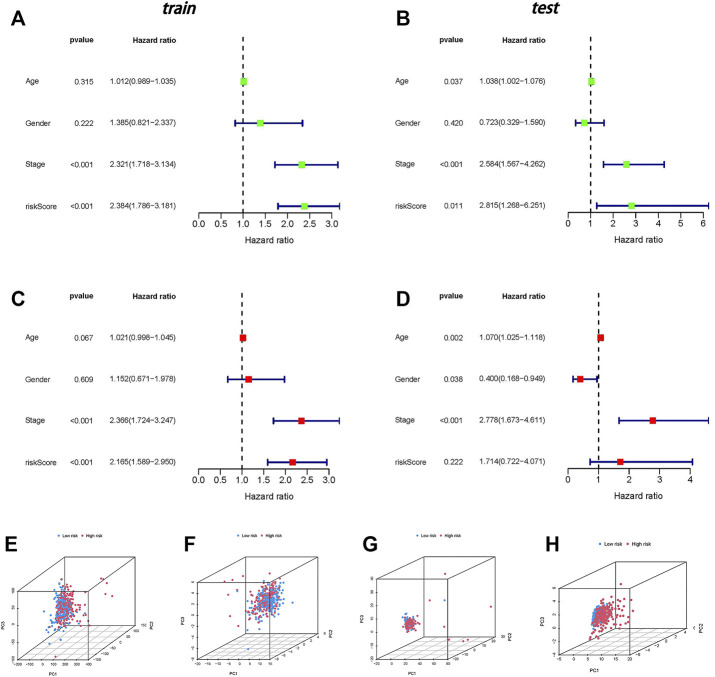
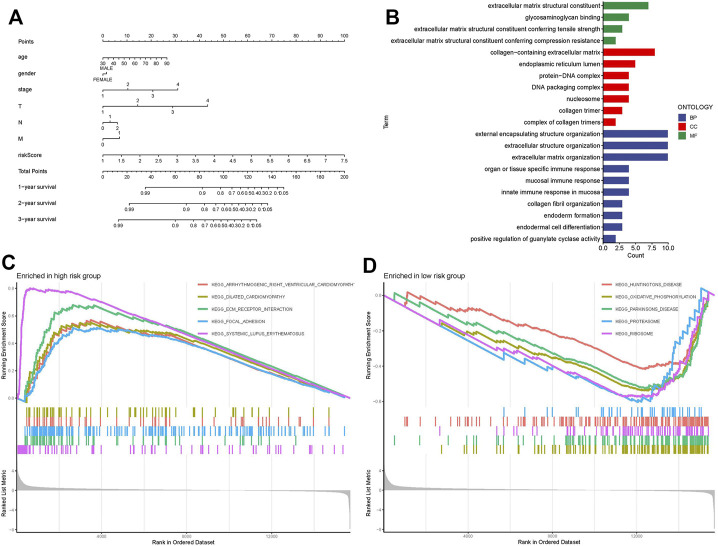
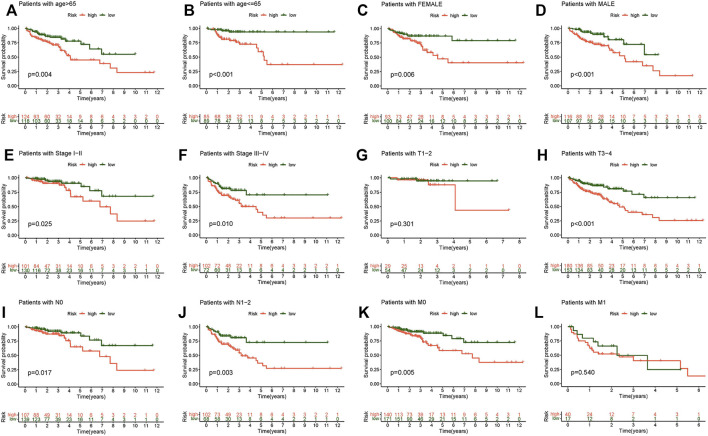
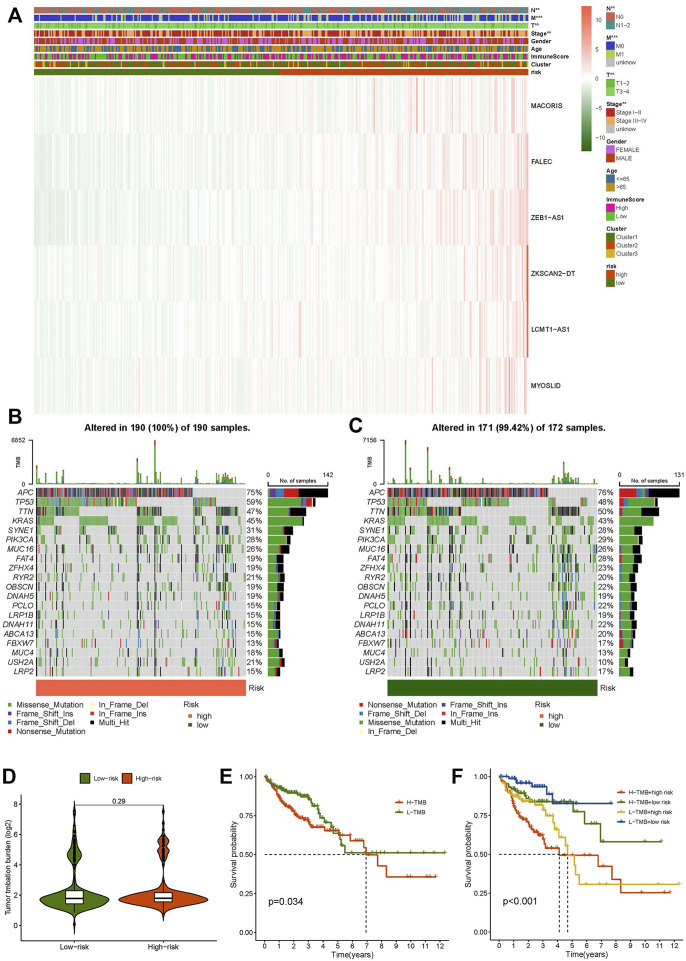
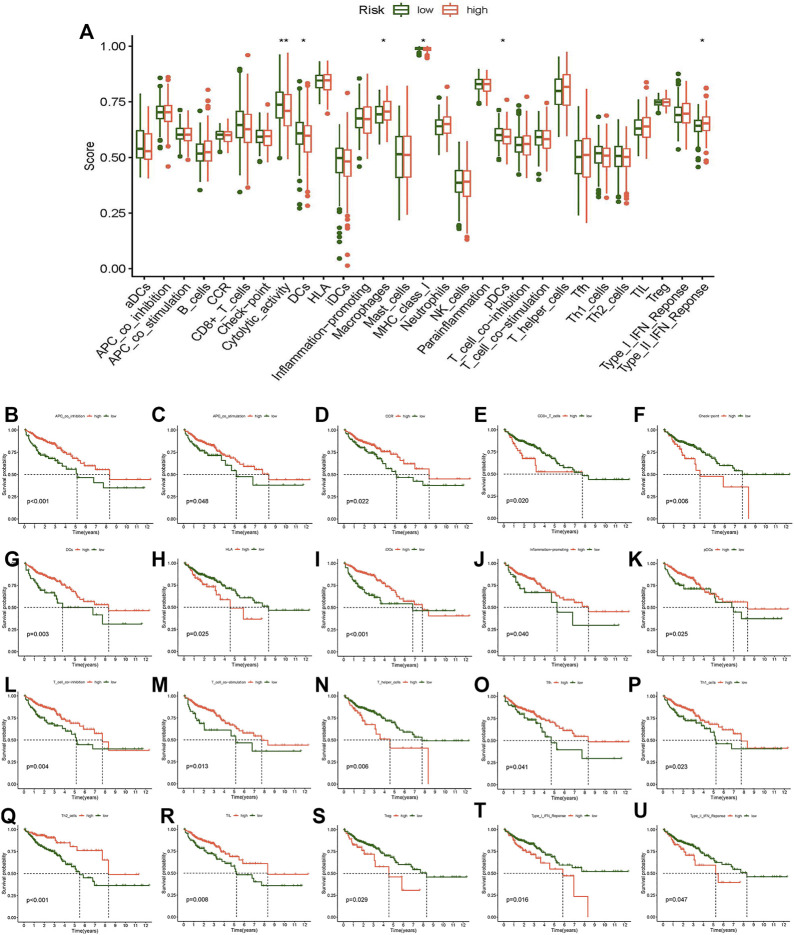
Colon cancer (CC) is one of the most frequent malignancies in the world, with a high rate of morbidity and death. In CC, necroptosis and long noncoding RNA (lncRNAs) are crucial, but the mechanism is not completely clear. The goal of this study was to create a new signature that might predict patient survival and tumor immunity in patients with CC. Expression profiles of necroptosis-related lncRNAs in 473 patients with CC were retrieved from the TCGA database. A consensus clustering analysis based on differentially expressed (DE) genes and a prognostic model based on least absolute shrinkage and selection operator (LASSO) regression analysis were conducted. Clinicopathological correlation analysis, expression difference analysis, PCA, TMB, GO analysis, KEGG enrichment analysis, survival analysis, immune correlation analysis, prediction of clinical therapeutic compounds, and qRT-PCR were also conducted. Fifty-six necroptosis-related lncRNAs were found to be linked to the prognosis, and consensus clustering analysis was performed. There were substantial variations in survival, immune checkpoint expression, clinicopathological correlations, and tumor immunity among the different subgroups. Six lncRNAs were discovered, and patients were split into high-risk and low-risk groups based on a risk score generated using these six lncRNAs. The survival time of low-risk patients was considerably longer than that of high-risk patients, indicating that these lncRNAs are directly associated with survival. The risk score was associated with the tumor stage, infiltration depth, lymph node metastasis, and distant metastasis. After univariate and multivariate Cox regression analysis, the risk score and tumor stage remained significant. Cancer- and metabolism-related pathways were enriched by KEGG analyses. Immune infiltration was shown to differ significantly between high- and low-risk patients in a tumor immunoassay. Eight compounds were screened out, and qRT-PCR confirmed the differential expression of the six lncRNAs. Overall, in CC, necroptosis-related lncRNAs have an important function, and the prognosis of patients with CC can be predicted by these six necroptosis-related lncRNAs. They may be useful in the future for customized cancer therapy.
结肠癌(CC)是世界上最常见的恶性肿瘤之一,发病率和死亡率都很高。在CC中,坏死性凋亡和长链非编码RNA(lncRNAs)至关重要,但其机制尚不完全清楚。本研究的目的是创建一个新的特征,以预测CC患者的生存情况和肿瘤免疫。从TCGA数据库中检索了473例CC患者坏死性凋亡相关lncRNAs的表达谱。基于差异表达(DE)基因进行了共识聚类分析,并基于最小绝对收缩和选择算子(LASSO)回归分析构建了预后模型。还进行了临床病理相关性分析、表达差异分析、主成分分析(PCA)、肿瘤突变负荷(TMB)分析、基因本体(GO)分析、京都基因与基因组百科全书(KEGG)富集分析、生存分析、免疫相关性分析、临床治疗化合物预测以及定量逆转录聚合酶链反应(qRT-PCR)。发现56个坏死性凋亡相关lncRNAs与预后相关,并进行了共识聚类分析。不同亚组之间在生存、免疫检查点表达、临床病理相关性和肿瘤免疫方面存在显著差异。发现了6个lncRNAs,并根据使用这6个lncRNAs生成的风险评分将患者分为高风险组和低风险组。低风险患者的生存时间明显长于高风险患者,表明这些lncRNAs与生存直接相关。风险评分与肿瘤分期、浸润深度、淋巴结转移和远处转移相关。经过单因素和多因素Cox回归分析,风险评分和肿瘤分期仍然具有显著性。KEGG分析显示癌症和代谢相关通路富集。在肿瘤免疫分析中,高风险和低风险患者之间的免疫浸润存在显著差异。筛选出8种化合物,qRT-PCR证实了这6个lncRNAs的差异表达。总体而言,在CC中,坏死性凋亡相关lncRNAs具有重要作用,这6个坏死性凋亡相关lncRNAs可以预测CC患者的预后。它们未来可能有助于个性化癌症治疗。