Department of General Surgery, Changhai Hospital, Navy Military Medical University, Shanghai, China.
Department of General Surgery, 63650 Military Hospital, China.
J Clin Lab Anal. 2022 Apr;36(4):e24302. doi: 10.1002/jcla.24302. Epub 2022 Mar 1.
Necroptosis is a type of programmed cell death, and recent researches have showed that lncRNAs could regulate the process of necroptosis in multiple cancers. We tried to screen necroptosis-related lncRNAs and investigate the immune landscape in breast cancer (BC).
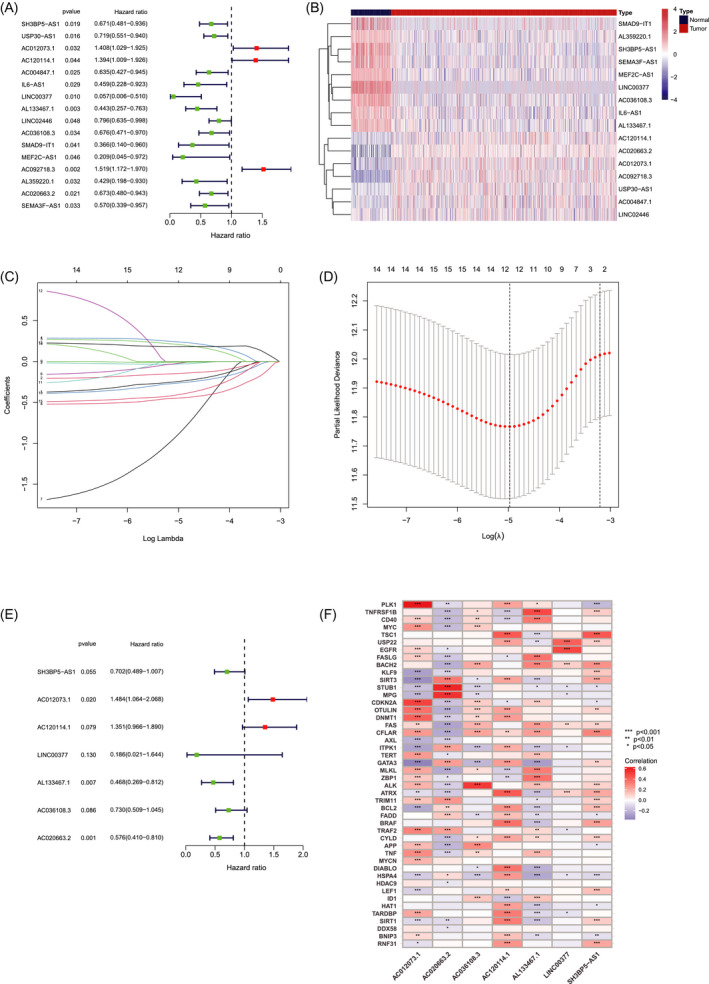
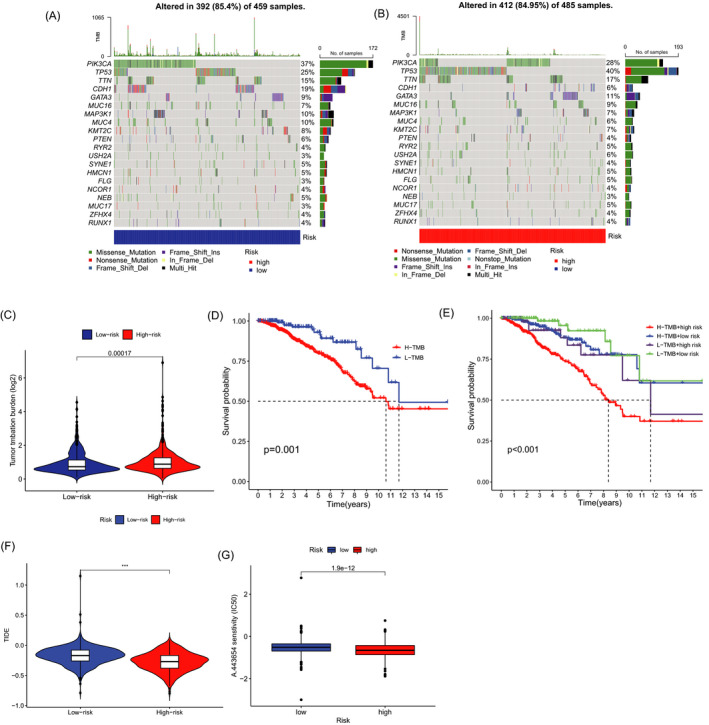
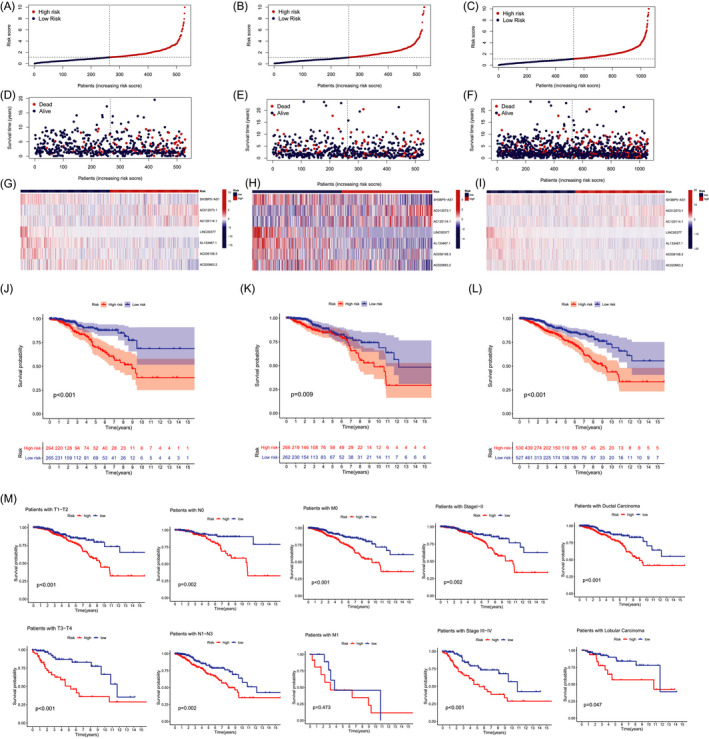
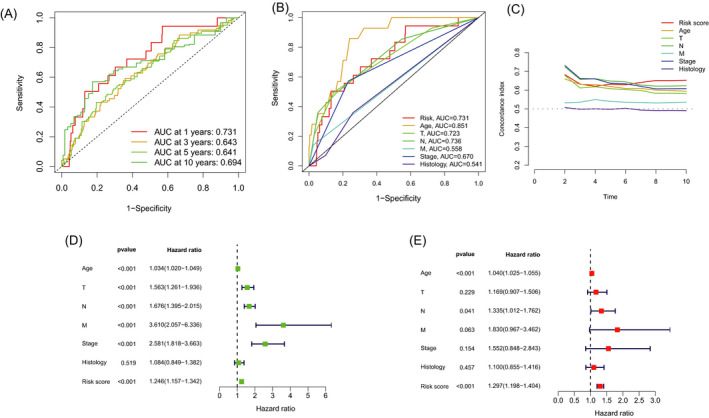
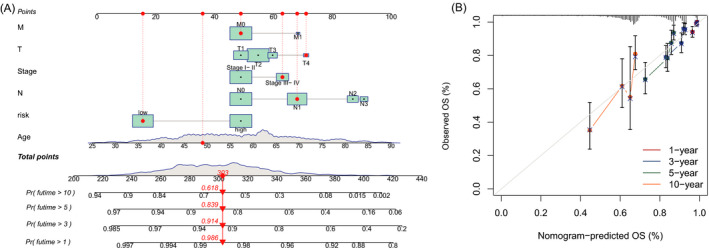
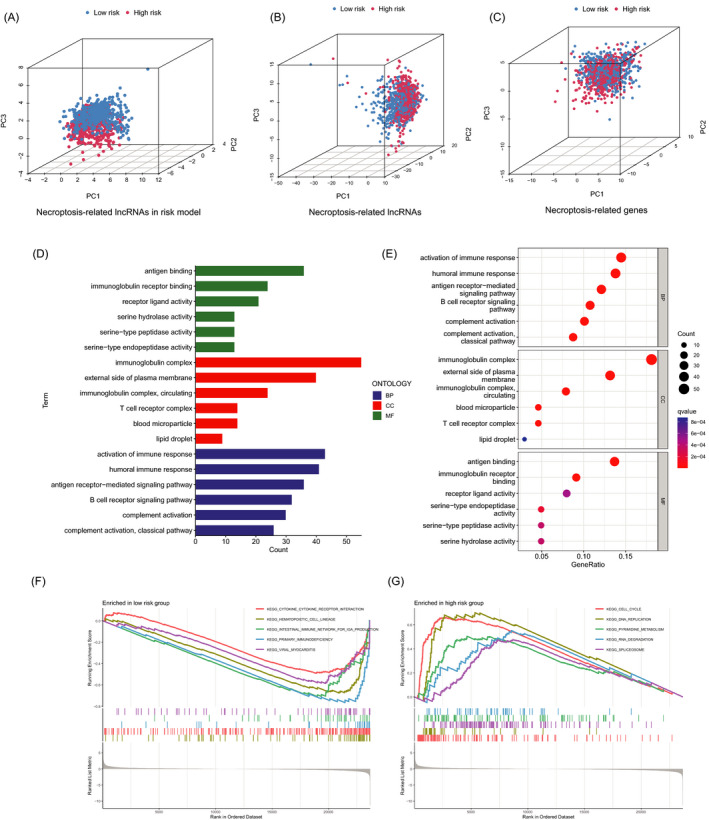
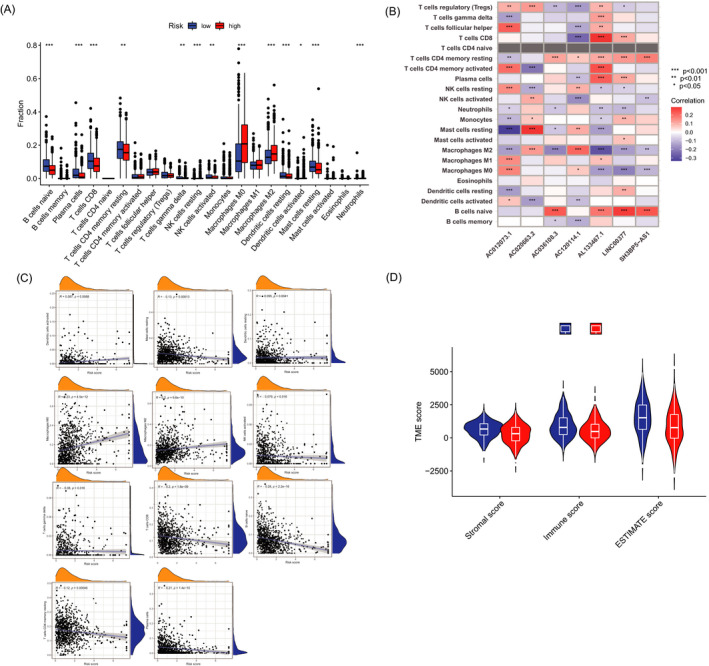
The samples of breast normal and cancer tissue were acquired from TCGA and GTEx databases. A risk prognostic model was constructed based on the identified necroptosis-related lncRNAs by Cox regression and least absolute shrinkage and selection operator (LASSO) method. Moreover, the forecast performance of this model was verified and accredited by synthetic approach. Subsequently, an accurate nomogram was constructed to predict the prognosis of BC patients. The biological differences were investigated through GO, GSEA, and immune analysis. The immunotherapy response was estimated through tumor mutation burden (TMB) and tumor immune dysfunction and exclusion (TIDE) score.
A total of 251 necroptosis-related lncRNAs were identified by differential coexpression analysis, and SH3BP5-AS1, AC012073.1, AC120114.1, LINC00377, AL133467.1, AC036108.3, and AC020663.2 were involved in the risk model, which had an excellent concordance with the prediction. The pathway analyses showed that immune-related pathways were relevant to the necroptosis-related lncRNAs risk model. And the risk score was significantly correlated with immune cell infiltration, as well as the ESTIMATE score. Most notably, the patients of higher risk score were characterized with increased TMB and decreased TIDE score, indicating that these patients showed better immune checkpoint blockade response.
These findings were conducive to understand the function of necroptosis-related lncRNAs in BC and provide a potential promising therapeutic strategy for BC.
坏死性凋亡是一种程序性细胞死亡方式,最近的研究表明,lncRNAs 可以调节多种癌症中的坏死性凋亡过程。我们试图筛选与坏死性凋亡相关的 lncRNAs,并研究乳腺癌(BC)中的免疫景观。
从 TCGA 和 GTEx 数据库中获取乳腺癌正常和肿瘤组织样本。基于 Cox 回归和最小绝对值收缩和选择算子(LASSO)方法鉴定的与坏死性凋亡相关的 lncRNAs 构建风险预后模型。此外,通过综合方法验证和确认该模型的预测性能。随后,构建一个准确的列线图来预测 BC 患者的预后。通过 GO、GSEA 和免疫分析研究生物学差异。通过肿瘤突变负担(TMB)和肿瘤免疫功能障碍和排除(TIDE)评分估计免疫治疗反应。
通过差异共表达分析共鉴定出 251 个与坏死性凋亡相关的 lncRNAs,SH3BP5-AS1、AC012073.1、AC120114.1、LINC00377、AL133467.1、AC036108.3 和 AC020663.2 参与了风险模型,与预测具有极好的一致性。通路分析表明,免疫相关通路与与坏死性凋亡相关的 lncRNAs 风险模型相关。风险评分与免疫细胞浸润以及 ESTIMATE 评分显著相关。值得注意的是,风险评分较高的患者具有更高的 TMB 和更低的 TIDE 评分,这表明这些患者表现出更好的免疫检查点阻断反应。
这些发现有助于了解与坏死性凋亡相关的 lncRNAs 在 BC 中的功能,并为 BC 提供一种有前途的潜在治疗策略。