Department of Cell Biology, University of Texas Southwestern Medical Center, Dallas, TX.
Department of Plant and Microbial Biology, North Carolina State University, Raleigh, NC.
J Cell Biol. 2022 May 2;221(5). doi: 10.1083/jcb.202107151. Epub 2022 Mar 3.
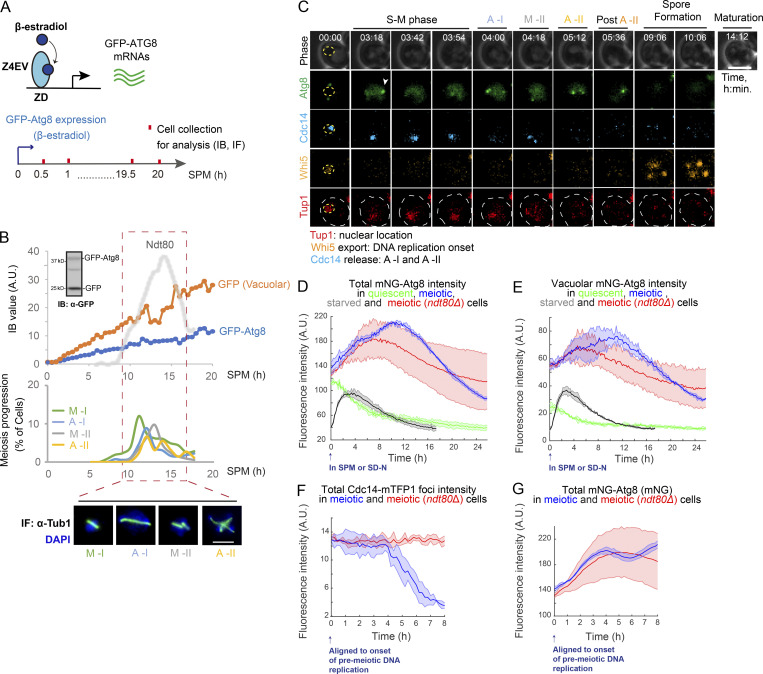
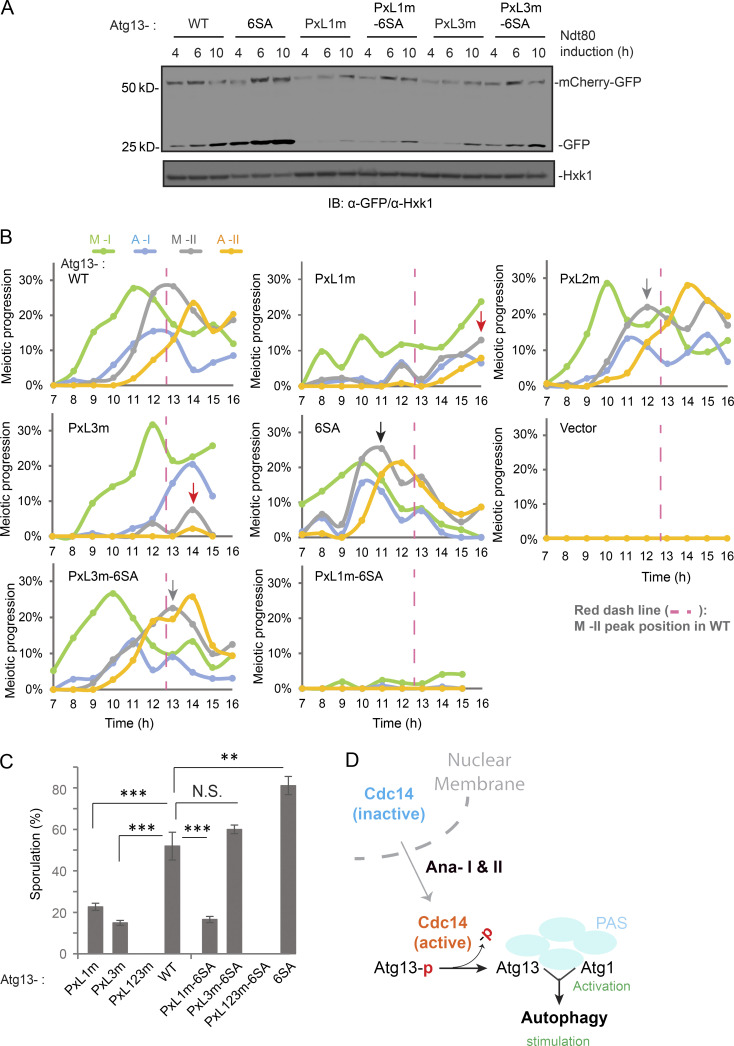
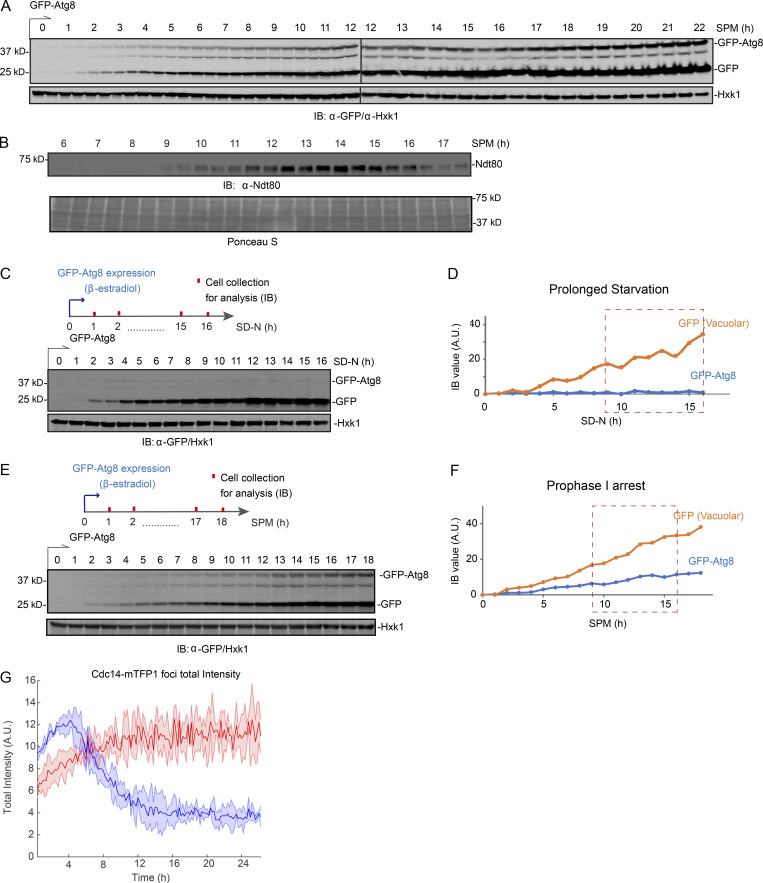
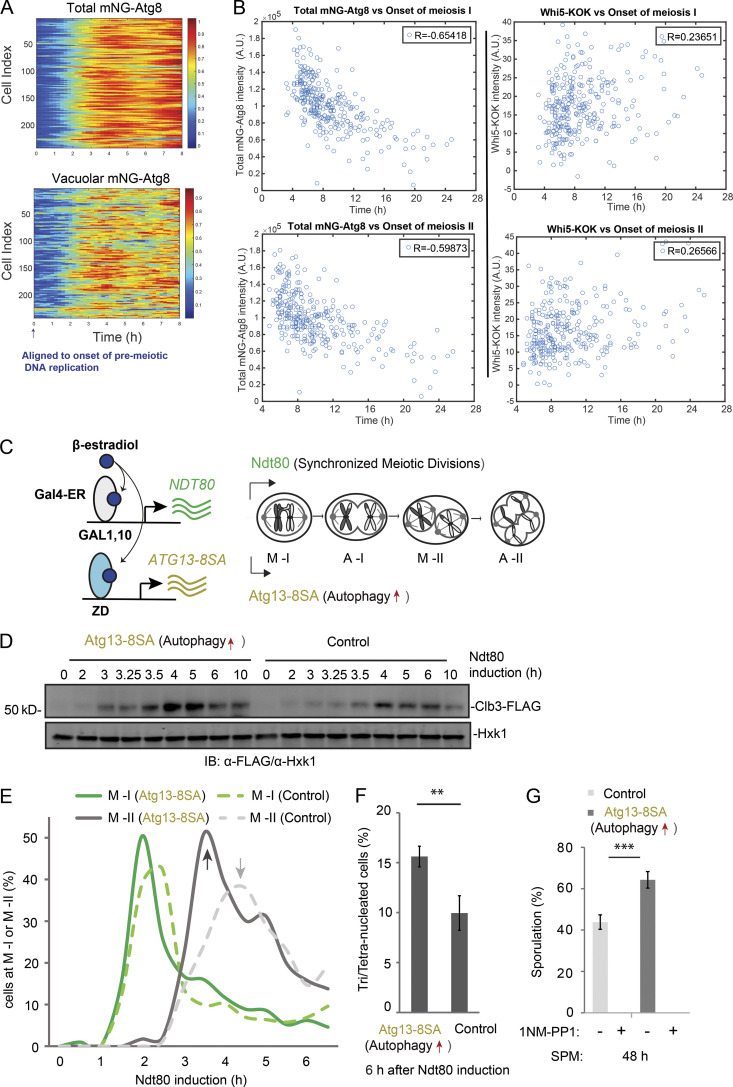
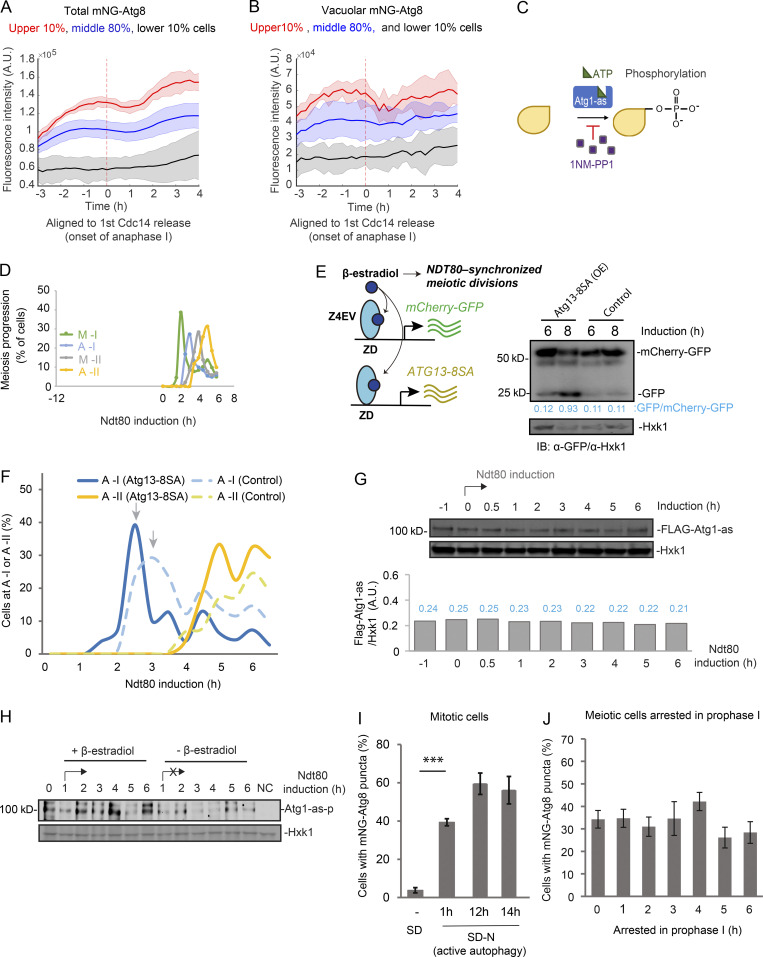
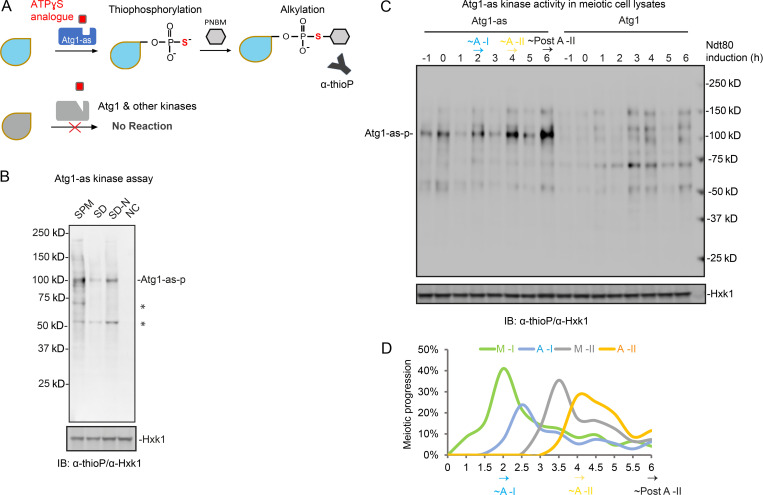
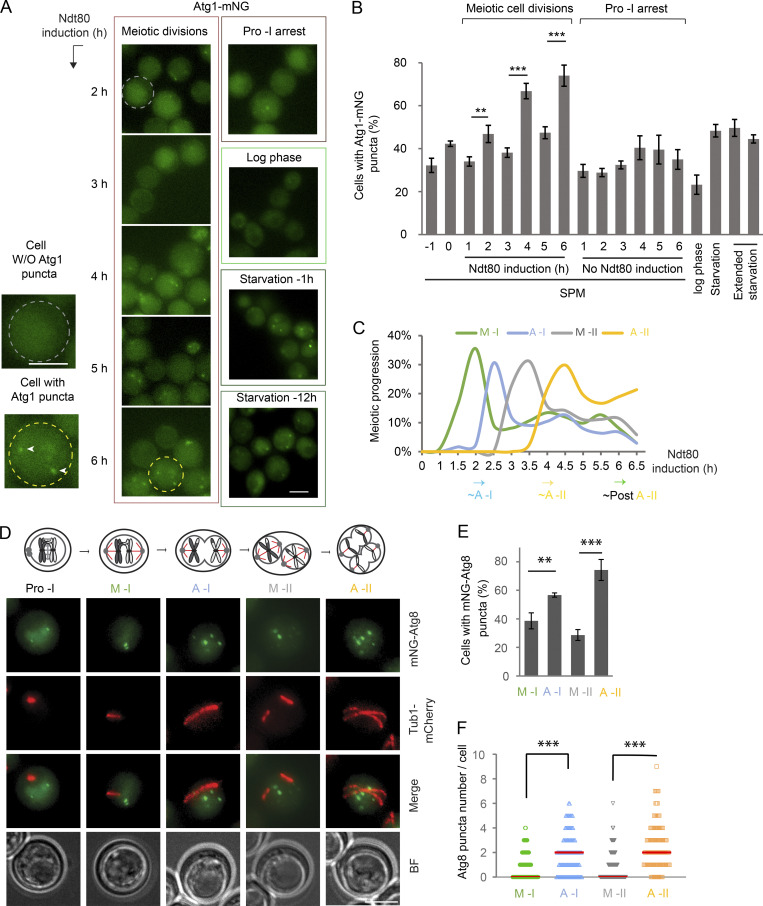
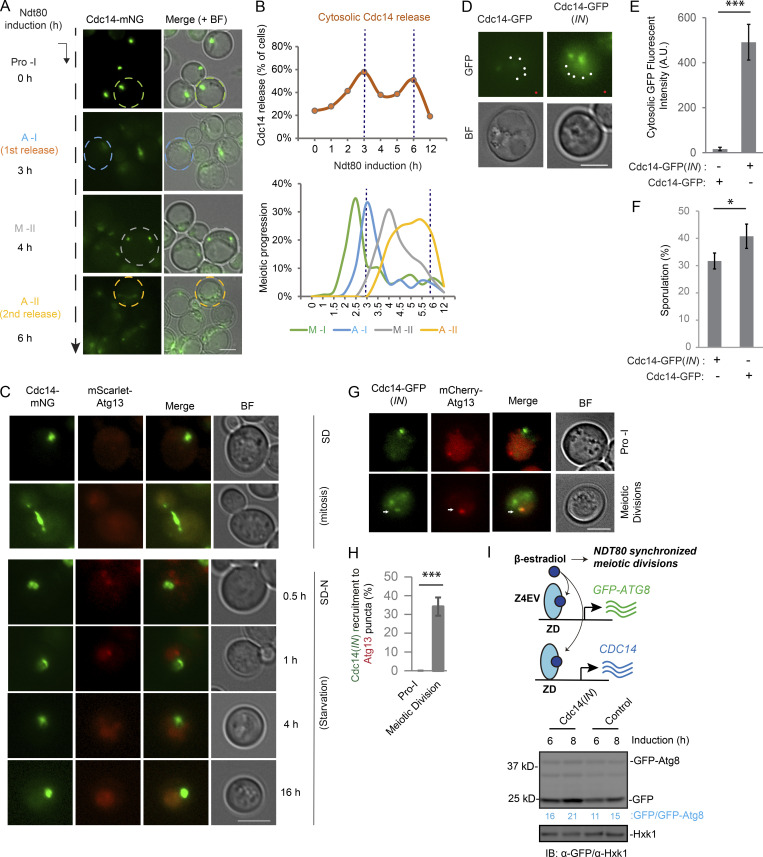
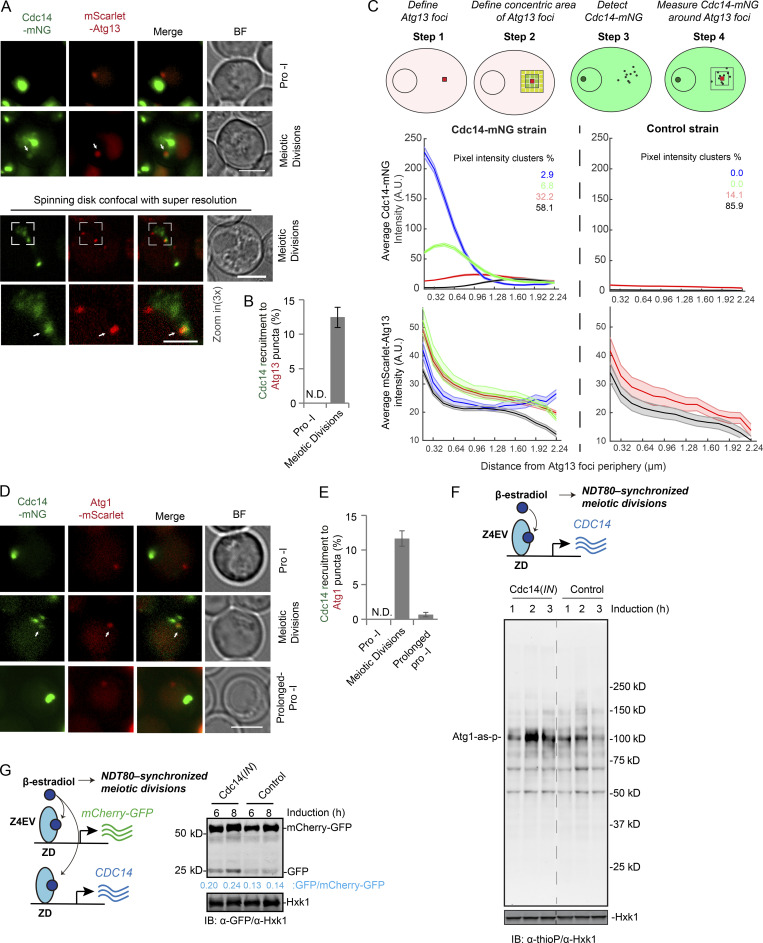
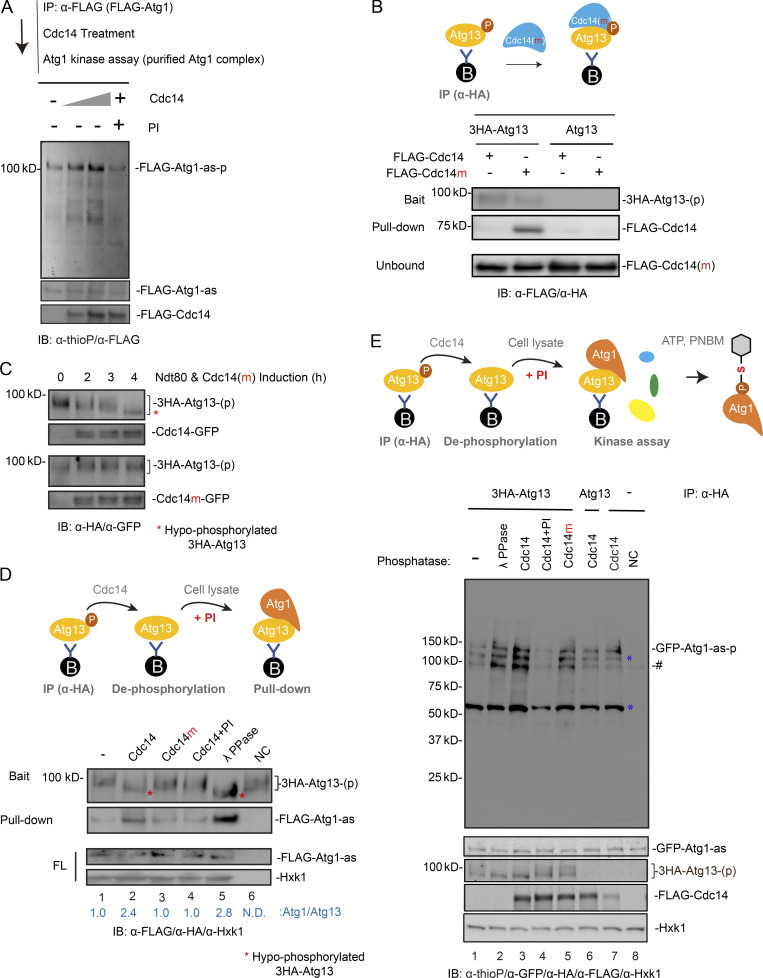
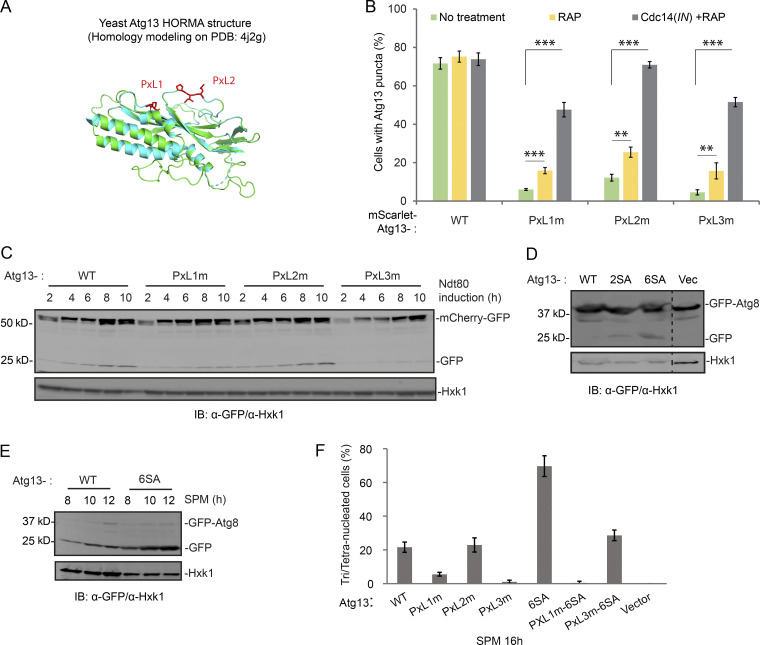
Autophagy is a conserved eukaryotic lysosomal degradation pathway that responds to environmental and cellular cues. Autophagy is essential for the meiotic exit and sporulation in budding yeast, but the underlying molecular mechanisms remain unknown. Here, we show that autophagy is maintained during meiosis and stimulated in anaphase I and II. Cells with higher levels of autophagy complete meiosis faster, and genetically enhanced autophagy increases meiotic kinetics and sporulation efficiency. Strikingly, our data reveal that the conserved phosphatase Cdc14 regulates meiosis-specific autophagy. Cdc14 is activated in anaphase I and II, accompanying its subcellular relocation from the nucleolus to the cytoplasm, where it dephosphorylates Atg13 to stimulate Atg1 kinase activity and thus autophagy. Together, our findings reveal a meiosis-tailored mechanism that spatiotemporally controls meiotic autophagy activity to ensure meiosis progression, exit, and sporulation.
自噬是一种保守的真核溶酶体降解途径,可响应环境和细胞信号。自噬对于芽殖酵母的减数分裂后期和孢子形成是必不可少的,但潜在的分子机制尚不清楚。在这里,我们表明自噬在减数分裂过程中得以维持,并在后期 I 和 II 中受到刺激。自噬水平较高的细胞完成减数分裂的速度更快,并且遗传增强的自噬会增加减数分裂动力学和孢子形成效率。引人注目的是,我们的数据表明保守的磷酸酶 Cdc14 调节减数分裂特异性自噬。Cdc14 在后期 I 和 II 中被激活,伴随着其从核仁到细胞质的亚细胞重定位,在细胞质中,它去磷酸化 Atg13 以刺激 Atg1 激酶活性,从而促进自噬。总之,我们的发现揭示了一种专门针对减数分裂的机制,可在时空上控制减数分裂自噬活性,以确保减数分裂的进行、退出和孢子形成。