Gupta Pallavi, Shinde Ashwini, Illath Kavitha, Kar Srabani, Nagai Moeto, Tseng Fan-Gang, Santra Tuhin Subhra
Department of Engineering Design, Indian Institute of Technology Madras, Chennai, 600036, India.
Department of Electrical Engineering, University of Cambridge, Cambridge, CB3 0FA, UK.
Mater Today Bio. 2022 Feb 16;13:100222. doi: 10.1016/j.mtbio.2022.100222. eCollection 2022 Jan.
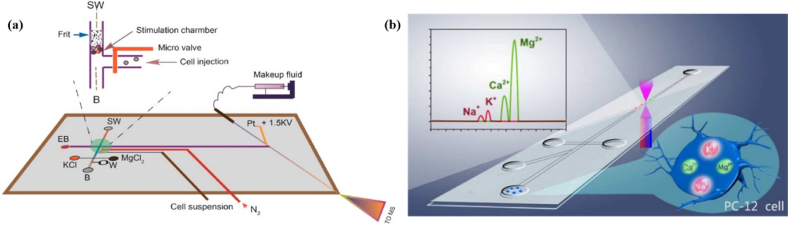
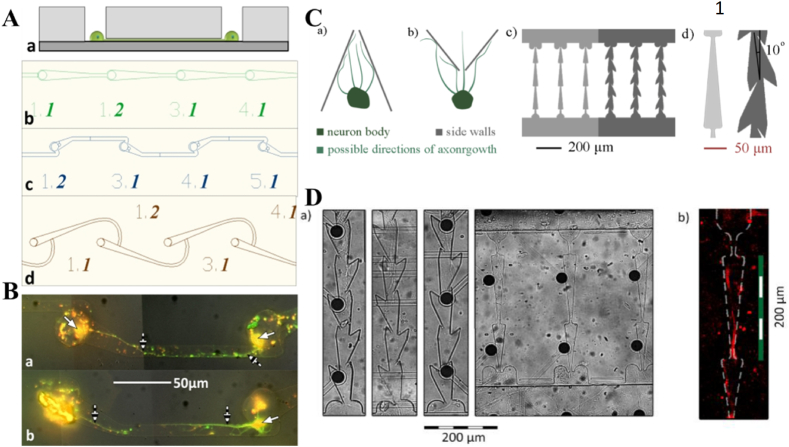
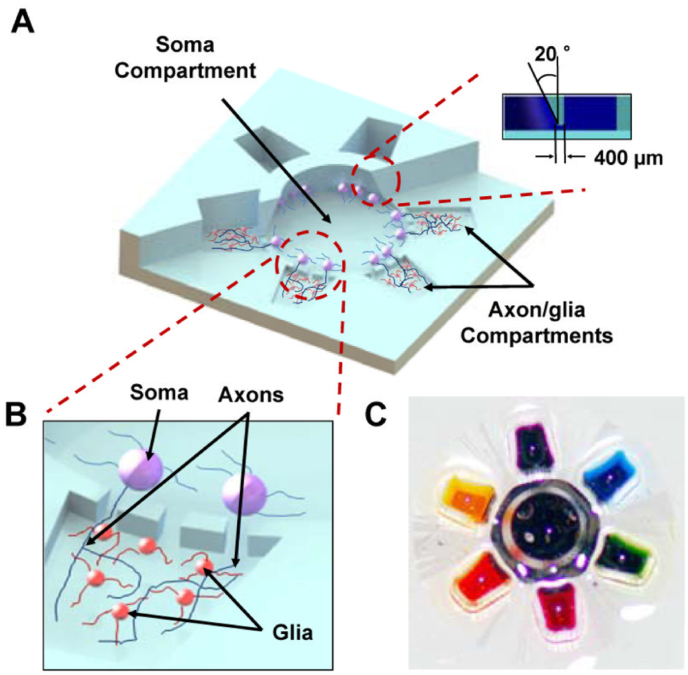
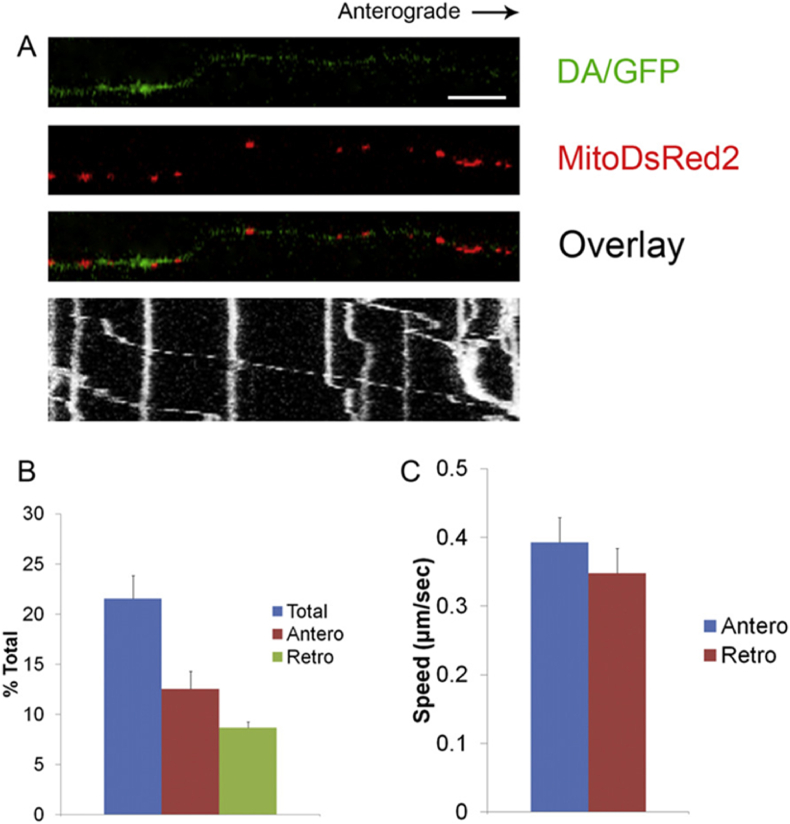
Single-neuron actions are the basis of brain function, as clinical sequelae, neuronal dysfunction or failure for most of the central nervous system (CNS) diseases and injuries can be identified via tracing single-neurons. The bulk analysis methods tend to miscue critical information by assessing the population-averaged outcomes. However, its primary requisite in neuroscience to analyze single-neurons and to understand dynamic interplay of neurons and their environment. Microfluidic systems enable precise control over nano-to femto-liter volumes via adjusting device geometry, surface characteristics, and flow-dynamics, thus facilitating a well-defined micro-environment with spatio-temporal control for single-neuron analysis. The microfluidic platform not only offers a comprehensive landscape to study brain cell diversity at the level of transcriptome, genome, and/or epigenome of individual cells but also has a substantial role in deciphering complex dynamics of brain development and brain-related disorders. In this review, we highlight recent advances of microfluidic devices for single-neuron analysis, i.e., single-neuron trapping, single-neuron dynamics, single-neuron proteomics, single-neuron transcriptomics, drug delivery at the single-neuron level, single axon guidance, and single-neuron differentiation. Moreover, we also emphasize limitations and future challenges of single-neuron analysis by focusing on key performances of throughput and multiparametric activity analysis on microfluidic platforms.
单神经元活动是脑功能的基础,因为对于大多数中枢神经系统(CNS)疾病和损伤而言,通过追踪单神经元可以识别临床后遗症、神经元功能障碍或衰竭。整体分析方法倾向于通过评估群体平均结果来误导关键信息。然而,在神经科学中分析单神经元并理解神经元与其环境的动态相互作用是其首要要求。微流控系统通过调整装置几何形状、表面特性和流体动力学,能够对纳升至飞升至的体积进行精确控制,从而为单神经元分析提供具有时空控制的明确微环境。微流控平台不仅为在单个细胞的转录组、基因组和/或表观基因组水平研究脑细胞多样性提供了全面的视角,而且在解读脑发育和脑相关疾病的复杂动态方面也发挥着重要作用。在本综述中,我们重点介绍了用于单神经元分析的微流控装置的最新进展,即单神经元捕获、单神经元动力学、单神经元蛋白质组学、单神经元转录组学、单神经元水平的药物递送、单轴突导向和单神经元分化。此外,我们还通过关注微流控平台上通量和多参数活性分析的关键性能,强调了单神经元分析的局限性和未来挑战。