Jammes Fabien C, Maerkl Sebastian J
Institute of Bioengineering, School of Engineering, École Polytechnique Fédérale de Lausanne, Lausanne, Switzerland.
Microsyst Nanoeng. 2020 Jul 13;6:45. doi: 10.1038/s41378-020-0140-8. eCollection 2020.
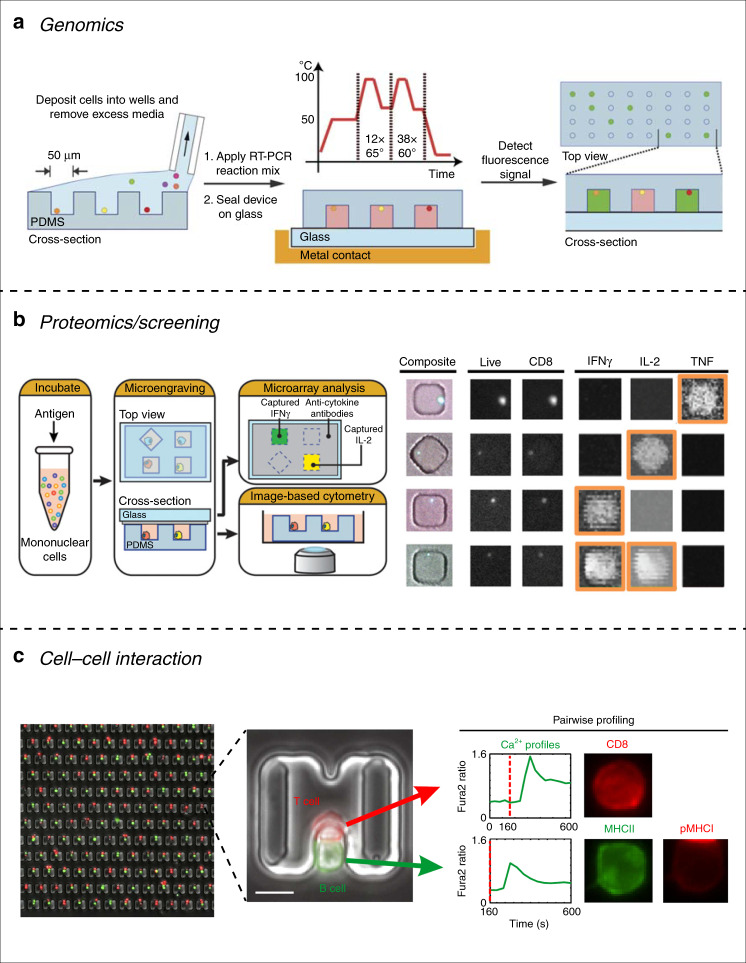
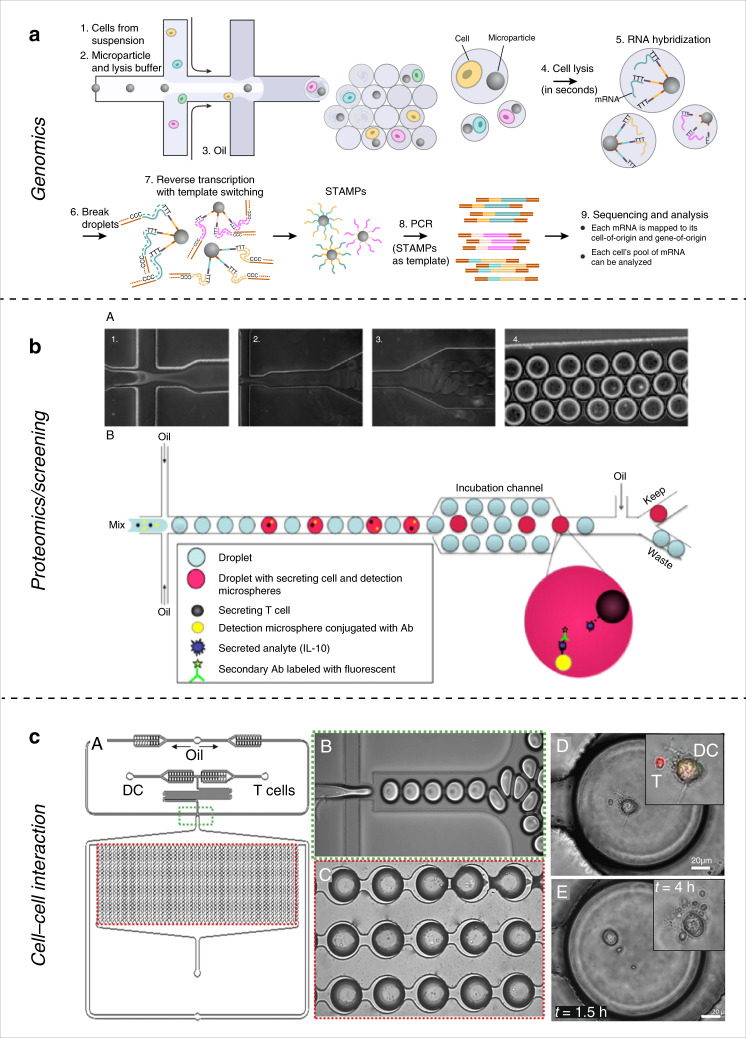
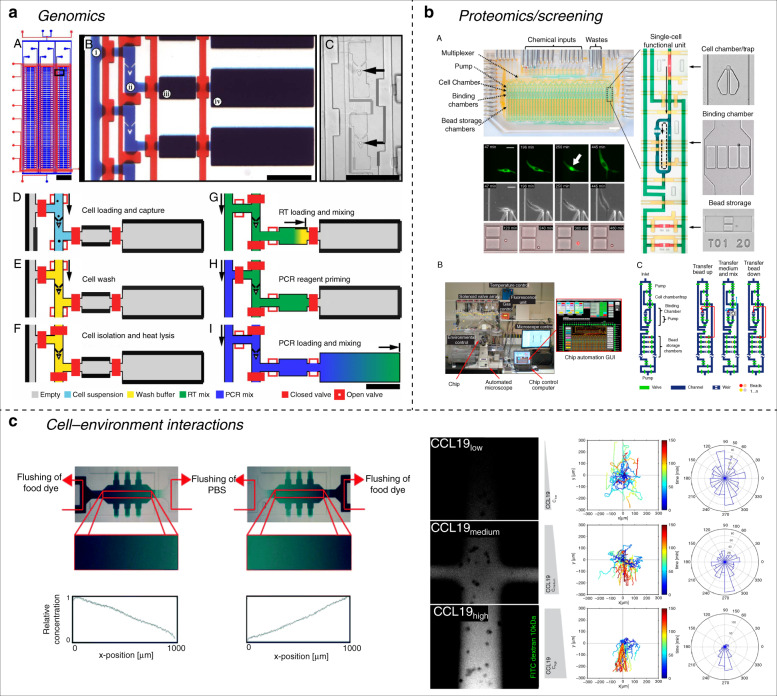
The immune system is a complex network of specialized cells that work in concert to protect against invading pathogens and tissue damage. Imbalances in this network often result in excessive or absent immune responses leading to allergies, autoimmune diseases, and cancer. Many of the mechanisms and their regulation remain poorly understood. Immune cells are highly diverse, and an immune response is the result of a large number of molecular and cellular interactions both in time and space. Conventional bulk methods are often prone to miss important details by returning population-averaged results. There is a need in immunology to measure single cells and to study the dynamic interplay of immune cells with their environment. Advances in the fields of microsystems and microengineering gave rise to the field of microfluidics and its application to biology. Microfluidic systems enable the precise control of small volumes in the femto- to nanoliter range. By controlling device geometries, surface chemistry, and flow behavior, microfluidics can create a precisely defined microenvironment for single-cell studies with spatio-temporal control. These features are highly desirable for single-cell analysis and have made microfluidic devices useful tools for studying complex immune systems. In addition, microfluidic devices can achieve high-throughput measurements, enabling in-depth studies of complex systems. Microfluidics has been used in a large panel of biological applications, ranging from single-cell genomics, cell signaling and dynamics to cell-cell interaction and cell migration studies. In this review, we give an overview of state-of-the-art microfluidic techniques, their application to single-cell immunology, their advantages and drawbacks, and provide an outlook for the future of single-cell technologies in research and medicine.
免疫系统是一个由专门细胞组成的复杂网络,这些细胞协同工作以抵御入侵的病原体和组织损伤。该网络的失衡常常导致免疫反应过度或缺失,进而引发过敏、自身免疫性疾病和癌症。许多相关机制及其调节方式仍知之甚少。免疫细胞高度多样化,免疫反应是大量分子和细胞在时间和空间上相互作用的结果。传统的批量方法往往因得出群体平均结果而容易忽略重要细节。免疫学领域需要对单细胞进行测量,并研究免疫细胞与其环境之间的动态相互作用。微系统和微工程领域的进展催生了微流控领域及其在生物学中的应用。微流控系统能够精确控制飞升至纳升范围内的小体积液体。通过控制装置几何形状、表面化学性质和流动行为,微流控可为单细胞研究创造一个具有时空控制的精确界定的微环境。这些特性对于单细胞分析非常理想,使微流控装置成为研究复杂免疫系统的有用工具。此外,微流控装置可以实现高通量测量,从而能够对复杂系统进行深入研究。微流控已被应用于大量生物学应用中,从单细胞基因组学、细胞信号传导和动力学研究到细胞间相互作用和细胞迁移研究。在这篇综述中,我们概述了最先进的微流控技术、它们在单细胞免疫学中的应用、它们的优缺点,并对单细胞技术在研究和医学领域的未来发展进行了展望。