Prince of Wales Clinical School, University of New South Wales, Randwick, Sydney, NSW, 2052, Australia.
Neuroscience Research Australia, University of New South Wales, Randwick, Sydney, NSW, 2052, Australia.
Exp Brain Res. 2022 May;240(5):1371-1385. doi: 10.1007/s00221-022-06335-5. Epub 2022 Mar 4.
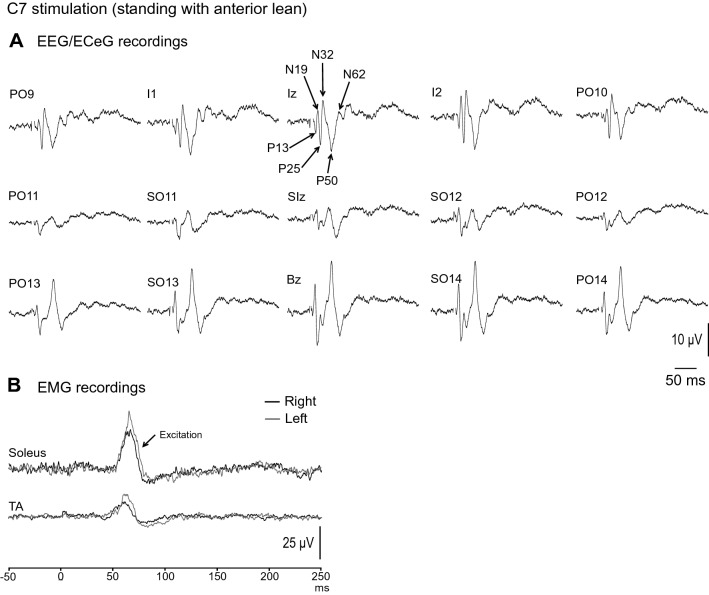
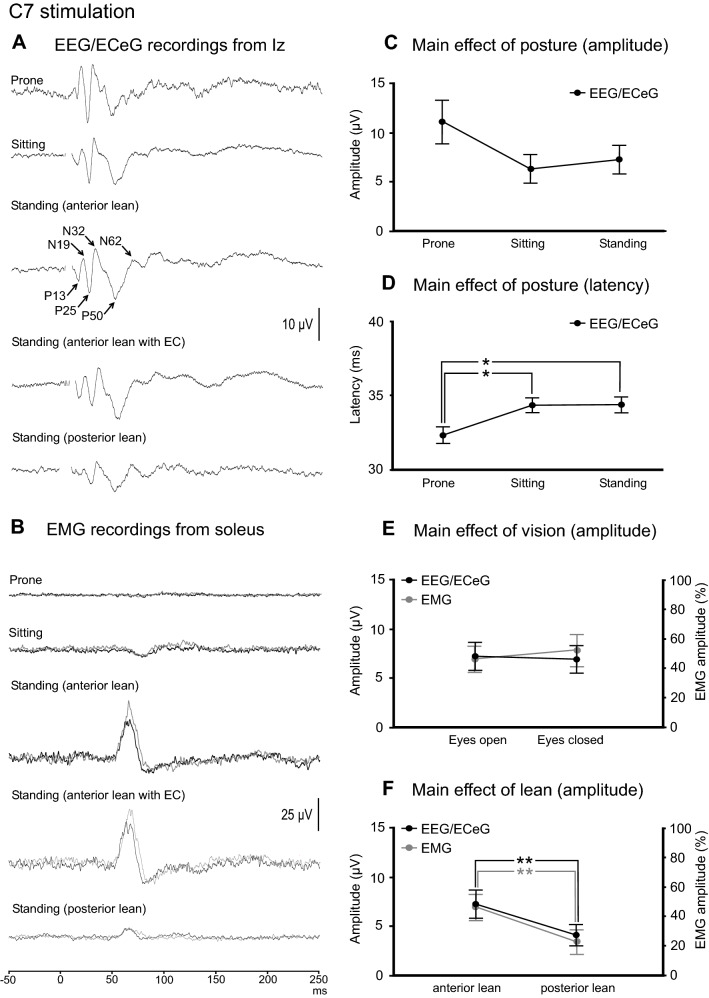
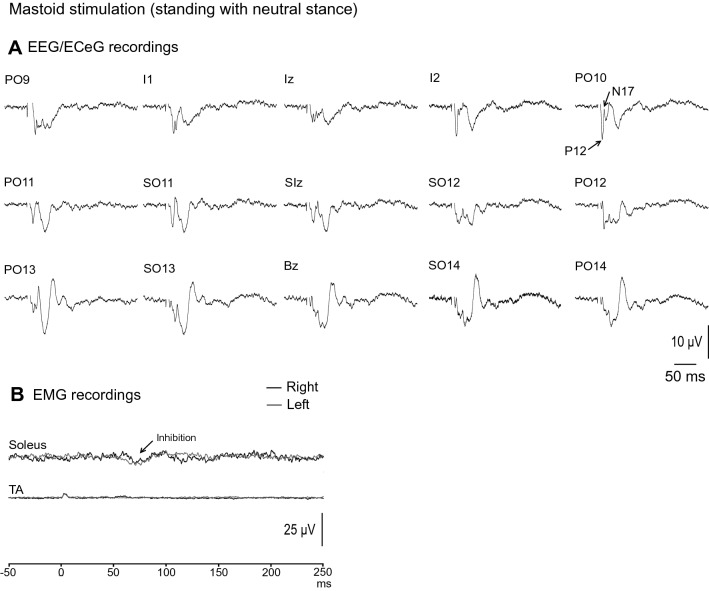
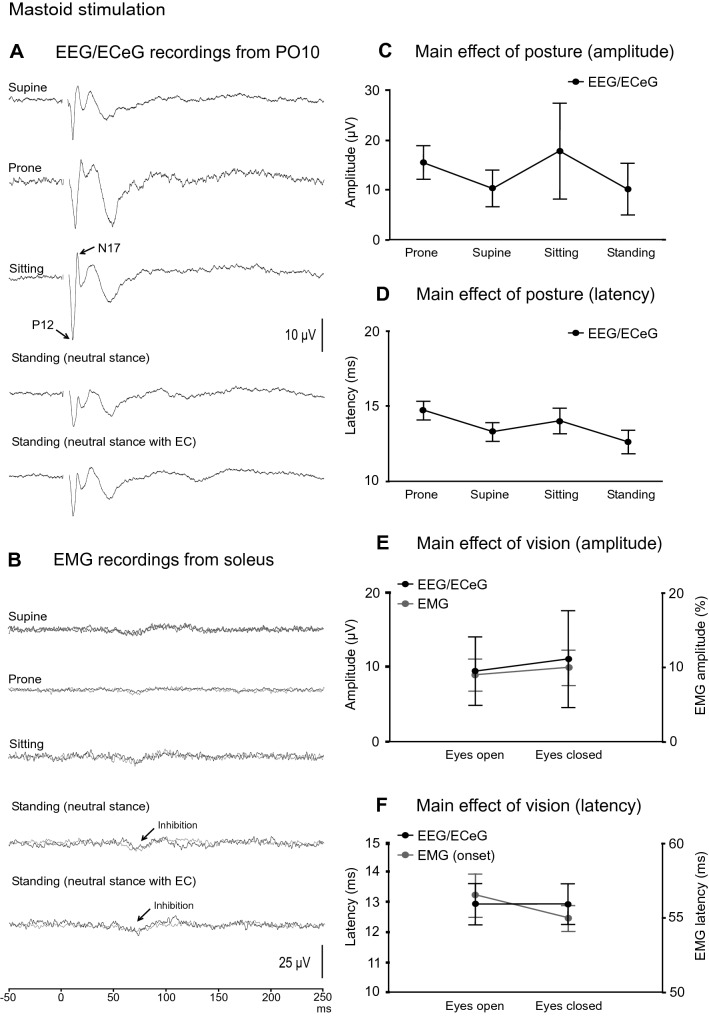
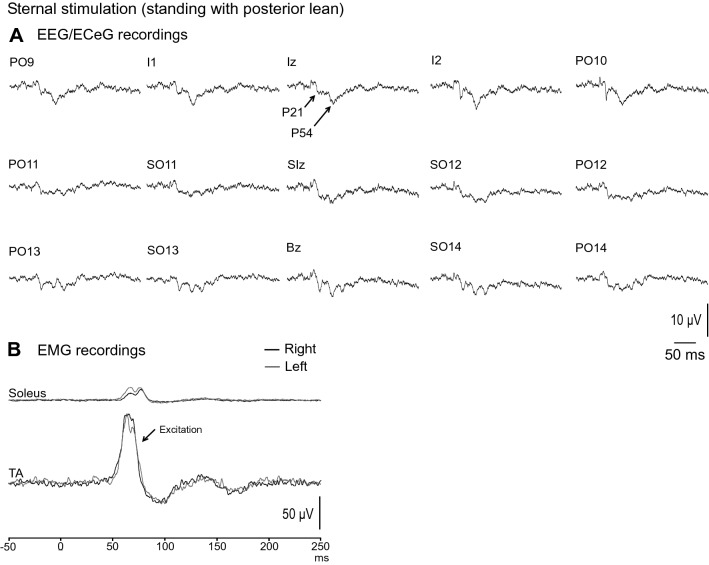
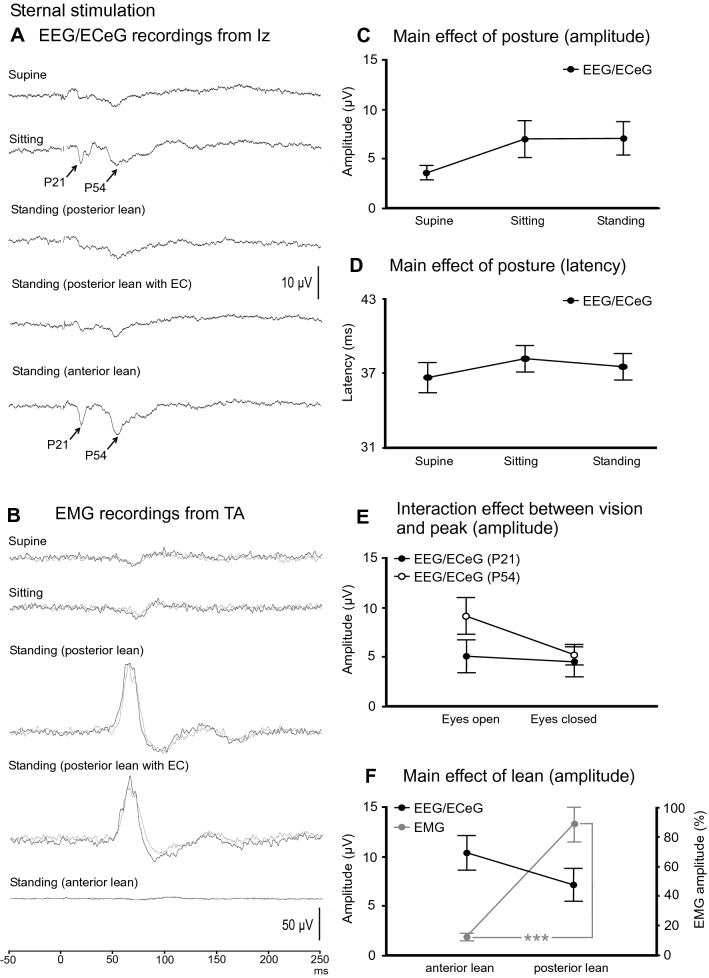
Recordings from over the posterior fossa following impulsive acceleration stimuli have shown short latency evoked potentials of presumed cerebellar origin. In this study, we investigated the effect of posture on these cerebellar evoked potentials (CEPs) and their relationship to postural reflexes recorded from the leg muscles evoked by the same stimuli. Nine healthy subjects were tested during lying (supine and prone), sitting and standing. Impulsive accelerations were applied at the mastoid and to truncal (both C7 and sternal) stimulation sites. The effect of vision, eyes open or closed, was investigated for all three stimuli. For the truncal stimuli, the effect of differing leaning conditions during standing was also recorded. CEP amplitudes were correlated for the three stimuli. For C7 stimulation during standing, both CEPs and postural reflexes scaled as the threat to postural stability increased. However, CEPs for all stimuli were present during lying, sitting and standing with amplitude and latency parameters mainly unaffected by posture or vision. In contrast, postural reflexes from the leg muscles were attenuated when not standing, with the effect being more marked for truncal stimuli. We conclude that CEPs evoked by axial and vestibular stimuli are not systematically gated by posture, in contrast to the reflex responses evoked by the same stimuli.
对后颅窝的记录表明,在受到冲动加速刺激后,会产生潜伏期较短的、推测来自小脑的诱发电位。在这项研究中,我们研究了姿势对这些小脑诱发电位(CEPs)的影响,以及它们与同一刺激从腿部肌肉记录到的姿势反射之间的关系。9 名健康受试者在仰卧(仰卧和俯卧)、坐姿和站立位接受测试。在乳突和躯干(C7 和胸骨)刺激部位施加冲动加速度。研究了三种刺激物在睁眼和闭眼时姿势的影响。对于躯干刺激,还记录了站立时不同倾斜条件的影响。对三种刺激进行了 CEP 幅度的相关性分析。对于站立位 C7 刺激,小脑诱发电位和姿势反射均随姿势稳定性威胁的增加而增加。然而,在仰卧、坐姿和站立位时,所有刺激都存在小脑诱发电位,其幅度和潜伏期参数主要不受姿势或视力的影响。相比之下,当不站立时,腿部肌肉的姿势反射会减弱,对于躯干刺激,这种影响更为明显。我们的结论是,与同一刺激引起的反射反应不同,轴向和前庭刺激引起的小脑诱发电位不受姿势的系统限制。