The Walter and Eliza Hall Institute of Medical Research, Parkville, VIC 3052, Australia.
The Department of Medical Biology, University of Melbourne, Parkville, VIC 3010, Australia.
Biochem J. 2022 Mar 18;479(5):609-628. doi: 10.1042/BCJ20210602.
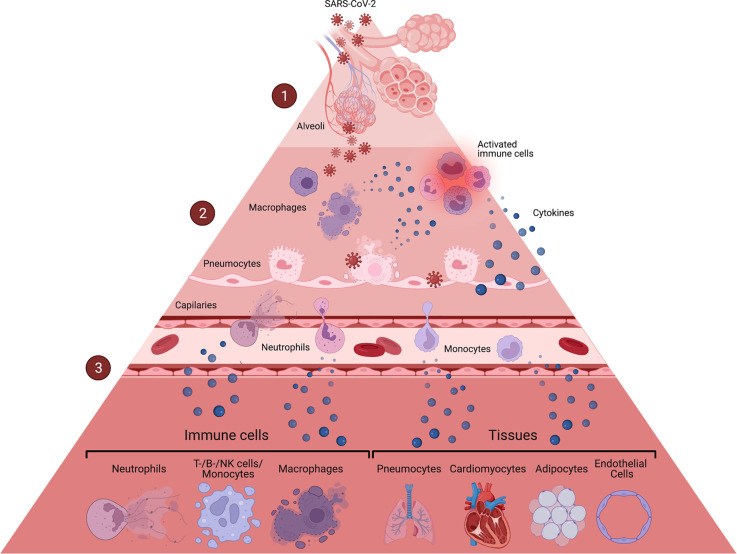
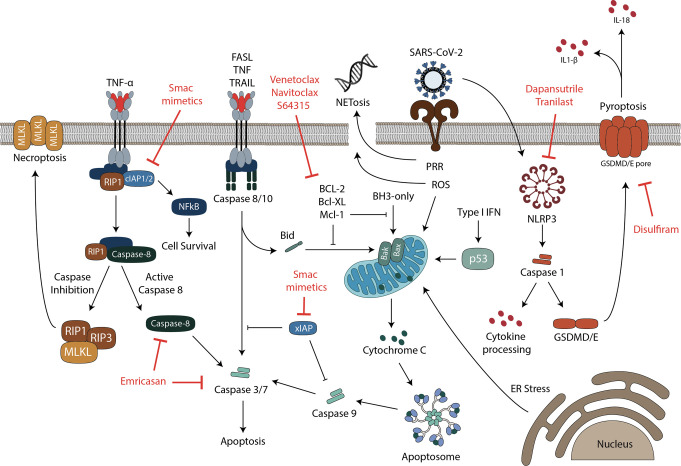
Two years after the emergence of SARS-CoV-2, our understanding of COVID-19 disease pathogenesis is still incomplete. Despite unprecedented global collaborative scientific efforts and rapid vaccine development, an uneven vaccine roll-out and the emergence of novel variants of concern such as omicron underscore the critical importance of identifying the mechanisms that contribute to this disease. Overt inflammation and cell death have been proposed to be central drivers of severe pathology in COVID-19 patients and their pathways and molecular components therefore present promising targets for host-directed therapeutics. In our review, we summarize the current knowledge on the role and impact of diverse programmed cell death (PCD) pathways on COVID-19 disease. We dissect the complex connection of cell death and inflammatory signaling at the cellular and molecular level and identify a number of critical questions that remain to be addressed. We provide rationale for targeting of cell death as potential COVID-19 treatment and provide an overview of current therapeutics that could potentially enter clinical trials in the near future.
在 SARS-CoV-2 出现两年后,我们对 COVID-19 发病机制的理解仍然不完整。尽管全球前所未有的合作科学努力和快速疫苗开发,但疫苗的不均衡推出以及像奥密克戎这样的新型关注变种的出现,突显了确定导致这种疾病的机制的至关重要性。过度炎症和细胞死亡被认为是 COVID-19 患者严重病理的主要驱动因素,因此它们的途径和分子成分是有希望的宿主定向治疗靶点。在我们的综述中,我们总结了关于不同程序性细胞死亡(PCD)途径在 COVID-19 疾病中的作用和影响的现有知识。我们从细胞和分子水平上剖析了细胞死亡和炎症信号之间的复杂联系,并确定了一些仍有待解决的关键问题。我们为针对细胞死亡作为 COVID-19 治疗的潜在靶点提供了依据,并概述了目前可能在不久的将来进入临床试验的治疗方法。